
Birkin vs Kelly: Which Holds Its Value Better Over 5 Years?
Market Intelligence: Tracking Long-Term Depreciation and Price Deltas Across Hermès Quota Bags
Determining exactly Birkin vs Kelly: which holds its value better over 5 years is the most consequential portfolio decision a luxury investor will make in 2026. The secondary market does not treat these two titans equally once they leave the boutique. While both are strictly classified as quota bags—requiring immense patience, a dedicated boutique relationship, and a substantial spend ratio to acquire—their financial trajectories diverge sharply over a half-decade hold period. A pristine Birkin generates explosive immediate returns, but a Kelly often exhibits superior architectural endurance that defends its condition grade against the ravages of time. Buyers on platforms like Vestiaire Collective, The Real Real, Fashionphile, and 1stDibs are aggressively factoring in physical aging, meaning the bag you buy today must survive gravity and friction to deliver a profit tomorrow. In this comprehensive head-to-head analysis, we will map out the precise price deltas separating these models, evaluate how condition grading impacts long-term liquidity, and reveal which silhouette serves as the ultimate vault asset.
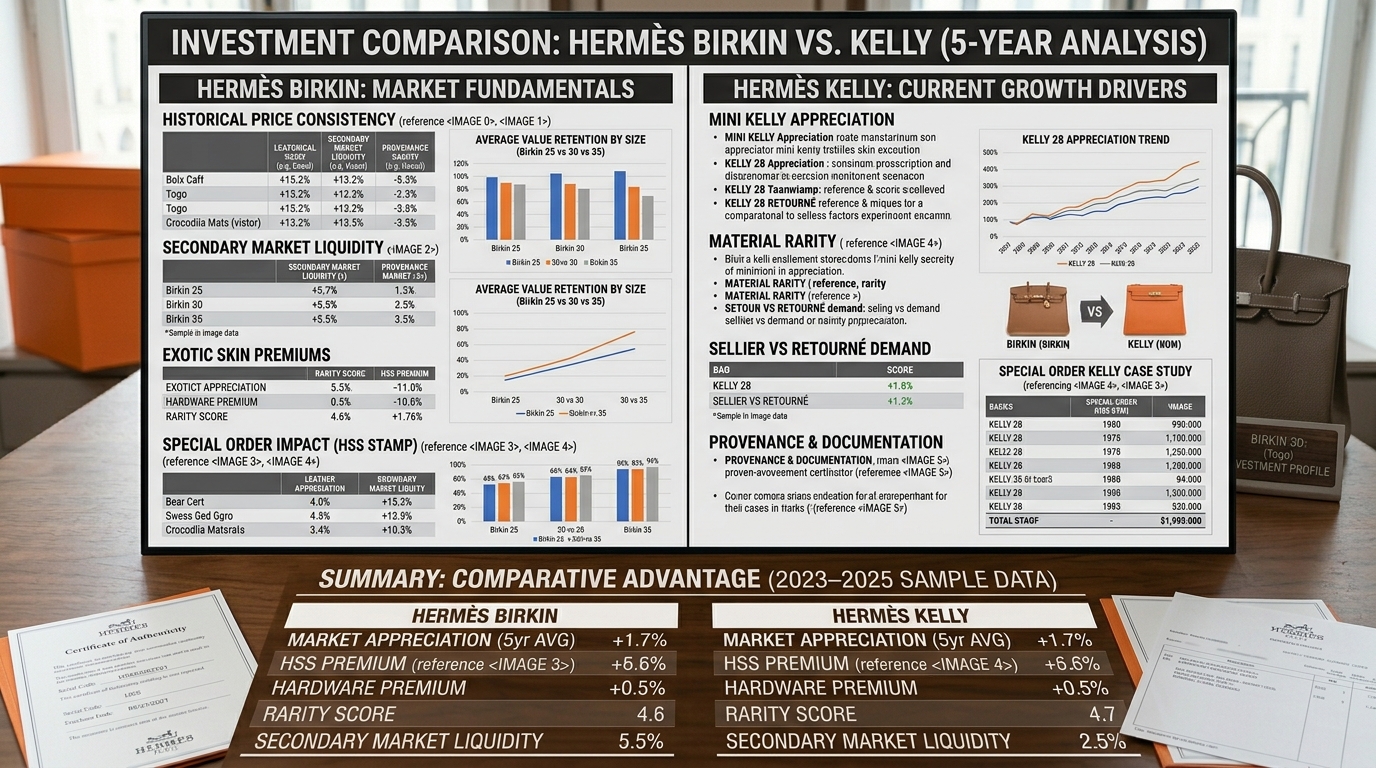
+80% to +100%
5-Year Avg. Kelly Sellier Delta
High Risk
Birkin 30 Structural Slouch
Pristine
Grade Required for Peak Liquidity
Table of Contents
The Foundation of 5-Year Valuation
To accurately project value over a five-year horizon, we must first consult our Comparisons Hub to baseline the acquisition friction. Neither the Birkin nor the Kelly is a standard retail transaction. Securing either requires satisfying an SA (Sales Associate) through a prolonged spend ratio, typically involving $15,000 to $25,000 in fine jewelry, homeware, or ready-to-wear purchases. The informal wait list ensures that by the time you receive the bag, you have already invested significant sunk capital.
The price-to-resale ratio calculation begins the moment the bag is offered. In year one, both the Birkin 25 and the Kelly 25 command astronomical premiums—often +80% to +110% over retail—because the secondary market is eager to bypass the boutique friction. However, as the asset crosses into year three, year four, and year five, the valuation shifts from "scarcity premium" to "condition premium."
Over five years, an Hermès bag is subjected to environmental stress, hardware friction, and the relentless pull of gravity. The bag that maintains its factory-fresh appearance the longest will naturally command the highest price delta on the resale market. Therefore, the winner of this five-year comparison is determined by which design possesses superior physical defense mechanisms against condition grade degradation.
The Birkin Trajectory: Velocity vs Vulnerability
The Birkin remains the undisputed volume leader of the secondary market. If you need to liquidate an asset in 48 hours, a Pristine Birkin 25 in Togo leather (Noir or Gold) offers unrivaled velocity on Fashionphile. However, when we evaluate which Hermès bag styles hold their resale value best over five years of active use, the Birkin reveals a critical vulnerability.
The Birkin is fundamentally a tote bag. Its design encourages the owner to carry it open, leading to internal weight imbalances. Over a five-year period, specifically in larger sizes like the Birkin 30 or 35, the soft leathers (Togo and Clemence) succumb to structural slouching. The gussets fold inward, and the base begins to puddle. Resale platforms heavily penalize this loss of shape. An authenticator on Vestiaire Collective will immediately downgrade a slouched Birkin 30 from "Excellent" to "Very Good," wiping $2,000 to $4,000 off its price delta.
Furthermore, the Birkin's exposed top handles are highly susceptible to darkening and patina over five years of hand-carrying, unless rigorously protected by twillies. While Hermès Special Service (HSS) Birkins command apex premiums on day one, a heavily customized Birkin that shows signs of handle darkening in year five becomes a distressed asset, struggling to find a buyer willing to pay above retail.
- The Birkin 25 mitigates structural slouch better than the 30 or 35 due to its compact dimensions.
- Protecting the top handles with twillies is non-negotiable for defending the condition grade.
- Internal structural inserts are mandatory to prevent a five-year-old Birkin from losing its price-to-resale ratio.
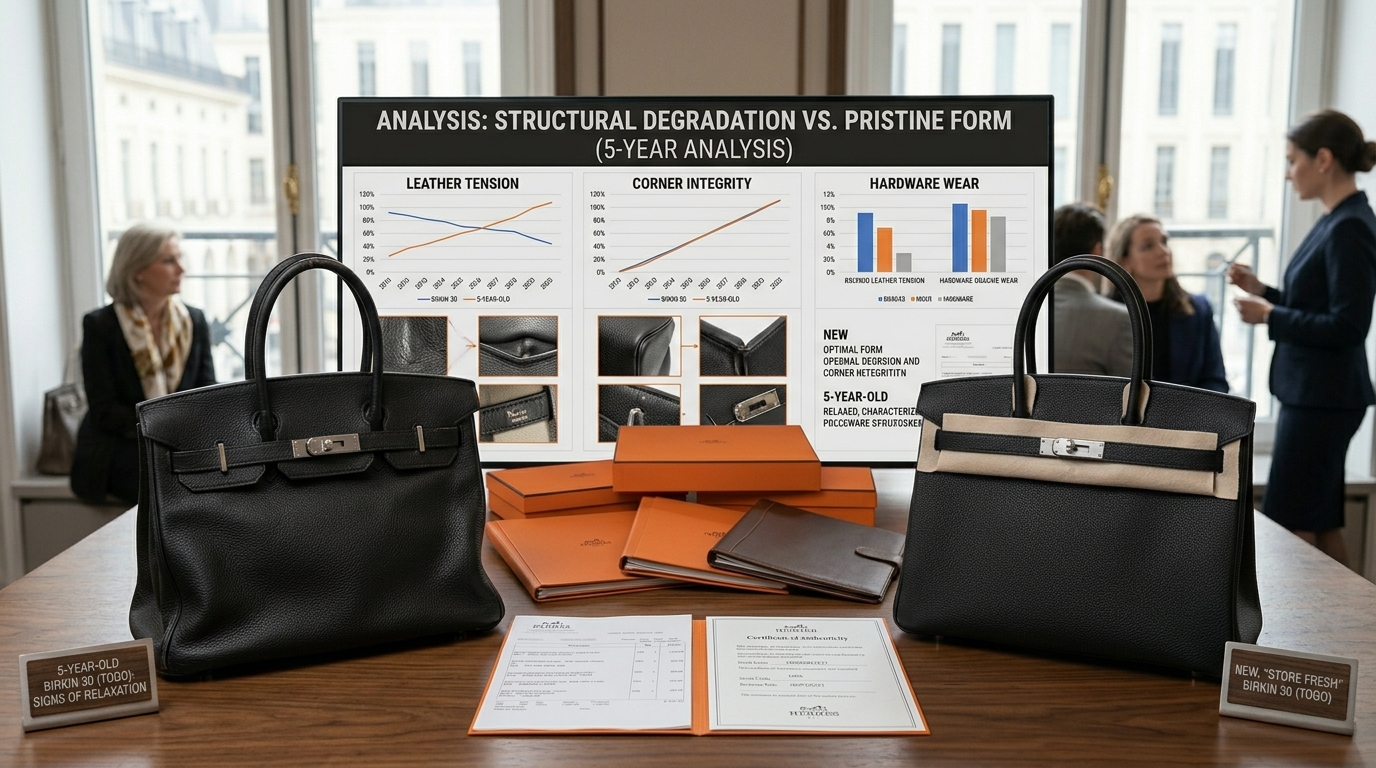
The Kelly Trajectory: Architectural Endurance
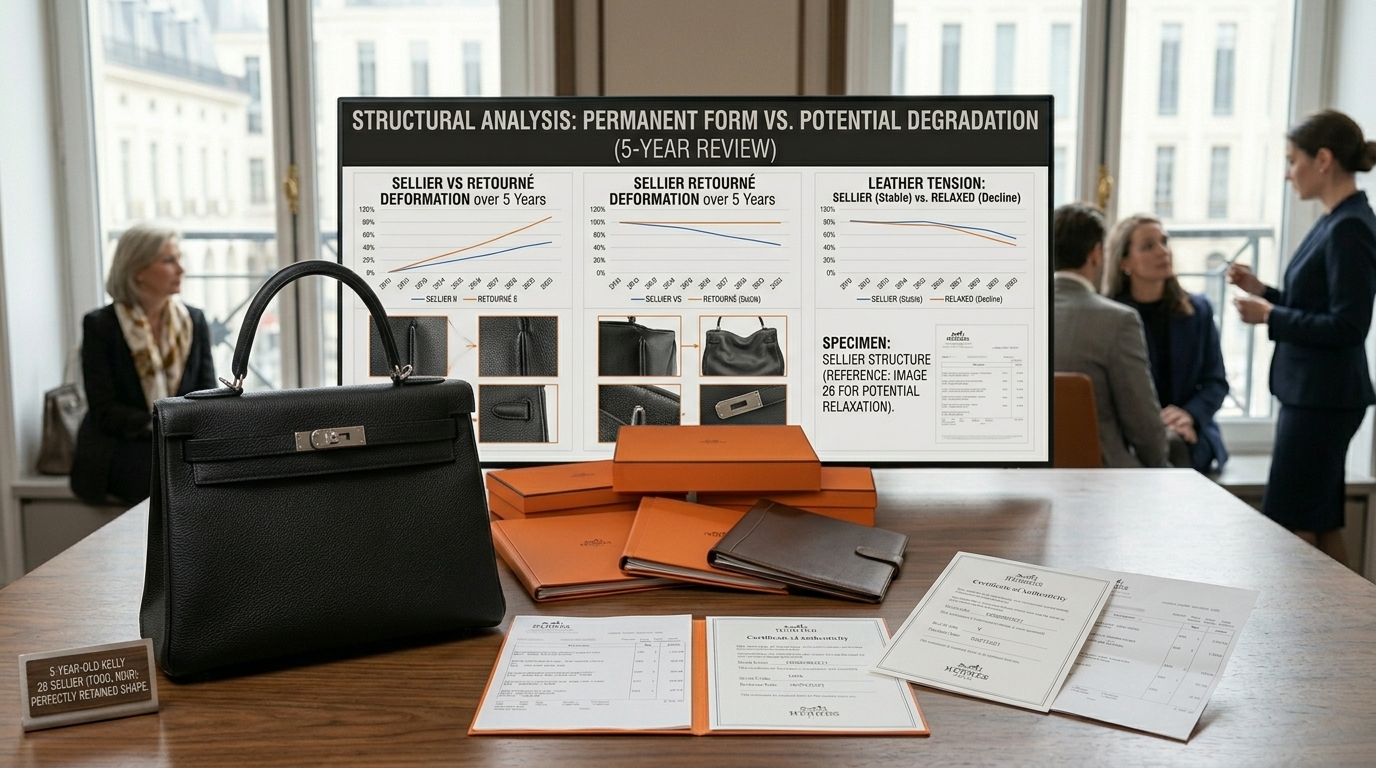
The Kelly presents a radically different five-year trajectory, deeply influenced by its construction type. While the Kelly Retourne mirrors the Birkin's susceptibility to slouching, the Kelly Sellier is the undisputed champion of long-term value retention.
The Sellier is stitched on the outside with resin-finished edges, creating a rigid, boxy architecture. Over five years of use, a Kelly 28 Sellier in Epsom or Box Calf leather will maintain an upright, military-grade posture. Because it resists gravity, it consistently secures "Pristine" or "Excellent" condition grades from platforms like The Real Real and 1stDibs long after a Birkin of the same age has been downgraded. For an exhaustive technical breakdown of how these specific rigid leathers resist aging, our sister site explores the science of structural leather aging.
The Hardware Risk
The Kelly’s primary vulnerability over a five-year hold is its central touret (turn-lock) and the shoulder strap clasps. Because the Kelly is meant to be closed, the metal plaque experiences high friction. Scratches on the Kelly hardware are heavily scrutinized. Furthermore, losing the detachable shoulder strap over five years represents a catastrophic failure of provenance; a Kelly missing its strap is functionally crippled on the resale market, suffering an immediate 20% to 30% penalty to its price delta.
Despite the hardware risks, the Kelly's aesthetic is currently surging. As tracked in our reseller market price drop analysis, buyers are rotating out of oversized totes and into structured, formal top-handles. The Kelly 25 and 28 Sellier command absolute peak liquidity, frequently retaining a +80% to +100% premium over retail even in year five, provided the resin edges remain uncracked.
Practical Holding and Liquidation Strategy
If your acquisition strategy demands a five-year hold period, you must align your boutique requests with these secondary market realities. Do not allow your SA to allocate you a soft-leather Birkin 35 if your goal is capital preservation; that asset will depreciate steadily as its structure collapses. For insights into alternative investments that preserve capital without the structural risks of a tote, consider the dynamics of Constance vs Birkin investment vehicles.
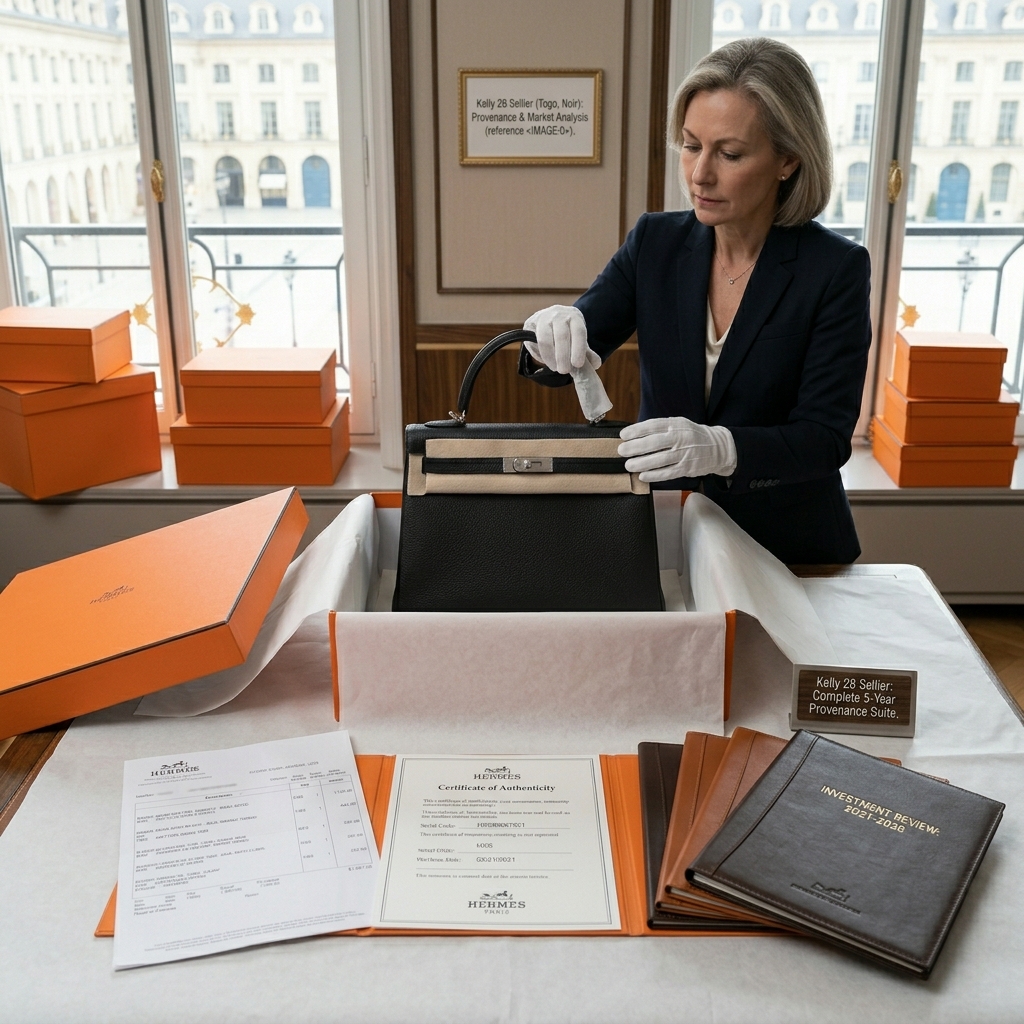
Instead, engineer your spend ratio to target a Kelly 25 or 28 in Sellier construction. This asset requires less active defense than a Birkin. You must retain every element of provenance—the original receipt, the box, the clochette, and the strap—in a climate-controlled vault. If you are forced to hold a Birkin, you must deploy 2mm felt inserts immediately to act as a structural exoskeleton, preventing the inevitable slouch that will destroy your ROI.
When it is time to liquidate in year five, transparency is your greatest asset. A five-year-old bag is rarely truly "Pristine." Utilize a peer-to-peer platform like Vestiaire Collective where you can control the narrative, post clear images of the perfectly preserved structure, and command a premium over the automated, often punishing buyout algorithms of Fashionphile. For broader liquidation strategies, refer to our Market & Resale archives.
| Model & Construction | Primary 5-Year Vulnerability | Condition Grade Defense | 5-Year Price-to-Resale Ratio |
|---|---|---|---|
| Kelly Sellier (Epsom/Box) | Resin edge cracking / Hardware scratches | Maximum (Flawless structural retention) | Apex Premium (+80% to +100%) |
| Birkin 25 (Togo/Epsom) | Handle darkening / Corner scuffs | High (Small size resists slouching) | Very High Premium (+70% to +90%) |
| Kelly Retourne (Clemence) | Base slouching / Piped edge wear | Moderate (Softer shape degrades) | Standard Premium (+40% to +60%) |
| Birkin 30/35 (Togo/Clemence) | Severe structural collapse / Slouching | Low (Requires constant internal support) | Retail Parity to Moderate Premium |
The Market Insider's Verdict
While the Birkin reigns supreme for immediate, short-term flips, it is structurally outclassed by the Kelly over a prolonged holding period. Physics and gravity dictate the secondary market. Bottom Line: For a five-year investment horizon, the Kelly Sellier (sizes 25 and 28) decisively beats the Birkin. Its rigid architecture effortlessly defends its condition grade, locking in your maximum price delta and guaranteeing extreme liquidity when you are finally ready to sell.
Popular Searches
Explore our most searched comparison and investment questionsKelly 28 Sellier vs Retourne Price Delta
Tracking the massive financial premium awarded to rigid structural architecture over time.
📈 Strong ResaleBirkin 25 vs Birkin 30 Value Retention
Why the smaller footprint resists gravity and preserves condition grades more effectively.
⬆ Rising DemandHermès Resale Value Drop 2026
Analyzing which specific quota bag sizes and leathers are currently shedding their premiums.
★ Collector FavouriteDoes the Birkin Depreciate After 5 Years
The critical difference between holding a vault asset and actively using a daily driver.
