
Hermès Reseller Market Price Drop Analysis: 2024–2026 Trends
Market Intelligence: Navigating the Secondary Market Correction and Preserving Portfolio Value
A rigorous Hermès reseller market price drop analysis tracking data from 2024 through the current 2026 landscape reveals a secondary ecosystem undergoing a brutal, yet necessary, structural correction. The days of speculative frenzy—where virtually any orange box could be flipped for a 40% markup within 24 hours—are definitively over. Today's market is highly discerning, governed by strict adherence to condition grades, forensic provenance checks, and a massive polarization between top-tier quota bags and entry-level luxury. For the modern investor, the shrinking price delta on non-quota assets represents a profound shift in how a boutique relationship must be leveraged. If your acquisition strategy has not evolved to reflect the realities of Vestiaire Collective, Fashionphile, and The Real Real in 2026, your capital is highly vulnerable. In this comprehensive breakdown, we dissect the data behind the price drops, map out which assets are actively depreciating, and provide clear directives on what to buy, hold, or liquidate immediately.
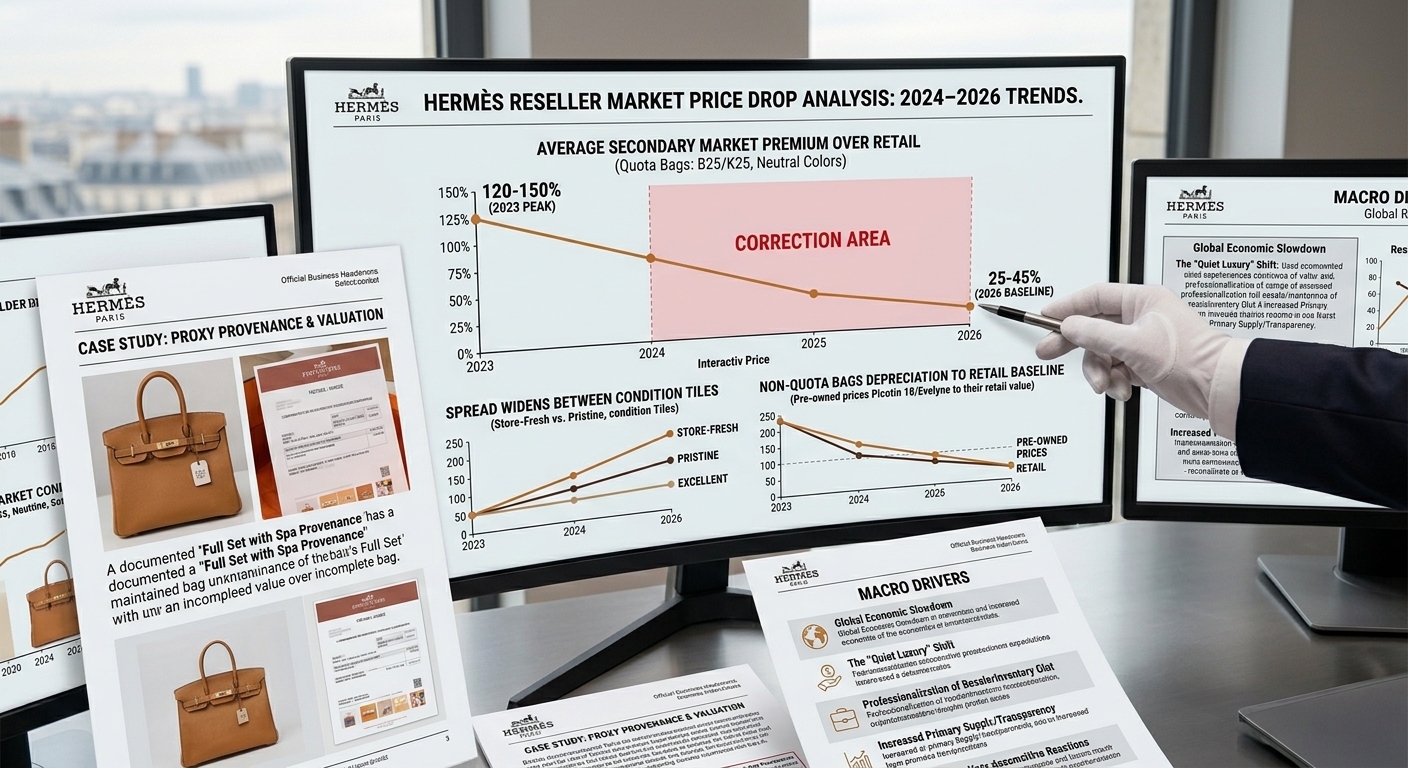
-25% to -35%
Non-Quota Bag Price Correction
B25 / K25
Assets Retaining Peak Liquidity
Pristine Only
Requirement for Profit Delta
The Foundation: The End of Speculative Liquidity
To accurately read the current climate, investors must first ground their perspective in our core Investment Guide. During the massive wealth influx of the early 2020s, a flood of new buyers entered the Hermès ecosystem. This surge created unprecedented liquidity on every major resale platform. Buyers who could not endure the required spend ratio or navigate the nuanced SA (Sales Associate) dynamic at the boutique level were willing to pay staggering price-to-resale ratios for practically anything with an Hermès stamp.
By late 2024, that speculative bubble began to deflate. Macroeconomic pressures, compounded by Hermès' own aggressive retail price hikes—a dynamic we track closely in our historical price increase analysis—forced the secondary market to sober up. As retail prices climbed, the secondary market floor naturally rose, but the willingness of secondary buyers to pay massive premium multipliers evaporated for lower-tier items. Today, the resale platform algorithm heavily penalizes anything that isn't functionally perfect.
The core shift is this: Access alone is no longer an asset. A client who successfully unlocks a quota bag allocation but accepts a wildly unpopular seasonal color will find themselves trapped holding an illiquid asset. The secondary buyer now possesses leverage, and they are using it to ruthlessly enforce a flight to quality.
The Collapse of Non-Quota Margins
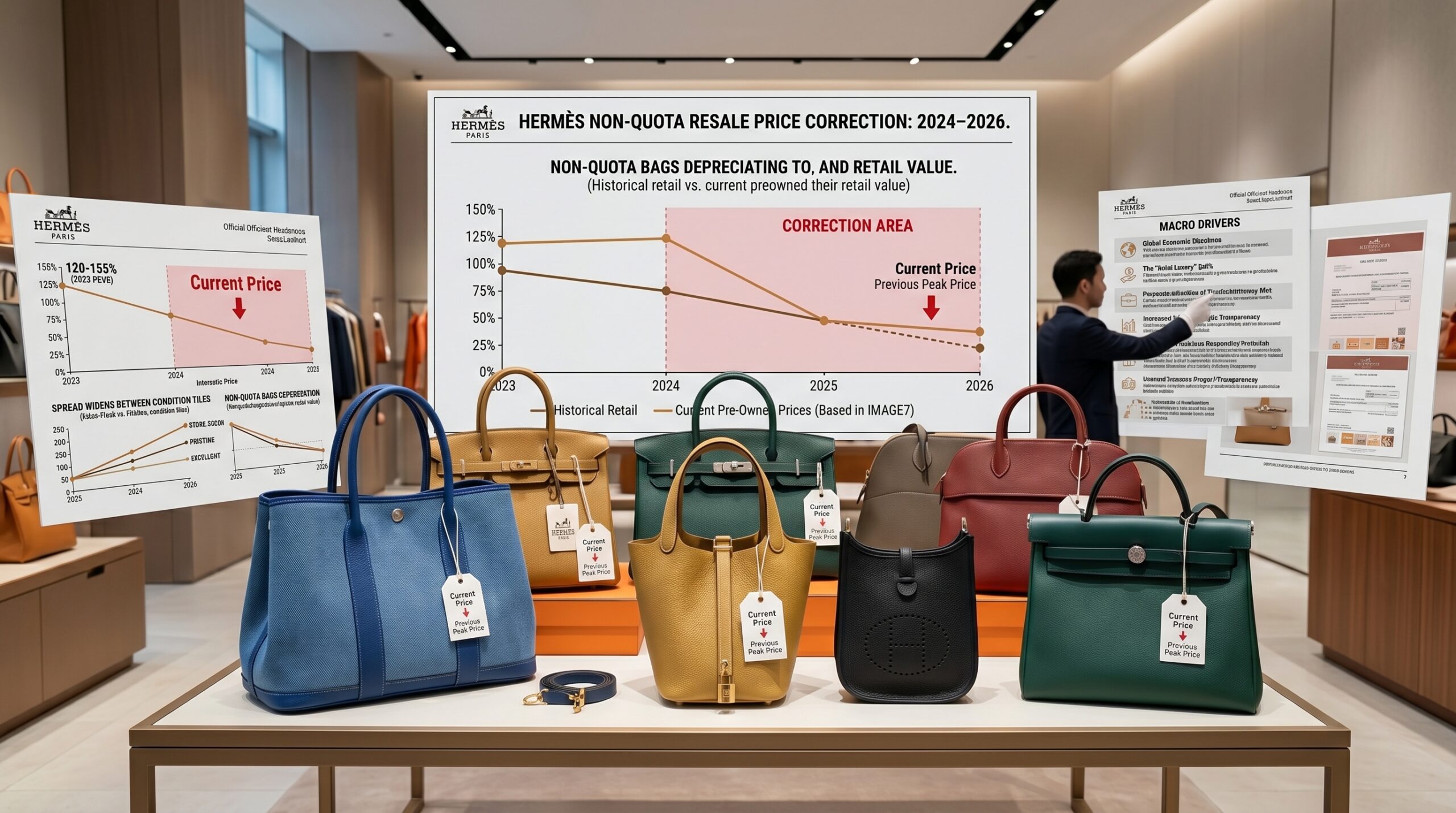
The most dramatic data points from this 2024–2026 correction center entirely on non-quota leather goods. Bags that previously served as reliable, quick-flip "cash parking" assets have seen their price deltas aggressively shrink.
Consider the Hermès Evelyne TPM or the Picotin Lock 18. During peak market conditions, these entry-level staples frequently commanded 15% to 25% premiums over retail simply due to boutique scarcity. In 2026, platforms like Fashionphile and 1stDibs are flooded with these specific models. Consequently, the price-to-resale ratio has inverted. A Pristine condition Picotin 18 now frequently trades at or slightly below its retail replacement cost, once platform consignment fees are factored in. If the condition grade drops to 'Excellent' or 'Very Good' due to minor hardware scuffs or base slouching, the seller will absorb a direct 20% to 30% financial loss.
The Constance 18 remains the sole non-quota anomaly. Because it functions with wait list dynamics almost identical to a Birkin or Kelly, it continues to hold its value. However, even here, buyers are deeply selective. The market is demanding classic combinations. As our rare colors resale analysis details, a Constance in a heavily contrasting or unpopular seasonal hue will sit stagnant on Vestiaire Collective for months.
- Do not acquire non-quota bags (Evelyne, Picotin, Lindy) with the expectation of short-term profit.
- If holding non-quota assets, treat them as lifestyle pieces; their primary financial utility is now purely as foundational spend history for your SA profile.
- Monitor your condition grades ruthlessly. A drop from 'Pristine' to 'B+' on an Evelyne renders the asset practically illiquid at retail parity.
Quota Bags: The Flight to Apex Quality
While the broader market corrects, the apex tier of the Hermès ecosystem—the Birkin and the Kelly—has not crashed; it has stratified. The overall volume of transactions has slowed, but the price deltas for universally demanded configurations remain ironclad.
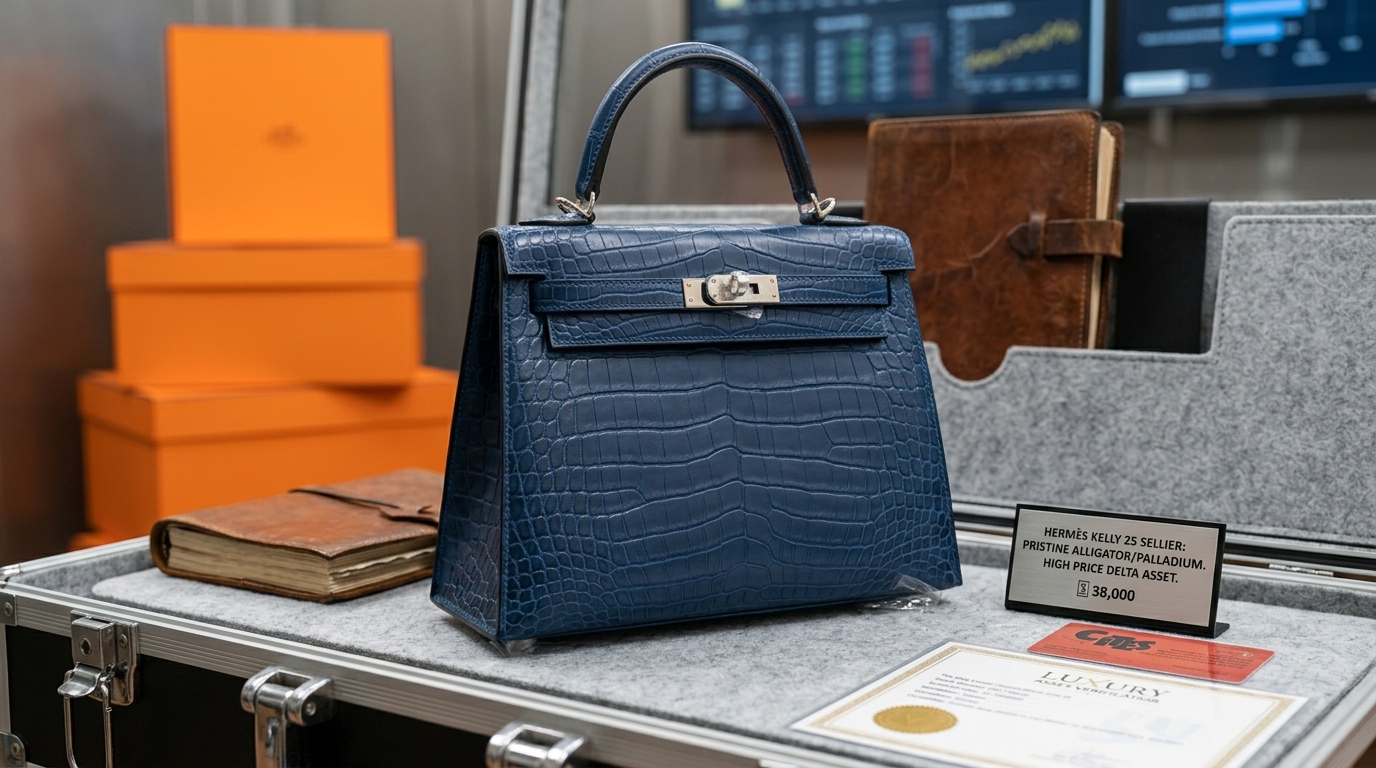
The Birkin 25 and Kelly 25/28 in highly sought-after neutrals (Craie, Nata, Noir, Gold) still command a 75% to 100% premium over retail. However, the 2026 buyer pool is fiercely scrutinizing provenance and leather type. As we explored in our comprehensive Birkin vs Kelly 5-year value retention analysis, structurally rigid models like the Kelly Sellier in Epsom leather are outperforming softer Retourne models in Togo. Secondary buyers view rigid structure as a defense against future condition degradation.
The HSS Vulnerability
The most surprising casualty of the 2024–2026 correction has been the Hermès Special Service (HSS) category. Previously, the horseshoe stamp guaranteed a massive payout regardless of the colorway. Today, secondary buyers refuse to pay a $15,000 premium for someone else's eccentric custom choices. Highly contrasting bi-color HSS bags are suffering massive liquidity freezes on The Real Real. Furthermore, buyers are increasingly demanding forensic authentication for these high-value pieces. For a deeper understanding of how the market validates these assets, our sister site provides excellent intelligence on forensic authentication and leather science for HSS allocations.
Size also dictates survival in this current climate. Any Birkin size 35 or Kelly size 32 is actively depreciating unless it is a rare vintage Box Calf piece. The market simply refuses to absorb large, heavy bags at premium multipliers.
Adjusting Your Acquisition Strategy
The modern collector must treat their boutique relationship like a strict financial operation. You can no longer afford to accept an inferior allocation just to please your SA. If you are offered a Birkin 35 in a vibrant, seasonal pink, and your goal is capital preservation, you must respectfully decline. Accepting that bag traps $13,000 of your liquidity in an asset that will likely sell for $10,000 on a resale platform after fees.
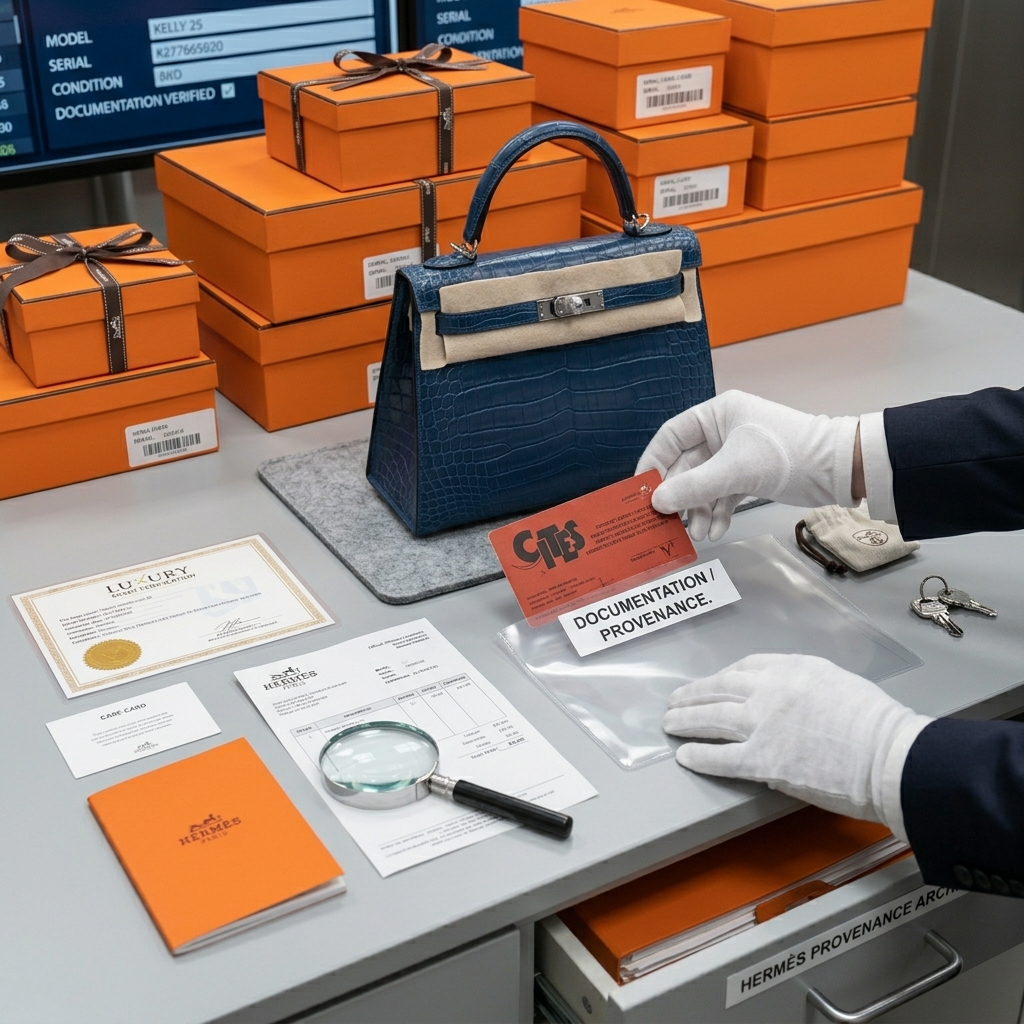
Focus your spend ratio entirely on unlocking sizes 25 and 28 in classic neutrals. Ensure that you retain absolutely every piece of provenance: the original receipt, CITES documents, the raincoat, and the pristine orange box. When listing on platforms, utilize Vestiaire Collective for higher-priced HSS items where you can afford to wait for the right international buyer, and utilize direct-buyout platforms like Fashionphile only when immediate liquidity is strictly necessary, understanding you will take a haircut on the price-to-resale ratio.
| Asset Category | 2024 Peak Performance | 2026 Corrected Reality | Current Liquidity Status |
|---|---|---|---|
| Birkin / Kelly 25 (Neutrals) | +100% to +130% Premium | +75% to +100% Premium | Extremely High |
| Birkin / Kelly 35+ | +20% to +40% Premium | -10% to +10% (Retail Parity) | Low (Slow Velocity) |
| Non-Quota (Picotin / Evelyne) | +15% to +25% Premium | -10% to -20% (Loss after fees) | High (But at a financial loss) |
| Highly Custom HSS (Contrasting) | +50% Premium | Severe Liquidity Freeze | Extremely Low |
The Market Insider's Verdict
The 2024–2026 secondary market correction has successfully purged speculative flippers, leaving a sophisticated, highly demanding buyer base. While entry-level and oversized bags have seen their margins collapse, pristine, highly targeted quota bags continue to function as robust vault assets. Bottom Line: To protect your capital in 2026, you must ruthlessly enforce quality control on your SA allocations, refuse any bag larger than size 30 or in polarizing colorways, and defend your condition grades with absolute fanaticism.
Popular Searches
Explore our most searched investment and market correction questionsHermès Resale Market Crash 2026
Separating the reality of the non-quota correction from the sustained strength of the Birkin 25.
📈 Strong ResaleBirkin vs Kelly Resale Value Drop
Tracking which iconic silhouette is weathering the secondary market correction more effectively.
⬆ TrendingWorst Hermès Colors to Resell
Identifying the seasonal and contrasting hues that trigger severe liquidity freezes on major platforms.
★ Collector FavouriteFashionphile Hermès Buyout Prices Dropping
Why direct-buyout platforms are slashing their offers for less-than-pristine quota bags.
