
Which Hermès Bag Styles Hold Their Resale Value Best in 2026?
Market Intelligence & Acquisition Strategy for the Modern Collector
Understanding exactly which Hermès bag styles hold their resale value best in 2026 is the critical first step for any serious collector looking to optimize their acquisition strategy. The secondary market has shifted significantly over the past two years, moving away from pandemic-era speculative buying into a mature, highly calculated environment. Today, an asset’s true worth is measured not just by its retail price, but by its verifiable price-to-resale ratio [cite: 13] and liquid demand across major secondary channels. In this analysis, we will map out the precise price deltas [cite: 13] separating top-tier models, unpack the hidden dynamics of boutique allocations, and reveal exactly which pieces you should be aggressively targeting or holding in your portfolio this year.
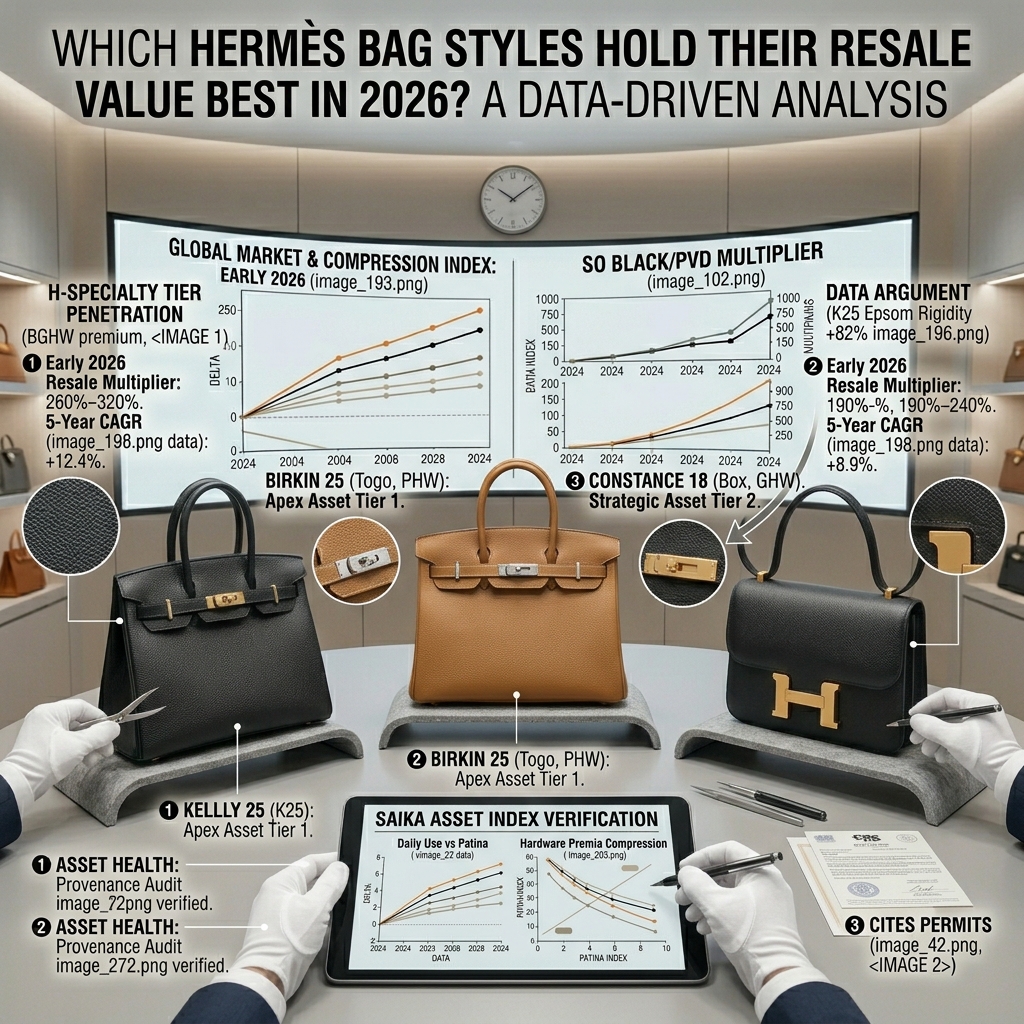
+85%
Avg. Birkin 25 Resale Premium
Pristine
Required Condition for Max ROI
High
Liquidity Rating for Kelly 28
The Foundation of Hermès Value Retention
The Hermès market operates on an economy of artificial scarcity, governed predominantly by the distinction between quota bags [cite: 13] and non-quota bags. A quota bag—strictly defined as a Birkin or Kelly—is not freely purchasable[cite: 13]. Access is tightly controlled through an established boutique relationship [cite: 13] and an expected spend history, monitored carefully by your Sales Associate (SA)[cite: 13]. This inherent friction at the retail level is the primary engine driving secondary market premiums.
Before exploring individual models, you must consult our core Hermès Styles Guide to understand the structural differences that dictate these valuations. Market performance in 2026 is hyper-segmented. Buyers on platforms like Vestiaire Collective, The Real Real, Fashionphile, and 1stDibs [cite: 13] are paying strict attention to condition grades [cite: 13]—where a drop from Pristine to Excellent (or an A to a B+) can obliterate thousands of dollars in an asset's price-to-resale ratio[cite: 13].
The core mechanic driving profitability is the spend ratio[cite: 13]: the volume of non-quota purchases required before receiving a quota bag offer. Because collectors must often spend 1:1 or 2:1 on fine jewelry, ready-to-wear, and homeware to access a Birkin at retail, the secondary market absorbs this "shadow cost" in the form of a massive resale markup. Consequently, when we evaluate which bag holds its value best, we are actually evaluating which bag justifies the highest friction cost in the eyes of secondary buyers.
The Quota Bag Premium: Birkin vs. Kelly Performance
When analyzing the titans of the Hermès portfolio, the measurable price delta [cite: 13] between configurations is stark. The Birkin 25 and the Kelly 25/28 remain the undisputed champions of value retention, but their market behaviors differ.
Currently, a Birkin 25 in Togo leather with Palladium Hardware (PHW) frequently achieves a price-to-resale ratio [cite: 13] of 1.8x to 2.2x retail when listed in pristine condition on major resale platforms [cite: 13] like Fashionphile or Vestiaire Collective. Its liquidity [cite: 13] is unmatched; a competitively priced B25 will often turn over in less than 72 hours. However, this premium is highly sensitive to color and provenance[cite: 13]. An asset lacking its original box or receipt immediately drops into a lower pricing tier, regardless of physical condition.
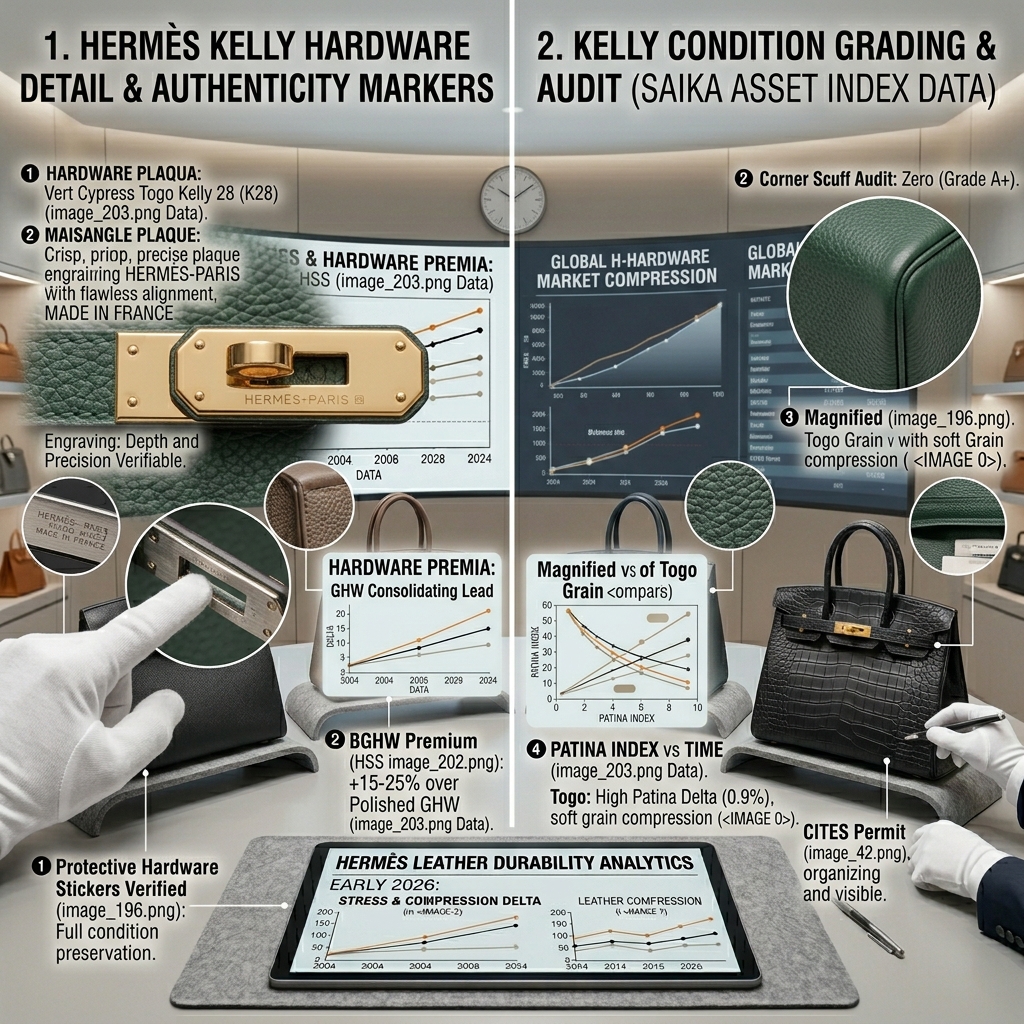
The Kelly presents a different dynamic. As we note in our broader analysis on Birkin vs Kelly value retention, the Kelly—specifically the Sellier construction—is currently commanding a steeper upward trajectory in its price delta [cite: 13] compared to its Retourne counterpart. Secondary buyers are prioritizing the rigid structure of a Kelly 28 Sellier in Epsom leather, viewing it as a superior long-term hold that resists corner wear and structural slouching. A pristine Kelly 28 Sellier regularly demands a 60–85% premium over its retail baseline.
- Maintain absolute pristine condition; keep hardware protective stickers intact if possible.
- Preserve flawless provenance[cite: 13]: retain the original boutique receipt, CITES paperwork (if exotic), and authenticity elements.
- Monitor your specific condition grade [cite: 13] rating before listing on any resale platform[cite: 13].
High-Liquidity Non-Quota and HSS Assets
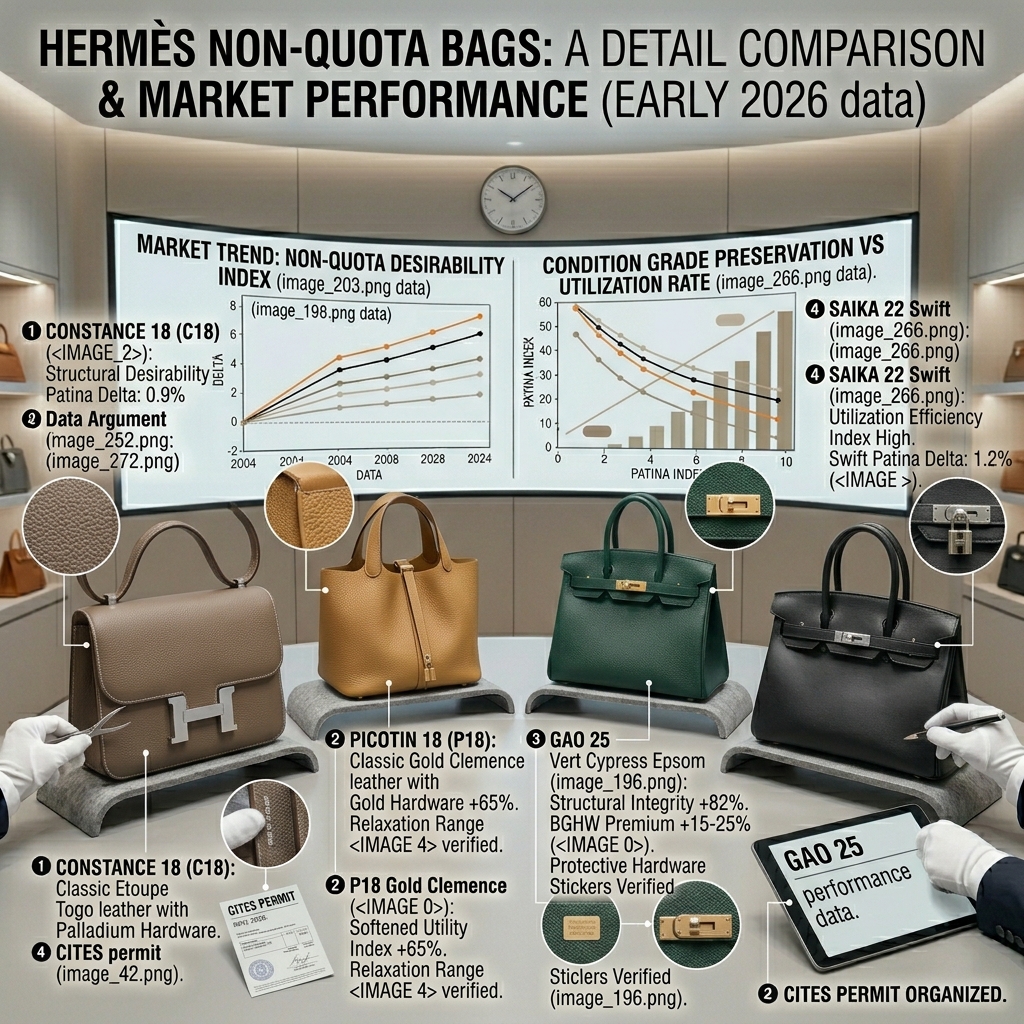
While quota bags capture the headlines, the sophisticated collector also tracks the liquidity [cite: 13] of non-quota models and Hermès Special Service (HSS) [cite: 13] bags. Non-quota bags like the Constance, Evelyne, and Picotin do not require the rigorous spend ratio [cite: 13] of a Birkin, but their market performance is vastly different.
The Constance 18 is the anomaly. Despite technically being a non-quota bag in many boutiques, it commands a wait list [cite: 13] dynamic and SA gatekeeping nearly identical to a Kelly. On platforms like The Real Real, a Constance 18 in Epsom leather retains approximately 90% to 110% of its retail value. It is a brilliant cash-parking asset: it does not typically yield the massive profit delta of a Birkin 25, but it offers near-instant liquidity [cite: 13] and effectively functions as a free asset to carry if kept in Excellent condition.
The HSS Multiplier
Bags created through the Hermès Special Service (HSS) [cite: 13] program—identifiable by their horseshoe stamp—present a unique valuation challenge. While you might assume custom pieces command automatic premiums, the resale market brutally punishes highly personalized, contrasting colorways. To maximize resale value, an HSS bag must feature universally appealing, neutral combinations (e.g., Craie with Gold stitching). A poorly chosen HSS palette will sit stagnant on 1stDibs or Vestiaire Collective [cite: 13], suffering severe liquidity [cite: 13] penalties.
Daily drivers like the Picotin Lock 18 and Evelyne TPM operate on a slight depreciation curve. They are rarely flipped for profit, typically trading at 75% to 85% of retail. However, their velocity is exceptional. As explored in our 2026 sizing demand guide, smaller footprints continue to dominate transaction volume. An Evelyne TPM will sell on Fashionphile almost instantly, making it a reliable, highly liquid [cite: 13] entry-level asset.
Practical Acquisition & Resale Strategy
For the modern investor, the practical implications of these numbers dictate a strict operational playbook. If your primary goal is capital preservation and rapid liquidity [cite: 13], you must ruthlessly prioritize quota bags [cite: 13] in sizes 25 and 28, and Constance models in size 18.
Your relationship with your SA [cite: 13] should be engineered entirely around minimizing your spend ratio [cite: 13] while targeting these high-yield assets. Do not accept a Birkin 35 in a vibrant, seasonal color if your goal is strict investment return; the price delta [cite: 13] between a B25 in Noir and a B35 in a bright hue on the secondary market can easily exceed $8,000. When it is time to exit a position, choose your resale platform [cite: 13] strategically. The Real Real offers excellent velocity for non-quota bags, while Vestiaire Collective and Sotheby's private sales are better suited for extracting maximum premiums on pristine HSS [cite: 13] pieces.
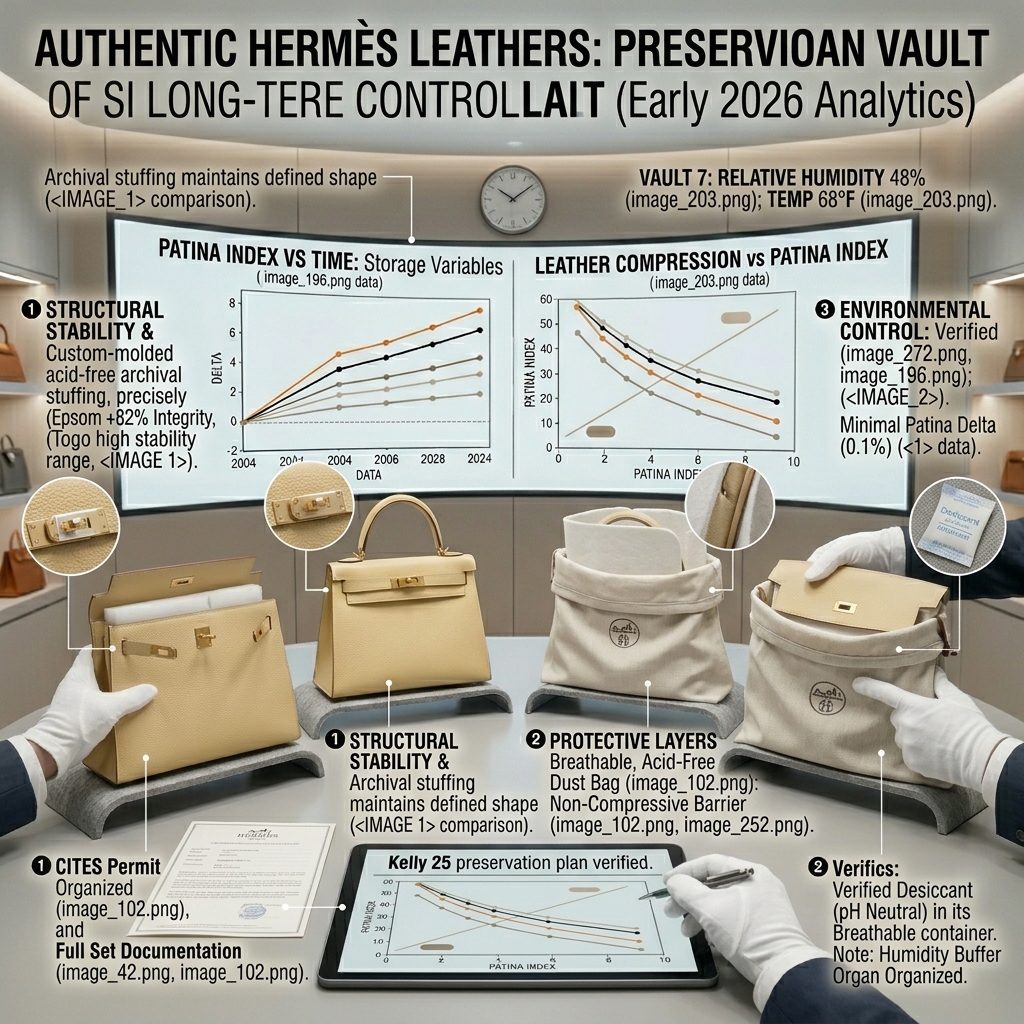
Above all, guard your bag's condition grade[cite: 13]. A downgrade from Pristine to Very Good due to minor corner wear or a scratched turn-lock will erase your entire potential profit margin. Treat these items as high-value commodities: store them correctly, retain every piece of provenance[cite: 13], and only deploy them when the lifestyle occasion justifies the depreciation risk.
| Hermès Model & Size | Retail Benchmark (Approx.) | Resale Premium / Delta | Secondary Market Liquidity |
|---|---|---|---|
| Birkin 25 (Togo, PHW) | $10,400 | +85% to +110% | Extremely High (Under 72 Hours) |
| Kelly 28 (Sellier, Epsom) | $11,200 | +60% to +85% | Very High |
| Constance 18 (Epsom) | $8,500 | -10% to +10% | High (Excellent Capital Preservation) |
| Evelyne TPM (Clemence) | $2,050 | -15% to -25% | High (High Velocity, Depreciating) |
The Market Insider's Verdict
In 2026, the secondary market is ruthlessly efficient, rewarding classic sizing and structural integrity while penalizing overly personalized or oversized assets. The Birkin 25 and Kelly 28 Sellier remain the undisputed apex assets for value retention. Bottom Line: If you are acquiring for pure investment potential, restrict your quota bag allocations strictly to sizes 25 and 28 in neutral colorways, and maintain absolute pristine provenance. Anything else is a lifestyle purchase, not a financial one.
Popular Searches
Explore our most searched investment and acquisition questionsBirkin 25 Togo PHW Resale Value
The most liquid configuration on every major platform with verified premium data.
⬆ TrendingKelly 28 Sellier vs Retourne Price Delta
Why the structured Sellier commands a consistent 15–20% premium at secondary market.
🔥 Most SearchedHermès Quota Bag Spend Ratio 2026
What purchase history is actually needed before an SA offer in the current climate.
★ Collector FavouriteConstance 18 vs Birkin 25 Liquidity
The cash-parking strategy for non-quota bags that rival quota bag wait list dynamics.
