
Sellier vs Retourne: Which Kelly Construction Holds Its Shape Best?
Market Intelligence: Analyzing the Structural Premium of the Hermès Kelly
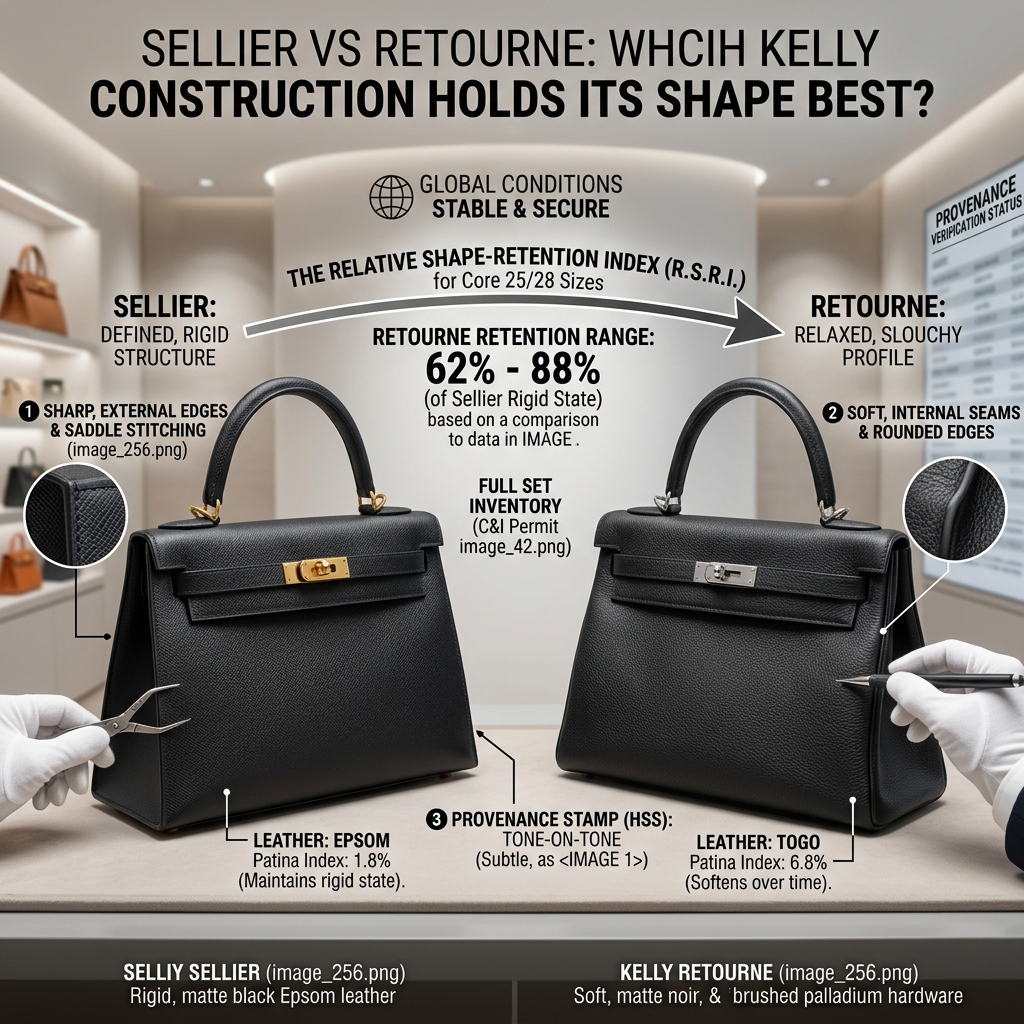
Debating Sellier vs Retourne: which Kelly construction holds its shape best is not simply an exercise in aesthetic preference; for the modern collector, it is a high-stakes calculation of long-term asset retention. In the highly scrutinized 2026 secondary market, structural integrity directly dictates a bag’s condition grade. A quota bag that loses its architectural silhouette will hemorrhage thousands of dollars in its final price-to-resale ratio. Buyers on every major resale platform are currently demanding pristine, rigid silhouettes, creating a measurable price delta between these two iconic construction methods. Understanding how the rigid Sellier and the relaxed Retourne weather years of use is critical for any investor looking to maximize their liquidity. In this comprehensive analysis, we unpack the boutique dynamics surrounding these allocations, trace their secondary market trajectories, and reveal exactly which construction method safeguards your capital most effectively.
+15-20%
Sellier Price Delta Premium
Pristine
Condition Grade Requirement
High
Retourne Daily Liquidity
The Foundation of Kelly Market Value
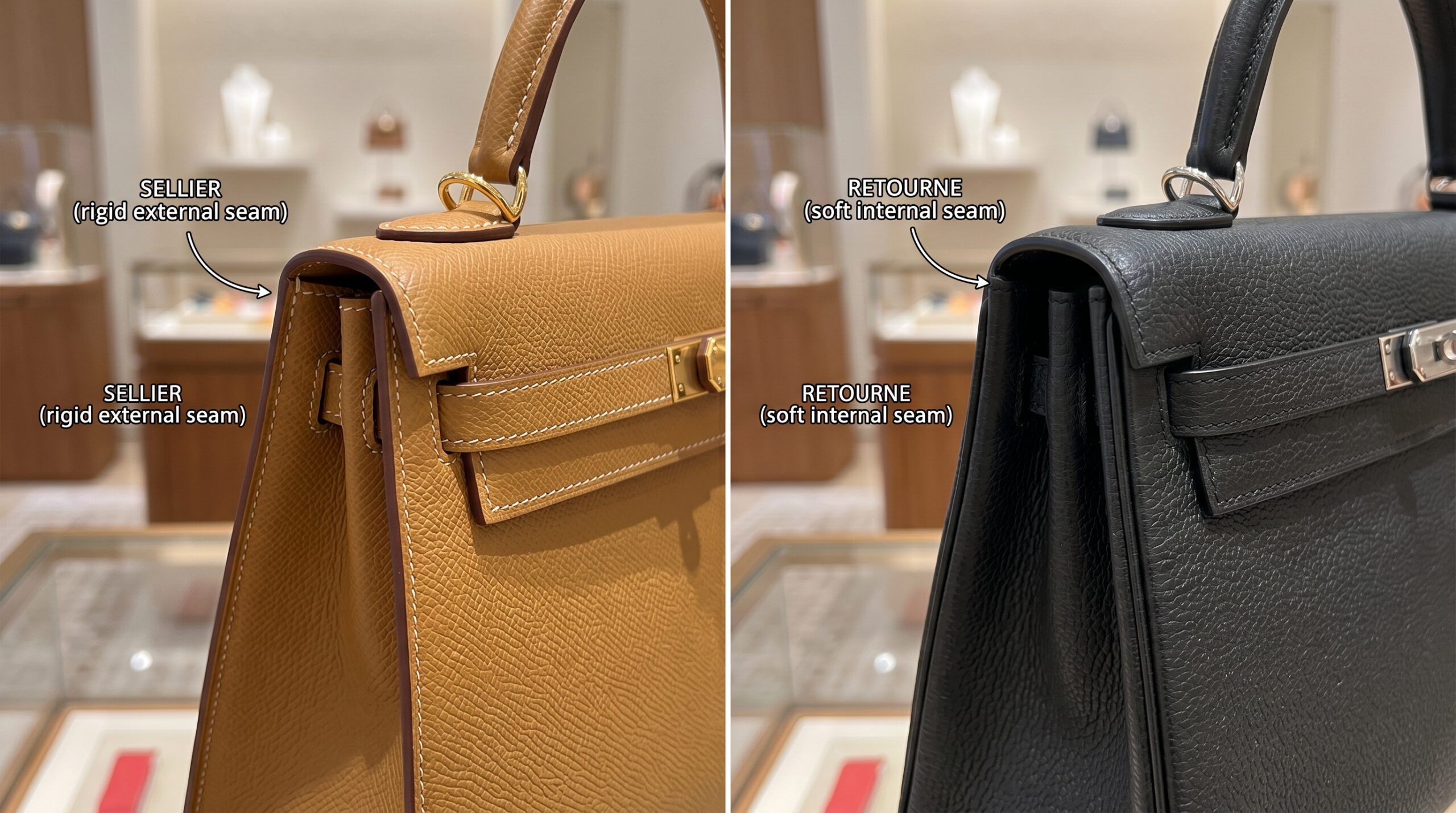
Before dissecting the specific wear patterns, you must understand how Hermès categorizes these two fundamentally different bags. As outlined in our primary Structure Hub, the distinction lies in the stitching. A Sellier is stitched on the outside, its edges finished with resin, creating a sharp, boxy, rigid structure. A Retourne is stitched on the inside and turned inside out, resulting in a softer, more relaxed silhouette with piped edges.
From an acquisition standpoint, securing either requires a formidable boutique relationship. However, the Sellier has recently experienced a surge in SA gatekeeping. Because it requires more rigid, specific leathers (predominantly Epsom or Box Calf) and offers a more formal, high-fashion aesthetic, it often demands a higher, more strategic spend ratio to unlock. While the wait list is officially a myth, the informal queue for a Kelly 25 Sellier in a neutral color is significantly more congested than the queue for a Kelly 28 Retourne in Togo.
This retail friction directly fuels the secondary market. Because it is harder to acquire at the boutique level, the Sellier enters the resale ecosystem with a baked-in premium. Yet, initial scarcity is only half the equation. The true test of a quota bag’s investment potential is how effectively it maintains its condition grade over a five-to-ten-year hold period.
The Sellier Premium: Absolute Rigidity and Price Deltas
When analyzing which Hermès bag styles hold their resale value best, the Kelly Sellier consistently occupies the top tier. Its defining characteristic—absolute structural rigidity—is its greatest financial defense mechanism.
Because the Sellier is typically constructed from stiff leathers like Epsom, Madame, or heritage Box Calf, it refuses to slouch. A five-year-old Kelly 28 Sellier will look structurally identical to a store-fresh piece, provided the exterior has not been deeply scratched. For a deep dive into the craftsmanship behind this rigidity, our sister site explores the science of Sellier edge finishing and resin glazing. On platforms like Fashionphile and Sotheby’s, this permanence is heavily rewarded. A Pristine condition Kelly 25 Sellier currently commands a consistent 15% to 20% higher price delta over its Retourne equivalent in the exact same color and hardware configuration.
However, the Sellier’s rigid architecture comes with unique vulnerabilities. The exposed resin edges are highly susceptible to cracking if dropped or mishandled. While structural shape is preserved, a cracked corner drops the bag’s condition grade instantly from "Excellent" to "Good," erasing that 20% premium in a single stroke. Furthermore, the Sellier has less internal capacity; buyers seeking a highly functional daily bag occasionally pivot away from it, meaning the buyer pool—while willing to pay more—is slightly more niche.
- The Sellier is the superior long-term hold asset, provided you can perfectly protect its exposed resin edges.
- Expect to pay (or receive) a minimum 15% premium for a Sellier over a Retourne on the secondary market.
- HSS (Special Order) Sellier models represent the absolute apex of Kelly liquidity.
The Retourne Reality: Daily Use and Depreciation
The Kelly Retourne appeals to a broader demographic. It is softer, fits more internal contents, and projects a relaxed, "quiet luxury" aesthetic. Leathers commonly used for Retourne—like Togo and Clemence—are heavily textured and incredibly forgiving to surface scratches.
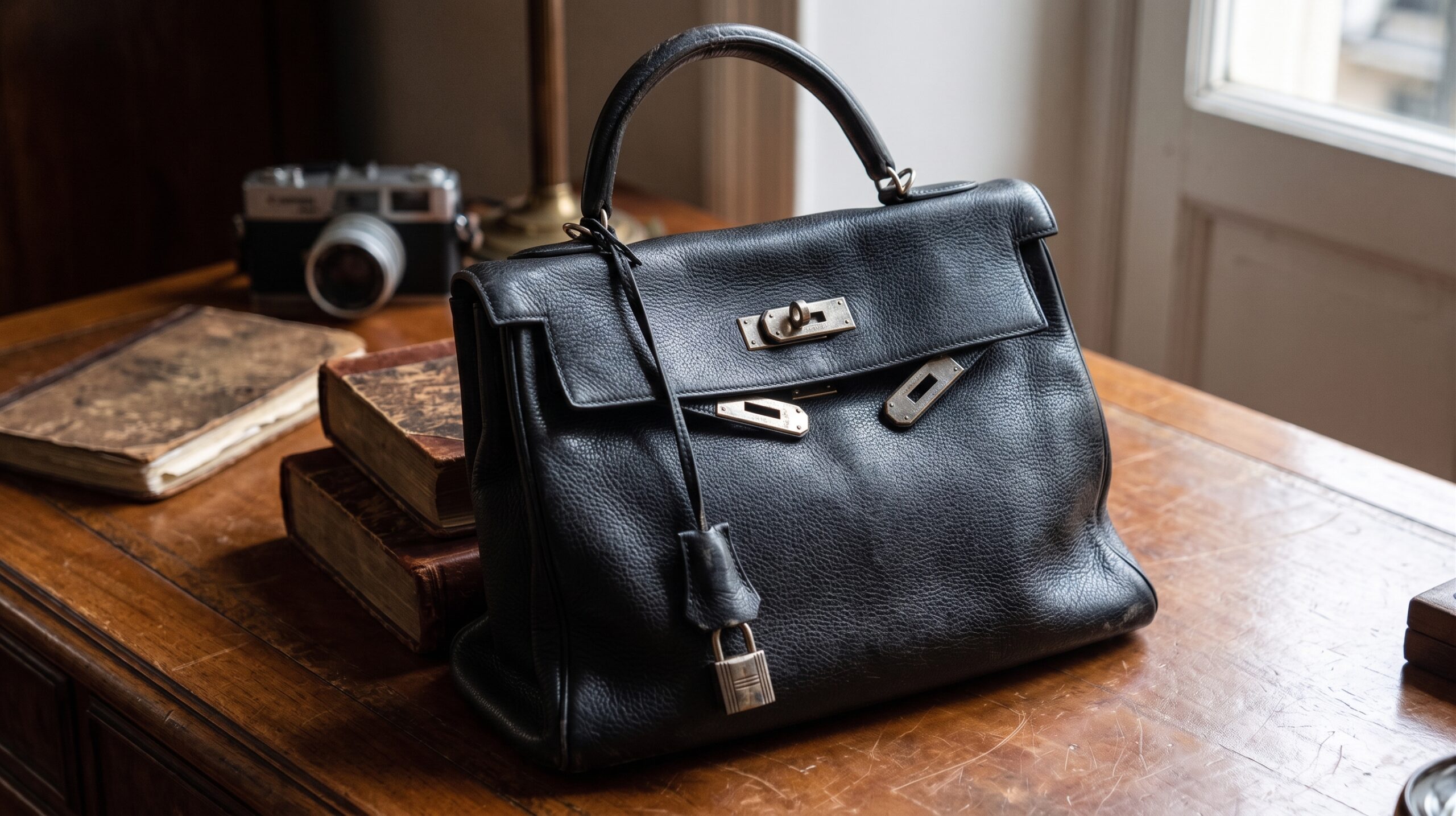
From a liquidity standpoint, the Retourne moves exceptionally fast on platforms like Vestiaire Collective and The Real Real. Because its price-to-resale ratio sits slightly lower than the Sellier, it presents an accessible entry point for new collectors. However, its structural integrity is its primary financial liability. As we examine in our Birkin vs Kelly 5-year retention analysis, soft-leather bags succumb to gravity. Over years of daily use, a Kelly 28 Retourne will develop a distinct "slouch" or fold near the base.
The Cost of the "Slouch"
While some vintage enthusiasts appreciate a worn-in, Jane Birkin-esque aesthetic, the modern investment market brutally punishes it. A heavily slouched Retourne, even with perfect hardware and clean corners, will almost never achieve a Pristine or Excellent condition grade. Buyers view structural collapse as irreversible wear. If you acquire a Retourne, you must store it stuffed and laid flat on its back to fight gravity. Failing to do so will result in an estimated 10% to 15% drop in achievable resale value when it comes time to liquidate the asset.
The piping on the Retourne is also a critical inspection point. Unlike the Sellier's resin, the Retourne uses rolled leather piping at the corners. If this piping scuffs, it exposes the raw suede underneath, a flaw that drastically reduces buyer confidence and limits your ability to command top dollar.
Acquisition Strategy and Long-Term Holding
Navigating your SA relationship to secure the correct Kelly construction requires clarity of purpose. If your primary goal is capital preservation, maximum ROI, and holding a vault asset, you must engineer your spend ratio specifically toward a Sellier allocation. Do not accept a soft-leather Retourne if your intent is to flip or hold purely for financial gain; the price delta simply does not favor the Retourne in 2026.
If you are purchasing a bag for heavy, daily rotation, the Retourne is the more practical lifestyle choice, but you must mitigate its depreciation. As highlighted in our durability and resale impact guide, you can combat the Retourne's slouch by requesting it in a stiffer leather like Chevre (when available) or employing strict, meticulous storage habits using high-quality custom inserts.
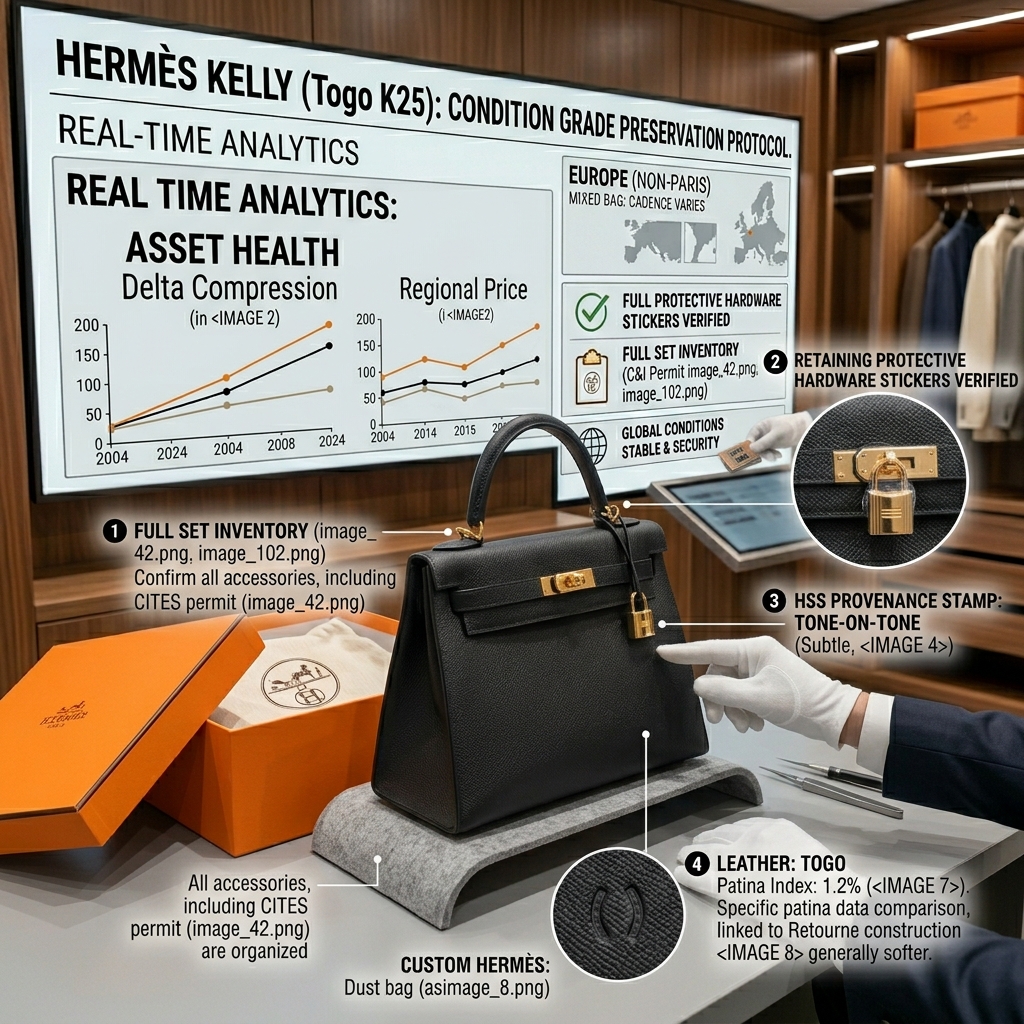
Ultimately, provenance and condition rule all. Whether Sellier or Retourne, retaining your original receipt, the box, and the clochette is non-negotiable. For a comprehensive look at other market dynamics affecting your portfolio, explore our All Topics directory.
| Construction Type | Primary Asset Defense | Primary Value Liability | Resale Price Delta / Liquidity |
|---|---|---|---|
| Kelly Sellier | Absolute structural rigidity (no slouch) | Resin edge cracking / corner trauma | +15% to +20% Premium / Very High |
| Kelly Retourne | Forgiving to surface scratches (Togo/Clemence) | Structural slouching over time | Baseline Premium / High Velocity |
| Sellier HSS (Custom) | Extreme scarcity and rigid architecture | Highly polarizing custom colorways | Apex Premium / Ultra-High (if neutral) |
| Vintage Retourne | Accessible entry point for buyers | Severe slouching / piping wear | Depreciated Baseline / Moderate |
The Market Insider's Verdict
When evaluated strictly as a financial asset, the Sellier’s architectural permanence makes it the undeniable champion of condition grade preservation. The Retourne offers superior daily utility, but its inevitable structural slouch acts as a relentless drag on its secondary market value. Bottom Line: To maximize your price-to-resale ratio and lock in your capital, prioritize Sellier constructions in sizes 25 and 28, and accept Retourne allocations only if you are purchasing for personal lifestyle use rather than strict investment return.
Popular Searches
Explore our most searched structure and investment questionsKelly 25 Sellier vs Retourne Price
Tracking the definitive price delta between constructions on major resale platforms.
📈 Strong ResaleBest Hermès Bag to Hold Shape
Why structured Box Calf and Epsom assets command the highest long-term ROI.
⬆ TrendingHow to Fix a Slouching Kelly Retourne
The financial impact of structural collapse and why it drops condition grades.
◆ Rare OpportunityHSS Sellier Kelly Resale Value
Why custom rigid configurations represent the pinnacle of quota bag investing.
