
Hermès Constance vs Birkin: Which Is the Better Investment?
Market Intelligence: Evaluating Peak Premiums Against High-Liquidity Cash Parking Assets
When high-net-worth collectors ask, Hermès Constance vs Birkin: which is the better investment, they are fundamentally attempting to reconcile two entirely different financial instruments operating within the same luxury ecosystem. In the 2026 secondary market, the Birkin is the undisputed apex predator—an asset designed to generate explosive, immediate profit deltas. The Constance, however, is the ultimate anomaly. While technically classified in many regions as a non-quota bag, it is subjected to a grueling level of boutique gatekeeping that mimics quota restrictions. This artificial retail friction forces the Constance to perform unlike any other non-quota leather good on resale platforms like Vestiaire Collective and Fashionphile. Instead of suffering immediate depreciation, the Constance operates as an elite "cash parking" vehicle, holding its capital value with ironclad stability. To determine which bag deserves your deployment of capital, an investor must look beyond the initial hype cycle and analyze the rigorous mechanics of condition grade vulnerability, hardware degradation, and long-term liquidity. In this comprehensive head-to-head analysis, we break down exactly how these two iconic silhouettes perform under the intense scrutiny of the secondary market.
+85% to +110%
Birkin 25 Peak Resale Premium
90% to 115%
Constance 18 Retail Value Retention
Pristine
Condition Grade Mandatory for Max ROI
Table of Contents
The Foundation: Quota vs. Pseudo-Quota Dynamics
To accurately evaluate the return on investment (ROI) for these two bags, one must first consult our Comparisons Hub to baseline the acquisition friction required to obtain them. The Birkin is the definition of a quota bag. You are strictly limited in how many you can purchase annually, and unlocking an allocation requires engineering a massive spend ratio (frequently 2:1 or higher in high-margin departments like fine jewelry and ready-to-wear). Your Sales Associate (SA) must fight for your profile in boardroom allocation meetings.
The Constance occupies a nebulous, highly frustrating gray area. In most boutiques, the Constance is technically a non-quota bag, meaning it does not count against your annual Birkin/Kelly limit. However, due to severe manufacturing constraints and overwhelming global demand, SAs gatekeep the Constance just as aggressively as a Birkin. It is a "pseudo-quota" bag. You cannot simply walk in and buy one. Securing a Constance 18 in a desirable neutral often requires its own dedicated boutique relationship and unwritten spend history.
This retail friction is the engine that drives secondary market valuations. Because the Constance is so difficult to extract from the boutique, secondary buyers on 1stDibs and The Real Real are willing to pay retail parity—or a slight premium—to bypass the SA gatekeeping. However, because it does not carry the mythical, globally recognized status of the Birkin, the absolute ceiling on its price delta is mathematically capped.
Price Deltas: Capital Gains vs. Cash Parking
When analyzing the raw transactional data, the Birkin operates on an entirely different financial stratosphere. A Birkin 25 in Togo leather with Palladium hardware, assuming a retail baseline of approximately $10,400, will routinely sell for $18,500 to $22,000 on major resale platforms when presented in Pristine condition. This represents a massive +80% to +110% price delta. If the bag is an Hermès Special Service (HSS) allocation in a universally appealing tone-on-tone colorway, that premium scales even higher. The Birkin is a speculative growth asset.
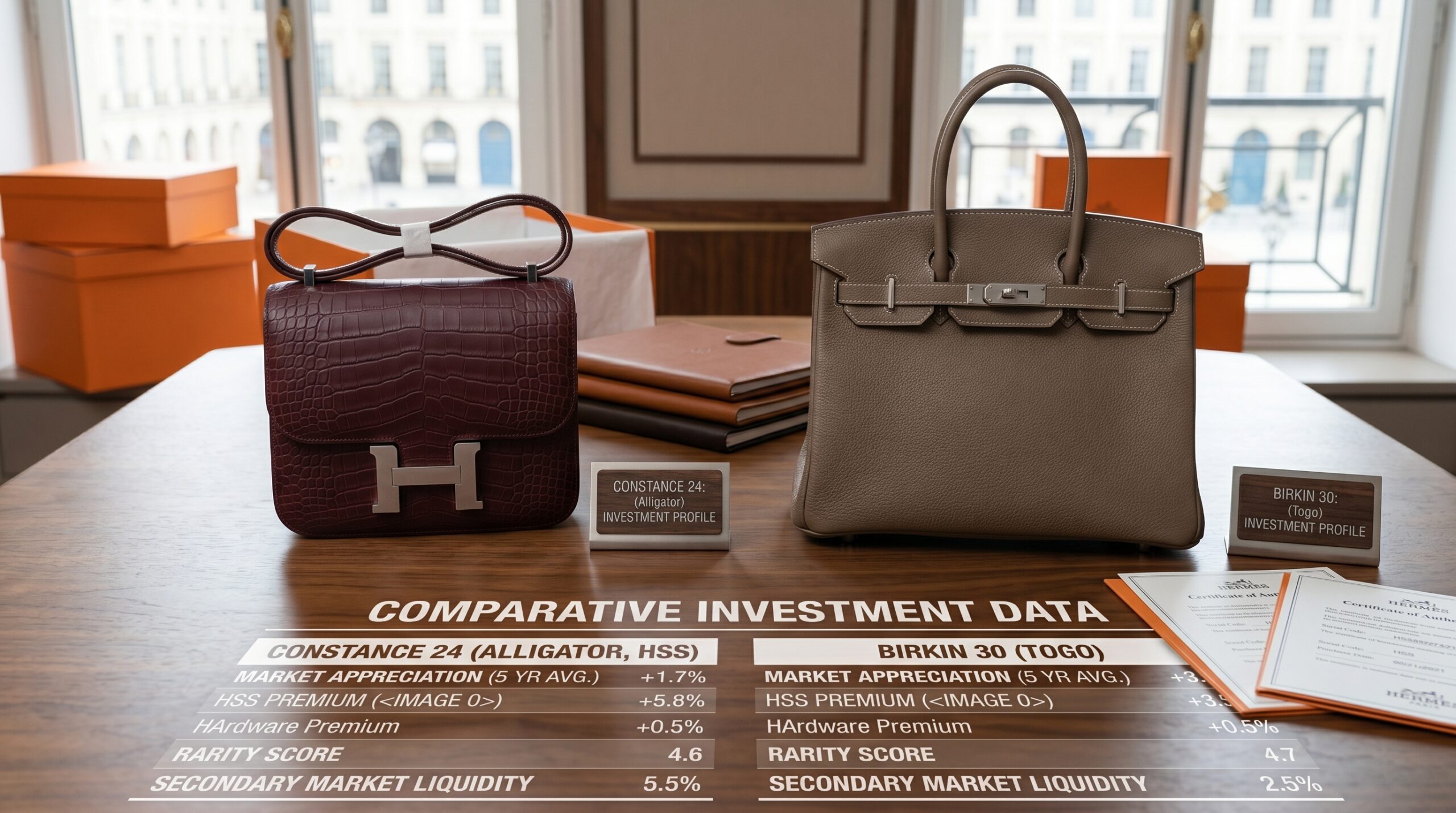
The Constance, specifically the highly desirable Constance 18 (Mini Constance), performs a different function. With a retail benchmark hovering around $8,500 for Epsom leather, a Pristine Constance 18 on Vestiaire Collective typically trades between $7,600 and $9,800. It retains roughly 90% to 115% of its original retail value. While it rarely generates a massive profit windfall after platform consignment fees are deducted, it effectively acts as high-yield "cash parking." As we explored in our analysis of which Hermès bag sizes have the highest resale demand, smaller footprints guarantee extreme velocity. If you need to liquidate a Constance 18 in Noir Epsom, you will find a buyer almost instantly, allowing you to recapture your deployed capital without suffering the 30% to 40% depreciation typical of other non-quota bags like the Evelyne or Lindy.
- The Birkin 25 provides the highest absolute capital gain in the Hermès portfolio.
- The Constance 18 provides exceptional capital preservation and rapid liquidity.
- Avoid the Constance 24 if investing; the larger size suffers from market apathy and notable depreciation.
Condition Grade Vulnerabilities: The H Buckle Liability
The true test of an investment asset is how easily it defends its condition grade during active use. The secondary market brutally punishes physical wear, and both the Birkin and the Constance possess distinct, fatal vulnerabilities that can annihilate their price-to-resale ratio.
The Birkin’s primary weakness is structural slouching, particularly in soft leathers like Togo or Clemence. Without a rigid internal insert, gravity will cause a Birkin 30 to collapse inward, instantly dropping its condition grade from "Excellent" to "Very Good." We have thoroughly documented the long-term effects of this in our Birkin vs Kelly 5-year value retention guide. Furthermore, the exposed base corners of a Birkin are prone to scuffing, which requires costly spa refurbishment to correct.
The Constance Hardware Target
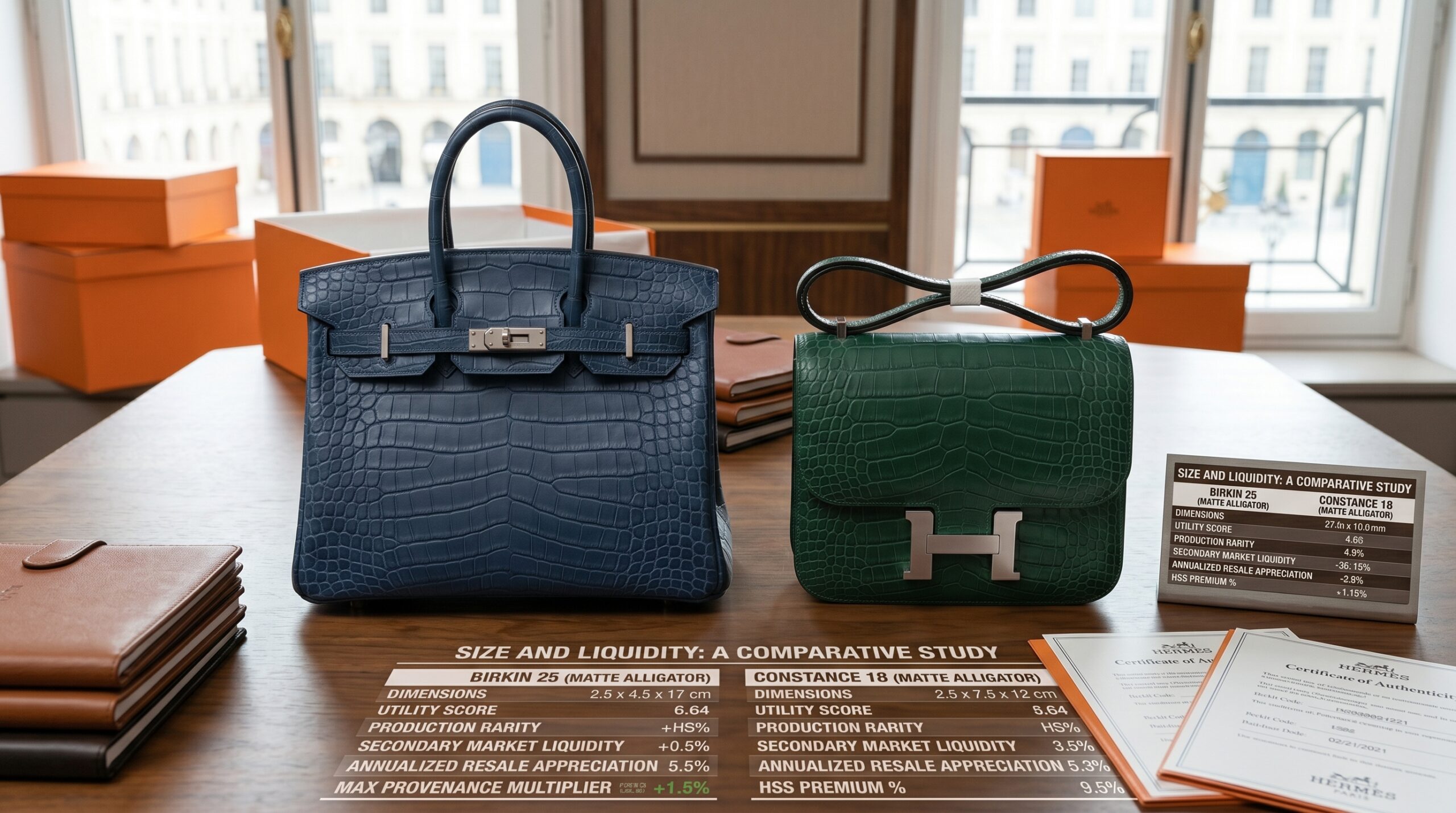
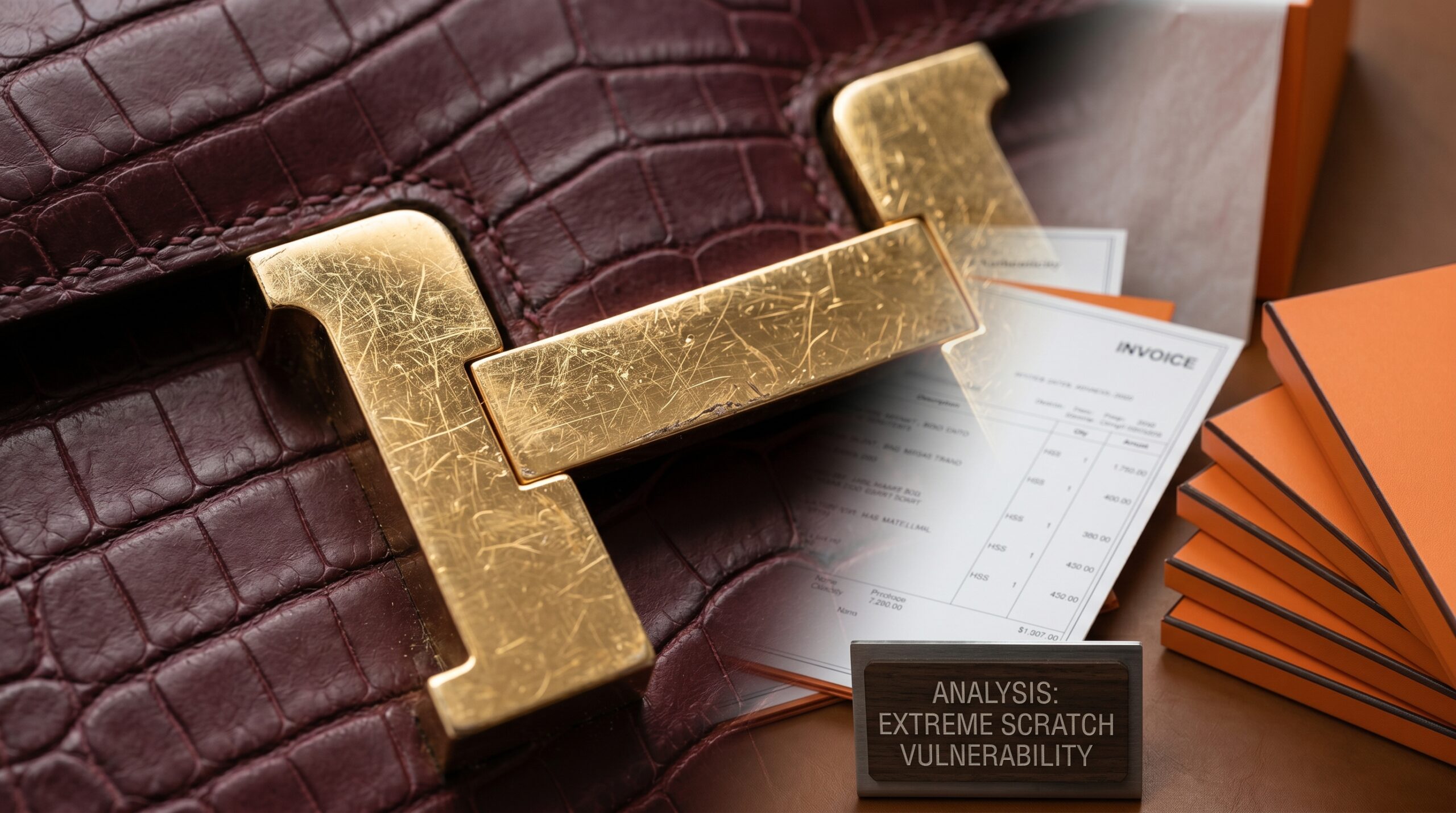
The Constance faces an entirely different threat: the massive, central 'H' buckle. This prominent hardware plaque is a magnet for micro-scratches and deep gouges. Because the Constance is a shoulder/crossbody bag, the buckle frequently brushes against zippers, car doors, and jewelry. A deeply scratched H buckle destroys buyer confidence and triggers an immediate liquidity freeze on resale platforms. Furthermore, the Constance is predominantly crafted in Epsom or Box Calf leather. While Epsom holds its rigid structure perfectly, a scratch on the smooth Box Calf surface is irreversible. For a deep forensic look at how these metals resist impact and tarnishing, our sister site provides an exhaustive analysis on the science of Hermès hardware scratch resistance.
To defend the price delta of a Constance, you must leave the factory protective plastics on the hardware for as long as possible, or apply precision-cut aftermarket films if you intend to carry it. A Constance listed with "scratched hardware" will force you to accept buyout offers well below your retail baseline.
Practical Implications and Portfolio Strategy
If you are engineering a comprehensive luxury portfolio in 2026, the decision is not binary; these bags serve sequential purposes. When navigating your SA relationship, the Constance can be utilized as a strategic stepping stone. Because it is heavily gatekept, successfully securing a Constance proves to the boutique management that you are a serious, long-term collector. While the leather purchase does not technically apply to your Birkin spend ratio, the internal goodwill it generates acts as a powerful catalyst for future quota allocations.
If you are deploying capital strictly for maximum financial return, you must relentlessly target the Birkin 25 in classic neutrals. The profit margin simply cannot be matched by any other leather good. However, if your portfolio requires diversification into highly liquid, low-risk assets that you can actually carry occasionally without suffering massive depreciation, the Constance 18 in Epsom leather is unparalleled. For broader strategies on navigating these market categories and timing your liquidations, explore our Market & Resale archives.
In either scenario, absolute provenance is your shield. Retain the original boutique receipt, the box, and the dust bags. The modern secondary buyer is seeking flawlessness, and they will weaponize any missing paperwork to reduce your final payout.
| Model & Size | Primary Vulnerability | Resale Premium / Delta | Secondary Market Liquidity |
|---|---|---|---|
| Birkin 25 (Togo/Epsom) | Corner wear / Handle darkening | +80% to +110% (Pristine) | Ultra-High (Apex Asset) |
| Constance 18 (Epsom) | H Buckle scratching | -10% to +10% (Capital Preservation) | Very High (Cash Parking) |
| Birkin 30 (Togo/Clemence) | Structural slouching over time | +60% to +80% | High |
| Constance 24 | Oversized scale lacks demand | -20% to -30% (Depreciating) | Moderate to Low |
The Market Insider's Verdict
Comparing these two assets is a matter of identifying your financial objective. The Birkin is an aggressive growth asset; the Constance is a defensive capital preservation tool. Bottom Line: If your sole objective is to extract maximum profit and generate a massive price delta, the Birkin 25 is the undisputed winner. However, if you require a highly liquid, stable asset that allows you to park cash with minimal depreciation risk, the Constance 18 in Epsom leather serves as a flawless secondary instrument.
Popular Searches
Explore our most searched comparison and investment questionsConstance 18 vs Constance 24 Resale Value
Tracking the exact depreciation penalty applied to the larger, less desirable silhouette.
📈 Strong ResaleBirkin vs Kelly vs Constance Investment
Ranking the holy trinity of Hermès bags by their long-term condition grade retention.
⬆ Rising DemandHow to Protect Hermès Constance Buckle
The definitive strategies required to prevent micro-scratches from destroying your price delta.
★ Collector FavouriteIs the Constance a Quota Bag 2026
Unpacking the boutique gatekeeping dynamics that artificially inflate secondary market demand.
