
Which Hermès Bag Sizes Have the Highest Resale Demand in 2026?
Market Intelligence: How Dimensions Dictate Liquidity and Price Deltas in the Secondary Market
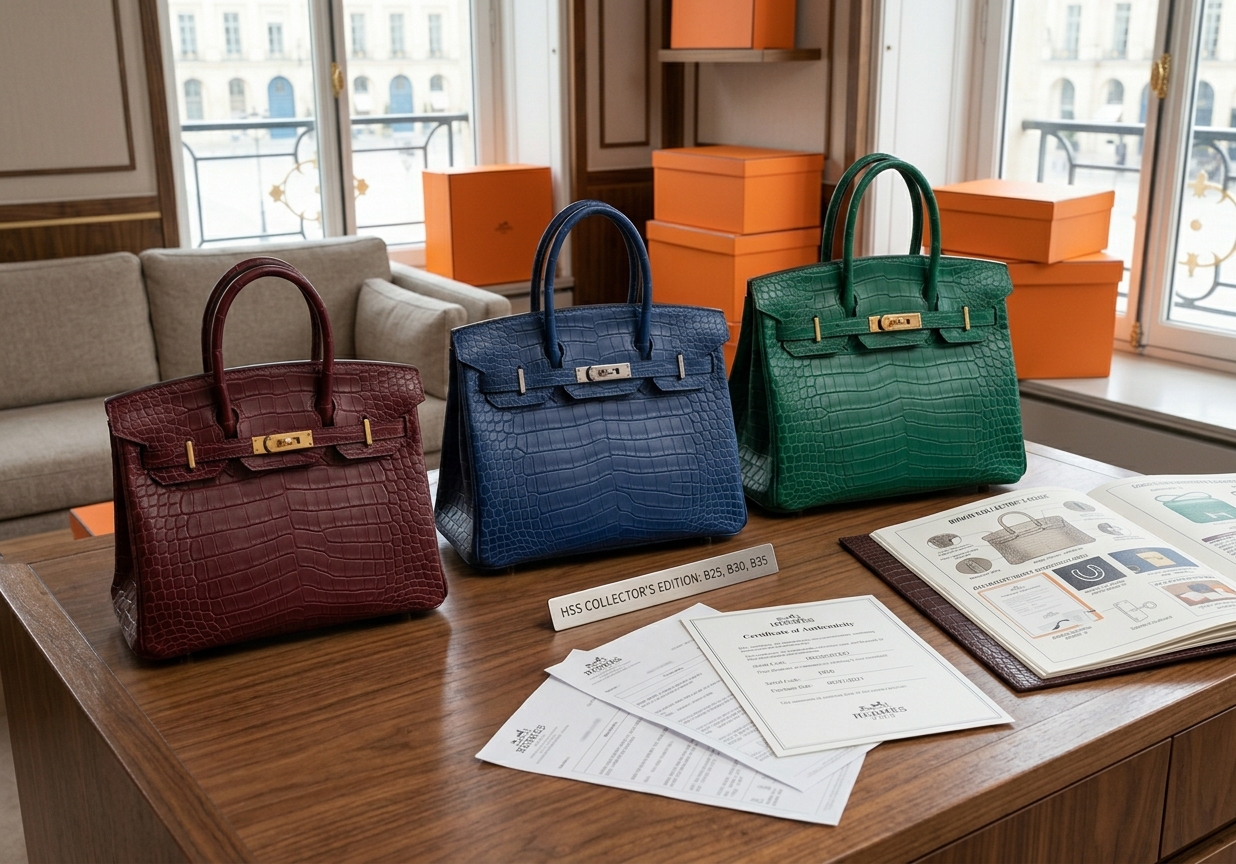
Identifying exactly which Hermès bag sizes have the highest resale demand in 2026 is the fundamental axis upon which modern acquisition strategy pivots. In the current secondary market landscape, the dimensions of a quota bag dictate its liquidity far more aggressively than its leather type or even its colorway. We are operating in an era defined by a ruthless "flight to petite"—a global market shift away from heavy, cumbersome luxury carriers toward streamlined, hyper-functional silhouettes. For the investor, this means the historical safety nets have shifted. A collector who assumes a Birkin 35 holds the same financial gravity as a Birkin 25 is operating on outdated intelligence and is actively jeopardizing their portfolio. When you spend tens of thousands of dollars cultivating a boutique relationship, you cannot afford to have your capital stranded in an oversized asset that major resale platforms refuse to prioritize. In this comprehensive analysis, we will map out the precise price deltas separating the 25, 30, and 35 models, unpack why condition grades collapse faster on larger bags, and define the exact sizing targets required to maximize your return on investment.
+80% to +110%
Avg. Birkin 25 Resale Premium
Size 25 & 28
Highest Liquidity Models
Pristine
Condition Grade Mandatory for Max ROI
The Foundation of Sizing Economics
To evaluate the financial impact of sizing, investors must consult our primary Size & Lifestyle Matching Guide to understand how Hermès controls production and allocation. The dimensions of a quota bag are not merely aesthetic choices; they represent tiered levels of boutique scarcity. At the retail level, manufacturing a Birkin 25 requires immense precision and historically, lower volume output than the traditional workhorse Birkin 35. Consequently, your Sales Associate (SA) receives far fewer size 25 allocations per season.
Because the boutique supply is violently constricted, the requisite spend ratio to unlock a smaller bag scales proportionally. An SA will often require a client to demonstrate a much higher, more consistent spend history in fine jewelry and ready-to-wear before advocating for a Kelly 25 Sellier compared to a Kelly 32 Retourne. The informal wait list for smaller sizes is intensely congested.
This retail friction acts as a massive pressure cooker for the secondary market. Buyers on platforms like Vestiaire Collective, The Real Real, and 1stDibs are acutely aware of how difficult it is to pry a size 25 from an SA's grasp. They are willing to pay an astronomical price delta to bypass that grueling boutique relationship-building phase. Therefore, when evaluating size, you are directly evaluating the secondary market's willingness to subsidize the friction cost of your boutique acquisition.
The Unrivaled Dominance of the 25 and 28
When analyzing the data across top-tier resale platforms, two specific footprints monopolize the apex of investment returns: the Birkin 25 (B25) and the Kelly 25/28 (K25/K28).
The Birkin 25 is currently the most liquid asset in the luxury sector. Assuming a retail benchmark of approximately $10,400 for Togo leather with Palladium hardware, a pristine B25 on Fashionphile or Sotheby's frequently commands a resale price between $18,500 and $22,000. This translates to an immediate +80% to +110% price delta. Its dominance is driven by the global shift toward "stealth wealth" evening wear and the practical reality that modern high-net-worth individuals no longer use luxury handbags to carry laptops or heavy daily essentials. As we noted in our comprehensive analysis detailing which Hermès bag styles hold their resale value best, the 25 perfectly bridges the gap between a daily driver and an evening statement piece.
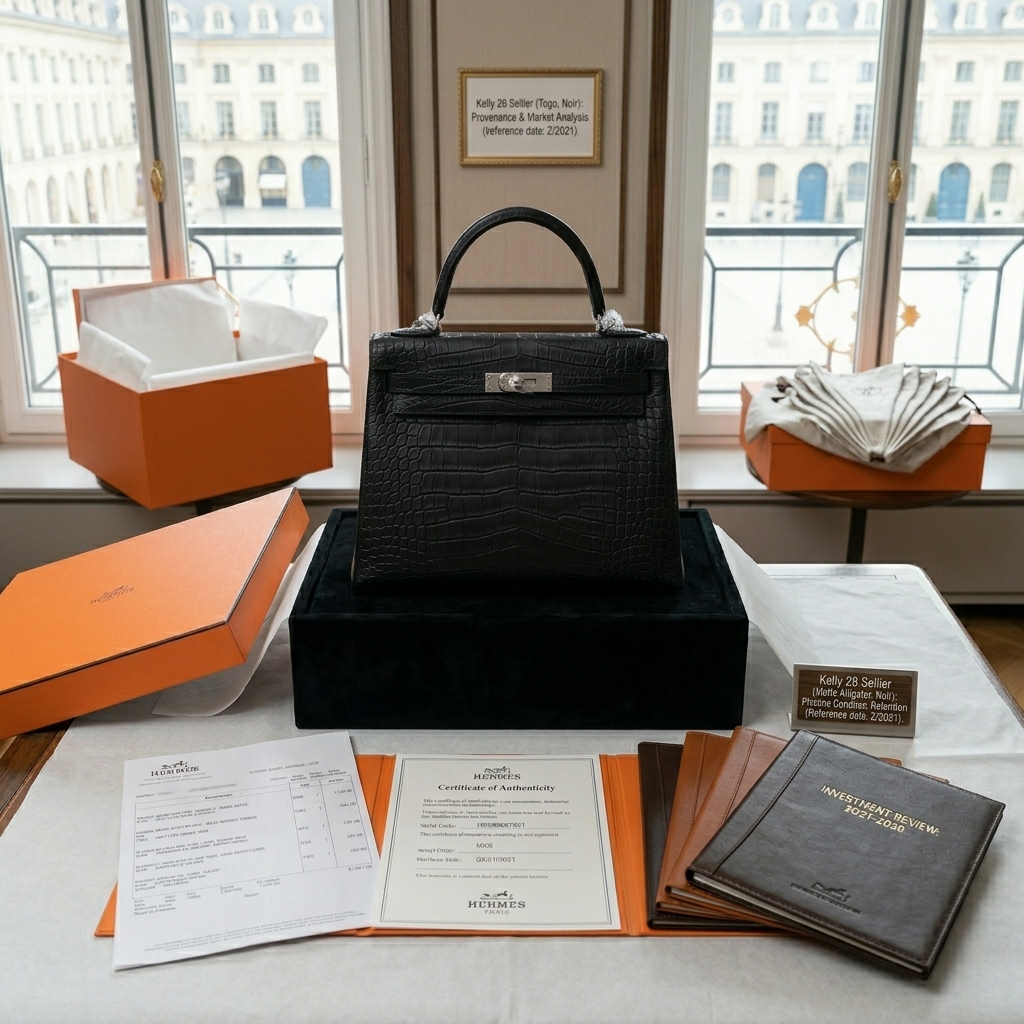
The Kelly 28, particularly in the rigid Sellier construction, occupies a similar powerhouse position. While the K25 is slightly more coveted for pure evening aesthetics, the Kelly 28 remains the ultimate "safe harbor" vault asset. It provides marginally more utility than the 25 while entirely avoiding the structural depreciation risks that plague larger sizes. A Kelly 28 Sellier in Epsom leather maintains an impenetrable condition grade over decades of use, guaranteeing that its price-to-resale ratio remains fiercely insulated against market fluctuations.
- The Birkin 25 and Kelly 25 command the highest percentage markup over retail.
- The Kelly 28 Sellier represents the most secure, structurally sound long-term hold in the sizing matrix.
- Absolute Pristine condition and flawless provenance (receipt, box, clochette) are required to extract the maximum delta from these sizes.
The Liquidity Freeze of the 35+ and Rise of Minis
The starkest revelation in the 2026 data is the near-total collapse of the Birkin 35 and Kelly 32/35 as high-yield investment vehicles. While these were the foundational "status symbols" of the early 2000s, the modern secondary market brutally punishes their scale.
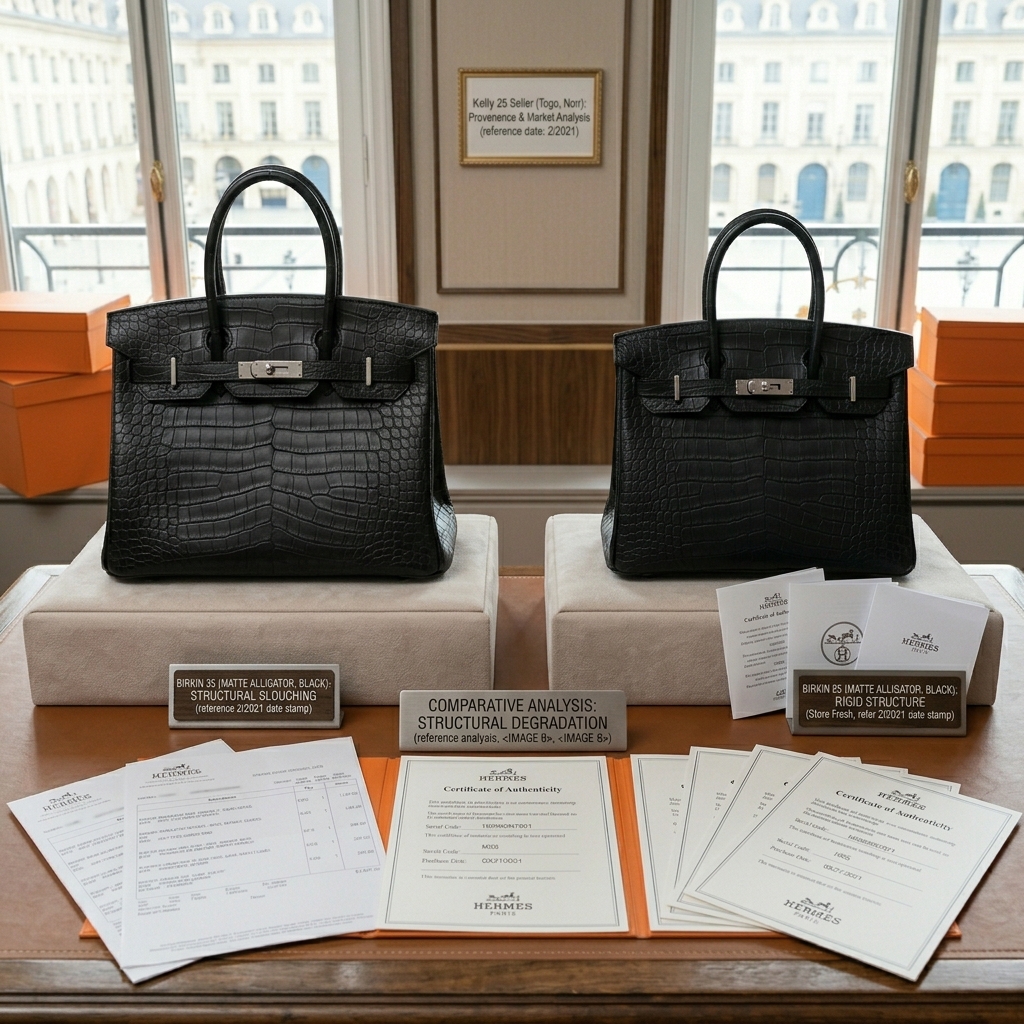
A Birkin 35 is heavy. When loaded, it forces tension on the handles and, more catastrophically, gravity pulls the soft Togo or Clemence leather downward. Over a short period of use, the bag develops a severe structural slouch. Resale platforms penalize slouching relentlessly, immediately dropping the condition grade from "Excellent" to "Very Good" or "B." A B35 with slouching often sells at retail parity or even a loss after consignment fees. For a deep forensic understanding of why this occurs, our sister site explores the science of leather weight capacity and structural tension, proving that physics is the ultimate enemy of oversized luxury leather goods.
The Boutique "Poison Pill" Strategy
Because the secondary market has frozen out larger sizes, SAs are often left with excess inventory of Birkin 35s and 40s in less desirable colors. SAs will frequently use these bags as "Poison Pills" for new, uneducated clients. They will offer a B35 to a client who has barely met the spend ratio, framing it as a lucky, fast-tracked allocation. If the client's goal is pure financial ROI, accepting this oversized bag is a catastrophic error. It traps their capital in an asset with a near-zero or negative price delta.
Conversely, the ultra-mini category continues to thrive. The Mini Kelly (Kelly 20) and the non-quota Constance 18 operate with extreme velocity. While they lack the daily utility of a B25, their microscopic production numbers ensure that their secondary market liquidity rivals—and occasionally surpasses—standard quota bags.
Acquisition Tactics for Sizing Success
Navigating your boutique relationship requires absolute clarity regarding dimensions. When you initiate your wish list strategy with your SA, you must install hard parameters. You must explicitly state that while you are open to various classic neutral colorways, your size ceiling is 30 for a Birkin and 28 for a Kelly. Do not hedge. Communicating that you will accept "any size just to get a bag" signals to the SA that you are an amateur collector willing to absorb their unsellable boutique inventory.
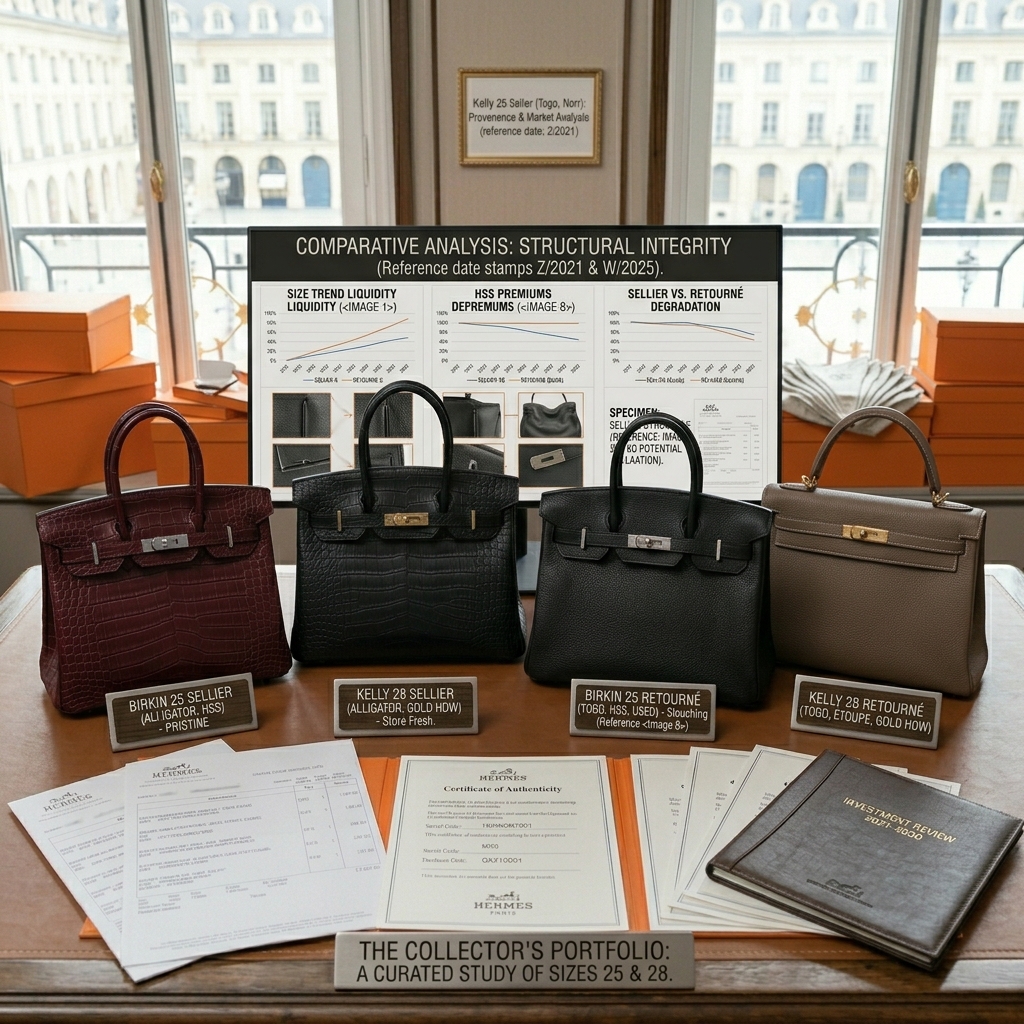
If you are offered a Birkin 30, you must evaluate it as a strong secondary option. As we dissect in our Birkin vs Kelly 5-year value retention analysis, the Birkin 30 is the most functional luxury daily driver. While its price delta might sit 10% to 15% lower than the B25, it still reliably commands a +60% to +80% premium in Pristine condition. It is a highly secure place to park capital, provided you use an internal structural insert to prevent it from slouching over time.
Finally, for collectors looking to liquidate assets, timing is critical. If you are holding a Pristine Birkin 25 or Kelly 28, the current market is ravenous; utilize platforms like Vestiaire Collective to dictate your maximum asking price. If you are unfortunate enough to be holding a heavily used B35, do not expect a windfall. You must treat it as a lifestyle asset, recognizing that the era of oversized Hermès dominating the secondary market has firmly closed. For more holistic strategies on managing your overall portfolio, explore our comprehensive All Topics directory.
| Hermès Model & Size | Retail Scarcity Level | Resale Premium / Price Delta | Secondary Market Liquidity |
|---|---|---|---|
| Birkin 25 / Kelly 25 | Extreme (Highest Spend Ratio required) | +80% to +110% (Pristine) | Ultra-High (Under 48 Hours) |
| Kelly 28 (Sellier) | Very High | +70% to +90% | Extremely High (Vault Asset) |
| Birkin 30 | High (Standard allocation target) | +60% to +80% | Very High (Most robust buyer base) |
| Birkin 35 / Kelly 32+ | Moderate (Boutique push items) | -10% to +10% (Retail Parity) | Low (High risk of liquidity freeze) |
The Market Insider's Verdict
The 2026 secondary market does not reward carrying capacity; it heavily rewards compact architectural precision. Oversized quota bags succumb to physical depreciation and shifting global trends, bleeding away your investment capital. Bottom Line: To absolutely guarantee maximum liquidity and lock in the highest possible price-to-resale ratio, collectors must aggressively reject allocations larger than a size 30, focusing their entire spend ratio leverage on securing Pristine size 25 and 28 assets in classic, universal neutrals.
Popular Searches
Explore our most searched sizing and investment acquisition questionsBirkin 25 vs 30 Resale Value 2026
Tracking the definitive price delta between the two most highly requested Hermès footprints.
📈 Strong ResaleKelly 25 Sellier vs Retourne Liquidity
Analyzing how rigid structural retention affects the secondary market velocity of mini sizes.
⬆ Rising DemandHermès Mini Kelly Resale Price Drop
Navigating the volatile micro-bag market and ensuring you secure the correct configuration.
◆ Rare OpportunityBirkin 35 Resale Value Collapse
Why oversized quota bags fail to command premiums and how to liquidate them effectively.
