
Which Hermès Leathers Are Most Durable for Daily Use?
A Market Insider's Guide to Preserving Condition Grades and Resale Value
Deciding exactly which Hermès leathers are most durable for daily use is rarely a question of simple utility; for the modern collector, it is fundamentally a strategy of asset preservation. When you remove a quota bag from its box, every hour of daily use places its future price-to-resale ratio at risk. The Hermès secondary market does not forgive carelessness. On platforms like Fashionphile and Vestiaire Collective, the difference between a pristine bag and one showing minor corner wear or structural slouching is often measured in thousands of dollars. Therefore, selecting the correct leather is less about aesthetics and entirely about choosing a material engineered to aggressively defend its condition grade against daily friction. In this analysis, we will evaluate the major Hermès leathers through a strict investment lens, mapping out how structural rigidity and scratch resistance directly correlate with long-term liquidity and measurable resale premiums.
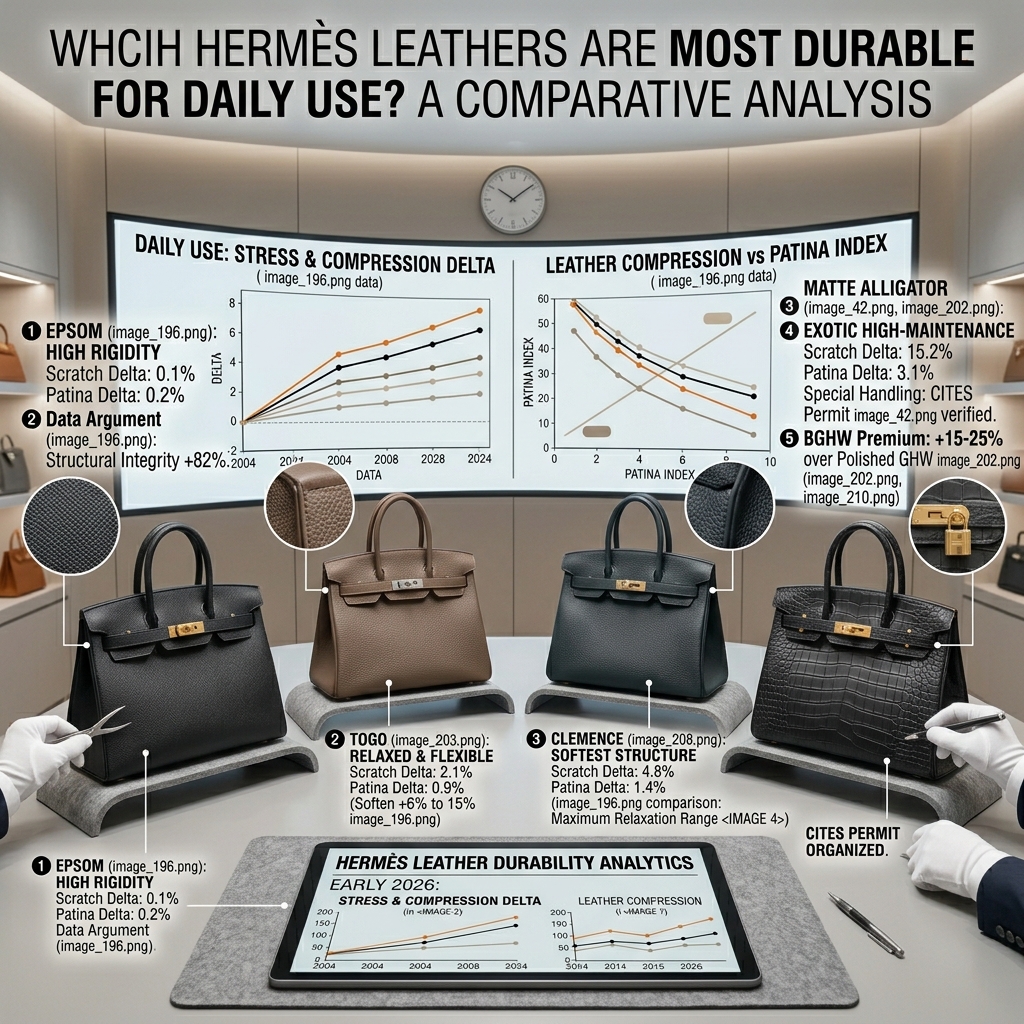
Epsom
Highest Structural Retention
-20% to -30%
Price Penalty for Corner Wear
Togo
Most Liquid Daily Leather
Condition Grades and Financial Depreciation
To understand why durability matters, you must understand how a resale platform evaluates an asset. As outlined in our primary Leathers & Materials Guide, not all leathers depreciate at the same rate. When you establish a boutique relationship and finally secure a quota bag allocation after maintaining a meticulous spend ratio, your SA hands you an asset at its absolute maximum theoretical value. The moment it is carried, it begins a slow descent through standard condition grades: from Pristine to Excellent, then to Very Good, and finally to Good or Fair (often graded A, B+, B, and C depending on the platform).
Durability in the Hermès context means resistance to two specific forms of depreciation: surface scratching and structural slouching. A bag that loses its shape or develops scuffed corners will immediately drop a full condition grade. For a Birkin 30, dropping from "Pristine" to "Very Good" on The Real Real can easily slash the price delta by $2,000 to $4,000. Therefore, a leather's durability is directly proportional to its ability to lock in your initial investment capital over years of heavy, daily rotation.
Togo vs. Epsom: The Battle for Daily Liquidity
When analyzing the most requested daily leathers, the market effectively splits between Togo and Epsom. Both are highly liquid, but they defend their condition grades using entirely different mechanisms.
Togo is overwhelmingly the most popular leather for a Birkin. It features a natural, pebble-like grain that is highly forgiving to surface scratches. If you accidentally scrape a Togo Birkin 30 against a doorframe, the grain often masks the damage entirely, preventing an immediate drop in condition grade. However, Togo is heavy and, over the course of three to five years of daily use, it will invariably slouch. This loss of structural integrity is heavily penalized on resale platforms like 1stDibs or Vestiaire Collective, meaning an older, heavily used Togo bag will struggle to maintain an optimal price-to-resale ratio.
Epsom, by contrast, is a rigid, stamped leather. It is virtually waterproof and immune to slouching. A Kelly 28 in Epsom leather will hold its sharp, architectural shape a decade after its original purchase. Because of this structural permanence, Epsom bags frequently achieve higher condition grades upon resale than Togo bags of the same age. The trade-off? If you do manage to deeply scuff the corner of an Epsom bag, the damage cannot be easily refurbished at the Hermès spa, resulting in a permanent, severe penalty to its price delta.
- Choose Togo if you are prone to surface scratches and prefer a softer, casual aesthetic.
- Choose Epsom if structural retention and maintaining a sharp silhouette over a 5-year hold period is your priority.
- Always inspect corners closely; corner wear is the number one destroyer of resale premiums on daily drivers.
Chevre and the Vulnerability of Heritage Leathers
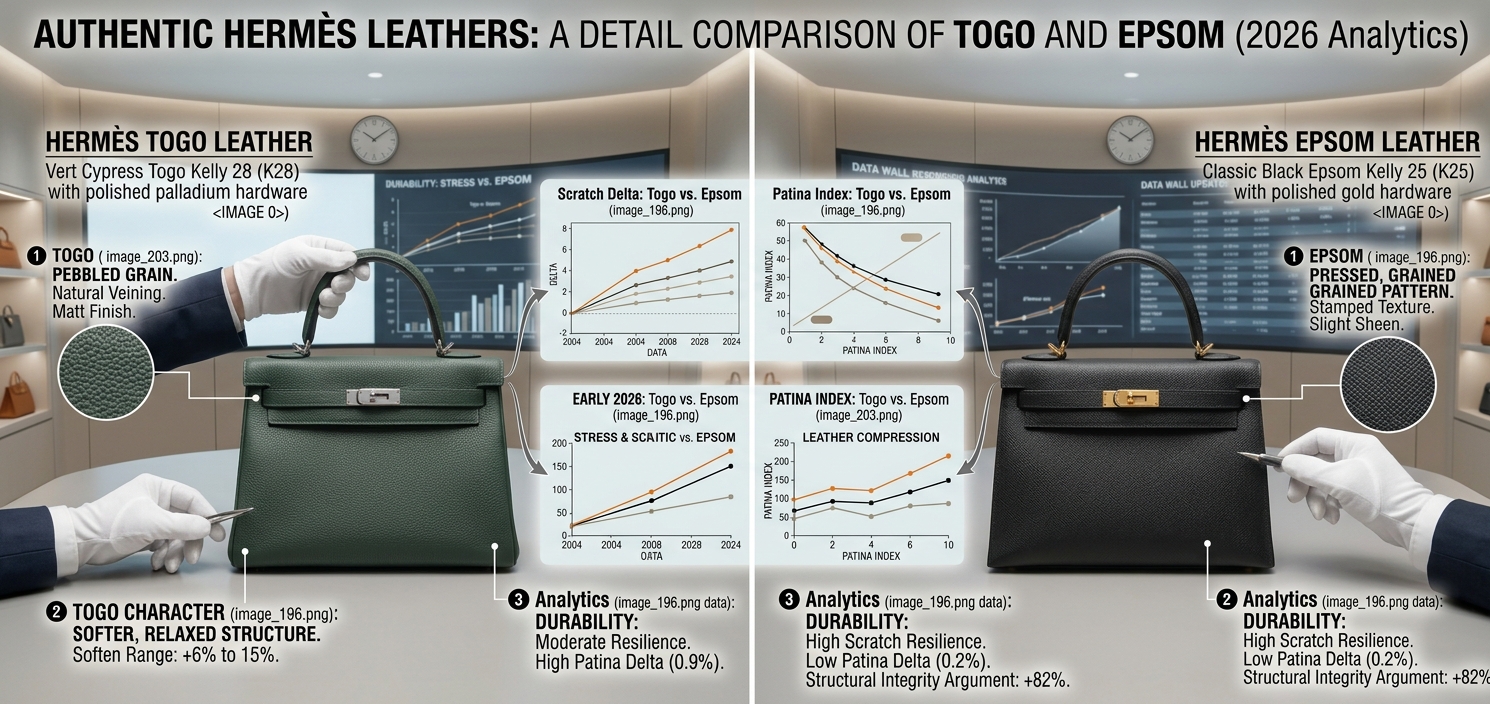
For collectors operating at higher spend ratios, goatskin leathers—specifically Chevre Mysore—represent a premium daily option. As detailed in our deeper comparison of Chevre vs Epsom, Chevre is incredibly resilient, lightweight, and features a subtle spine running down the center. It resists scratching beautifully and holds color vibrantly. More importantly, Chevre is often utilized in Hermès Special Service (HSS) pieces. Because it strikes a rare balance between the scratch-resistance of Togo and the lightweight structure of Epsom, a Chevre quota bag in Pristine condition commands immense liquidity and often outpaces standard leathers in final resale value.
The Heritage Leather Warning
Conversely, heritage leathers like Box Calf, Barenia, and Swift are catastrophic choices for a carefree daily driver. While vintage Box Calf Kellys have an undeniable collector's allure, they scratch simply by looking at them. Barenia is designed to absorb oils and develop a heavy, dark patina over time. While some niche collectors value this provenance, the broader secondary market views patina as damage. Listing a heavily patinaed Barenia Birkin on a resale platform often results in a massive liquidity freeze, as the buyer pool willing to pay top dollar for a "used-looking" bag is incredibly small compared to the pool seeking a pristine Epsom or Togo asset.
Your hardware choice also plays a role in daily durability. Palladium hardware tends to hide micro-scratches slightly better than Gold or Rose Gold, ensuring the overall aesthetic condition of the bag remains higher. We dive into these metrics further in our hardware price analysis.
Acquisition Strategy for a Daily Driver
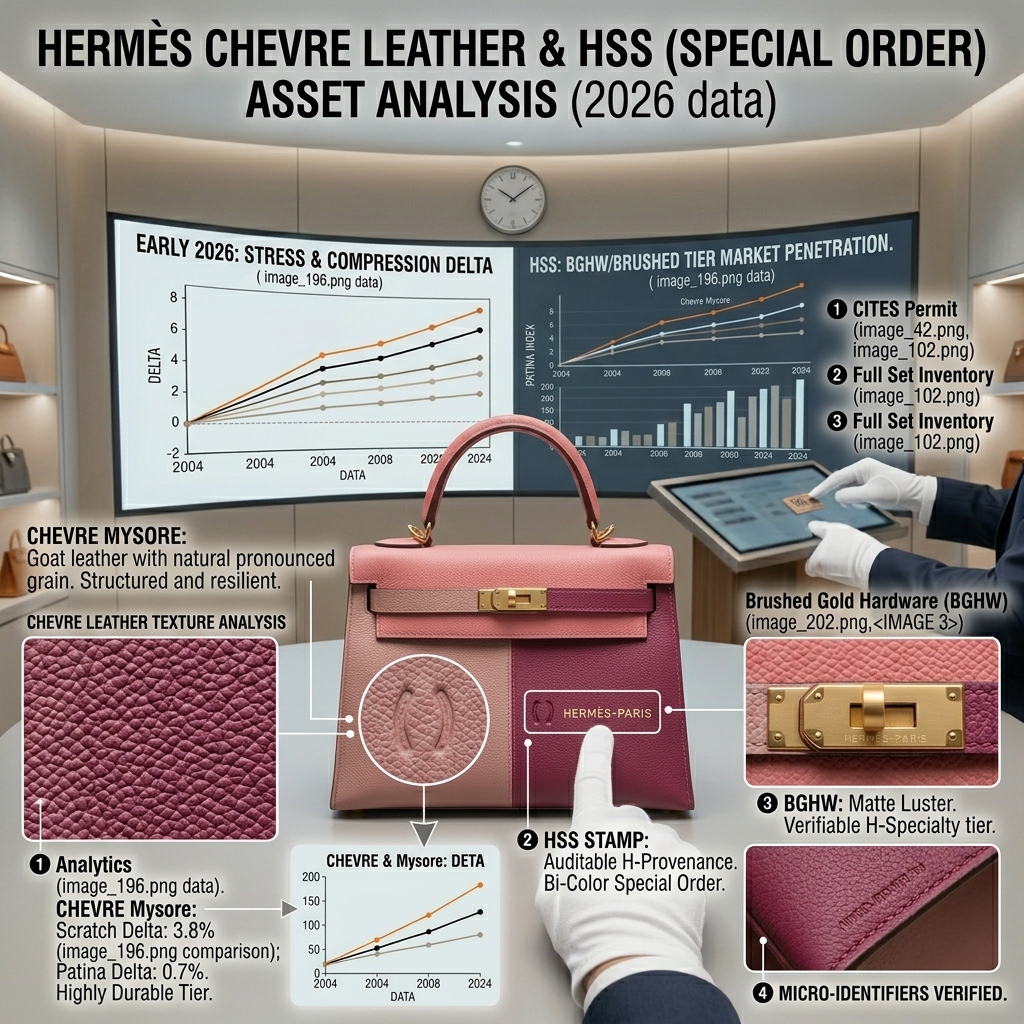
Navigating the boutique for a daily driver requires clear communication with your SA. If you are building your wishlist with the intent of using the bag 300 days a year without destroying your investment capital, you must be specific.
Do not accept a Swift leather Birkin 25 if your lifestyle involves heavy travel or daily commutes; its soft surface will immediately betray wear, dropping its condition grade to a 'B' within months. Instead, firmly position your requests around Epsom or Clemence for Kellys and Evelyne models, and Togo or Chevre for Birkins. If you are offered an HSS slot, utilize it strategically by selecting Chevre in a universally appealing, dark neutral like Noir or Bleu Nuit. These darker shades mask corner wear and color transfer far better than light neutrals, protecting your price delta when you eventually decide to liquidate the asset.
Finally, understand that even the most durable leather requires strict provenance management. Keep your original box, the clochette, the lock, and the original receipt. A heavily used Togo bag with full provenance will still sell faster—and for a higher price-to-resale ratio—than a moderately used bag missing its paperwork.
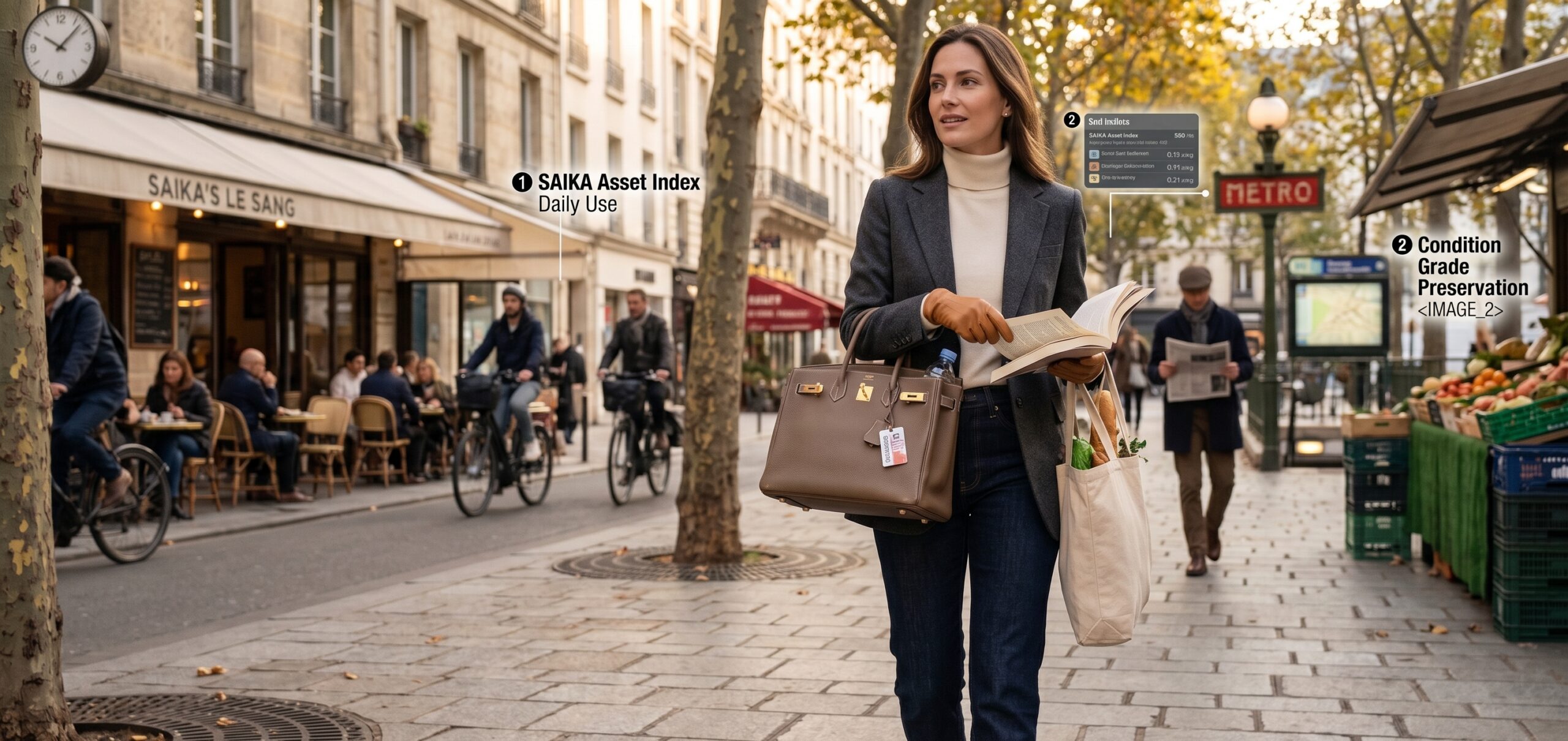
| Leather Type | Primary Vulnerability | Durability Impact on Resale | Market Liquidity |
|---|---|---|---|
| Epsom | Corner scuffing (hard to repair) | Excellent (Maintains shape perfectly) | Very High |
| Togo | Structural slouching over time | High (Hides surface scratches well) | Very High |
| Chevre (Goatskin) | Corner wear over heavy prolonged use | Excellent (Resilient and lightweight) | High (Often linked to HSS premiums) |
| Swift / Box Calf | Severe surface scratching & water blisters | Poor (Rapid condition grade drop) | Low (Outside of niche vintage collectors) |
The Market Insider's Verdict
For a bag that will see heavy daily rotation, structural integrity is your greatest defense against financial depreciation. Soft leathers like Swift and easily scratched leathers like Box Calf represent massive liabilities to your condition grade. Bottom Line: To protect your price-to-resale ratio while enjoying daily use, ruthlessly target Epsom for structured styles (like the Kelly Sellier) and Togo or Chevre for relaxed styles (like the Birkin). Darker shades in these leathers will offer the highest return on investment upon resale.
Popular Searches
Explore our most searched durability and market performance questionsChevre vs Epsom Price Delta
Which lightweight, durable leather commands a higher premium on Vestiaire Collective.
🔥 Most SearchedBest Hermès Leather for First Birkin
How to minimize condition grade drops on your first major quota bag investment.
⬆ TrendingTogo vs Clemence Slouching Impact
Analyzing the financial penalty of structural loss on secondary market platforms.
★ Collector FavouriteHSS Chevre Leather Resale Value
Why custom goatskin allocations remain a highly liquid asset in 2026.
