
Buying Vintage Hermès Box Kelly vs New: Full Investment Comparison
Market Intelligence: Evaluating Capital Efficiency, Scarcity Premiums, and Portfolio Growth in 2026
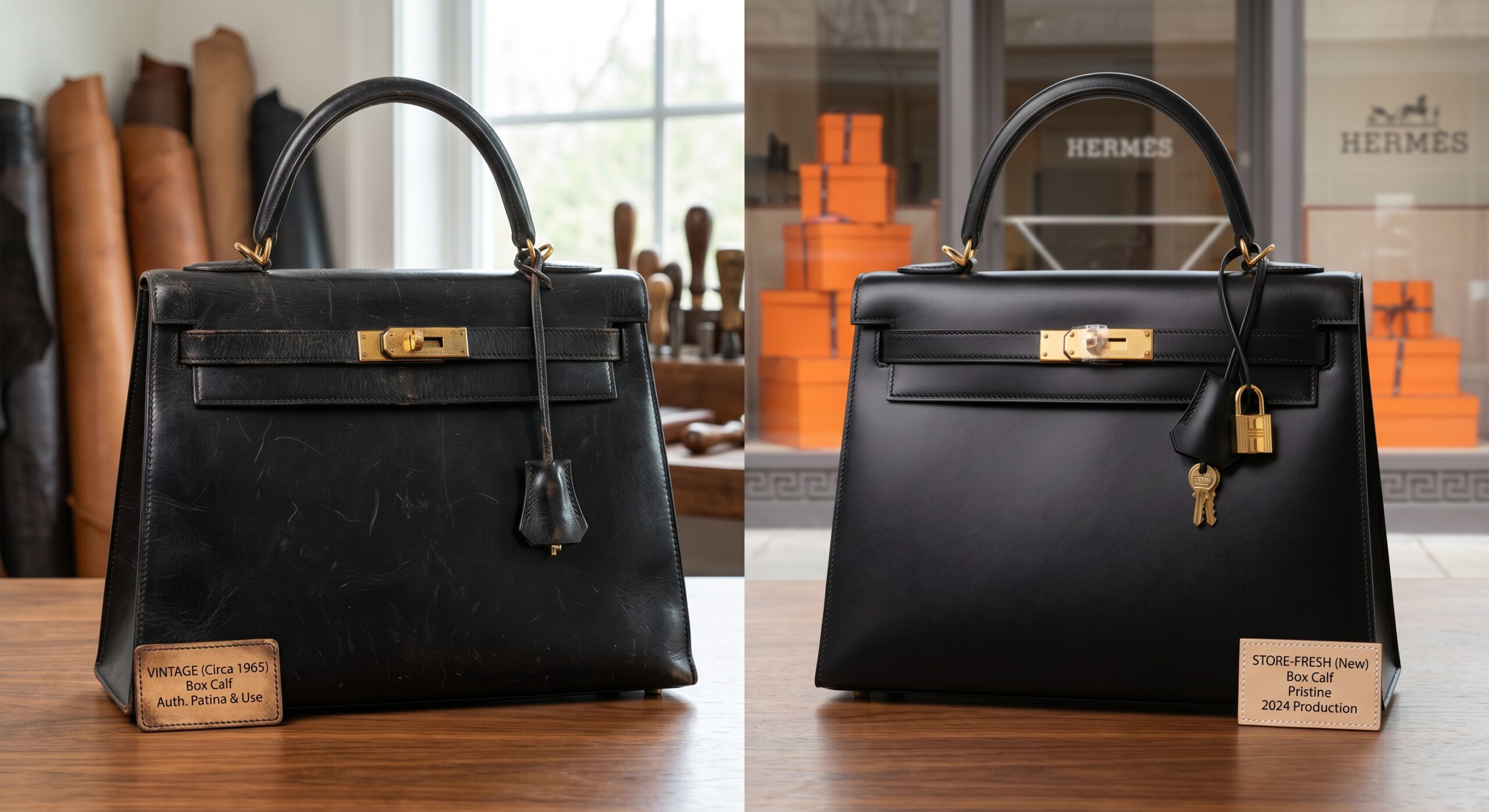
Evaluating the precise financial mechanics of buying a vintage Hermès Box Kelly vs new represents one of the most sophisticated capital allocation choices in the luxury sector in 2026. The Box Calf Kelly is the foundational bedrock of Hermès history—a hyper-smooth, rigid, heritage asset that behaves entirely differently than modern textured leathers on the secondary market. For the investor, this comparison is a battle between two distinct fiscal strategies. Acquiring a pristine, store-fresh Box Kelly from a boutique requires surviving an astronomical spend ratio, locking up tens of thousands of dollars in high-margin peripheral goods simply to gain access. Conversely, pivoting to the secondary market to acquire a vintage Box Kelly from the 1980s or 1990s completely bypasses the boutique friction, but introduces severe risks regarding condition grading, authenticity, and hidden structural depreciation. Platforms like Vestiaire Collective and Fashionphile mathematically stratify these assets based on the microscopic condition of their resin edges and the depth of their patina. In this definitive head-to-head analysis, we deconstruct the price deltas of both avenues, analyze how modern buyers assess vintage wear, and reveal which specific acquisition path guarantees the highest liquidity and ultimate price-to-resale ratio for your portfolio.
+80% to +120%
New Box Kelly Premium
0:1
Spend Ratio for Vintage Assets
Pristine
Condition Grade Mandatory for Max ROI
Table of Contents
The Foundation of Box Calf Economics
Before dissecting the specific valuation models of old versus new, we must consult our core Investment Guide to understand why Box Calf commands such unique reverence. Box Calf is the oldest leather used by Hermès. It is exceptionally smooth, highly reflective, and fundamentally rigid. Because it does not stretch or slouch like Togo or Clemence, a Box Kelly—specifically in the architectural Sellier construction—is functionally a vault asset. It holds its shape for decades.
However, this rigidity comes with extreme fragility. Box Calf is notoriously susceptible to surface scratches and water blisters. A single drop of rain can raise the grain, leaving a permanent welt. In the boutique environment, your Sales Associate (SA) is acutely aware of how difficult Box Calf is to manufacture today. Hermès has heavily restricted its production in recent years, pivoting the bulk of their quota bag volume toward durable, scalable leathers like Epsom. Because new Box Calf bags are manufactured in microscopic quantities, they are gatekept with absolute ferocity. To unlock a new Box Kelly in 2026, an investor must typically engineer a massive spend ratio, frequently exceeding 3:1 in fine jewelry and ready-to-wear, placing it nearly on par with the friction required for an Hermès Special Service (HSS) allocation.
The secondary market absorbs this friction directly. When evaluating a vintage model on The Real Real versus a store-fresh model on Sotheby's, the investor must calculate whether the massive price delta of the new bag justifies the crushing sunk cost required to extract it from the boutique.
The Vintage Appeal: Bypassing the Spend Ratio
The primary financial incentive for targeting a vintage Box Kelly (typically defined as pieces stamped prior to 2005) is the immediate preservation of capital. By utilizing a resale platform like Vestiaire Collective or 1stDibs, the investor completely bypasses the informal wait list and the compulsory boutique relationship. Your spend ratio is 0:1.
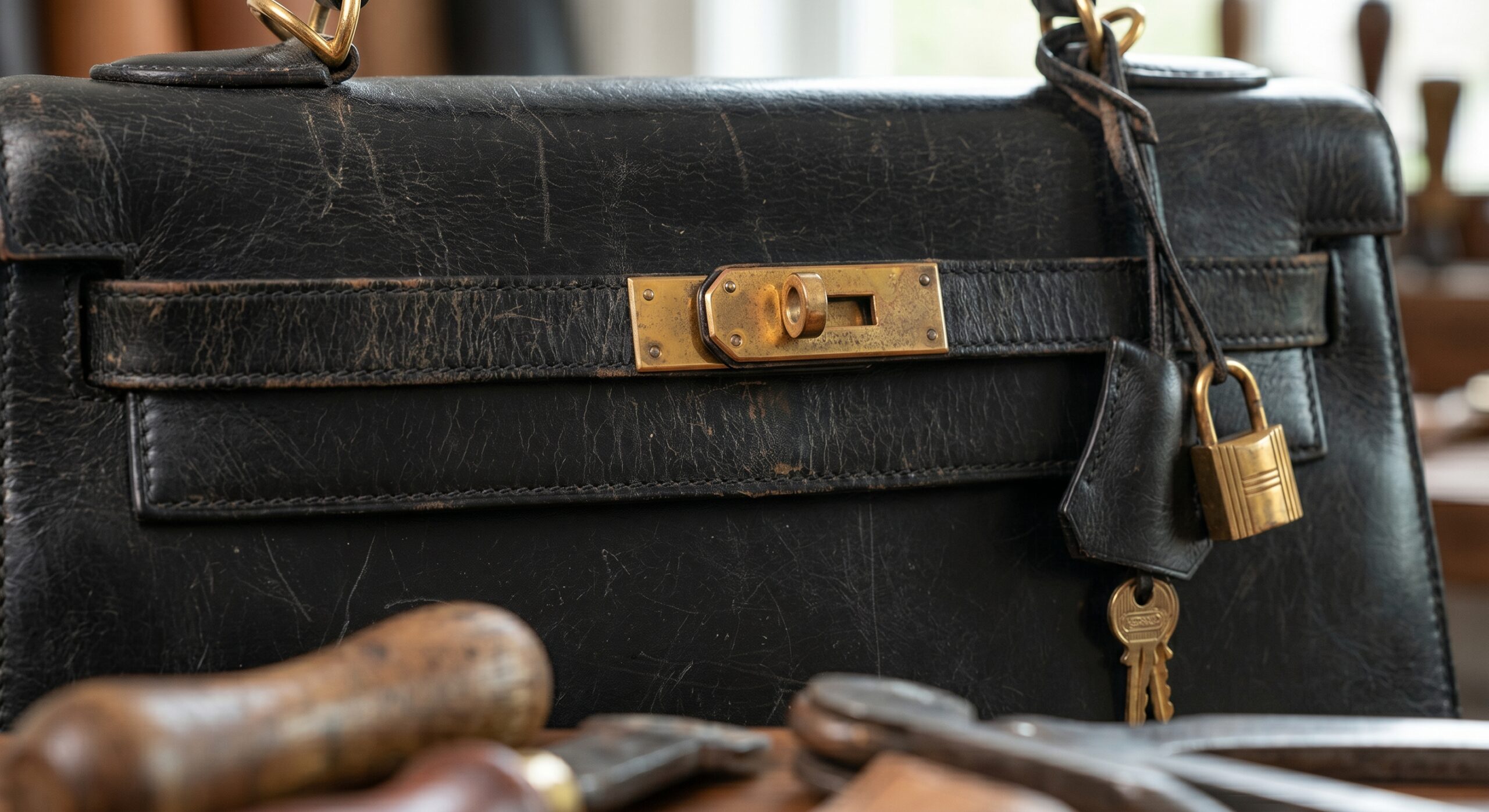
From an aesthetic perspective, vintage Box Calf possesses a unique patina. Over decades of polishing and handling, the leather develops a deep, mirror-like luster that new Box Calf simply cannot replicate. Furthermore, vintage Kellys from the 1970s through the 1990s feature flat brass hardware, a detail highly coveted by purists. However, this is where the investment risk spikes. The resale market ruthlessly stratifies these bags based on condition grades. A vintage bag is expected to show wear, but the line between "beautiful patina" and "distressed asset" is razor-thin.
If a vintage Box Kelly exhibits deep, un-buffable gouges, severely cracked resin edges, or compromised structural stitching, its price-to-resale ratio collapses. While we highlighted the robustness of the Kelly shape in our Birkin vs Kelly 5-year value retention analysis, a 30-year-old bag is heavily dependent on the care of its previous owners. Furthermore, provenance is frequently missing. A vintage bag lacking its original box, clochette, and receipt will suffer an immediate 10% to 15% discount on direct-buyout platforms. If you purchase a heavily worn vintage asset with the intent of sending it to the Hermès spa for restoration, be warned: the spa process can take 6 to 12 months, effectively freezing your capital and eating directly into your potential profit margin with expensive refurbishment fees.
- Vintage acquisition preserves immediate capital by eliminating the boutique spend ratio requirement.
- Missing provenance (receipt, strap) is common but must be factored into your expected price delta penalty.
- Deep scratches or water blisters on vintage Box Calf are irreversible and permanently degrade the condition grade.
The Store-Fresh Apex: Scarcity and Immediate Profit
Acquiring a store-fresh, new Box Kelly from an SA represents the zenith of modern Hermès acquisition strategy. Because Hermès restricts the modern output of Box Calf so heavily, a new piece commands an apex premium on the secondary market. It is an ultra-liquid asset.
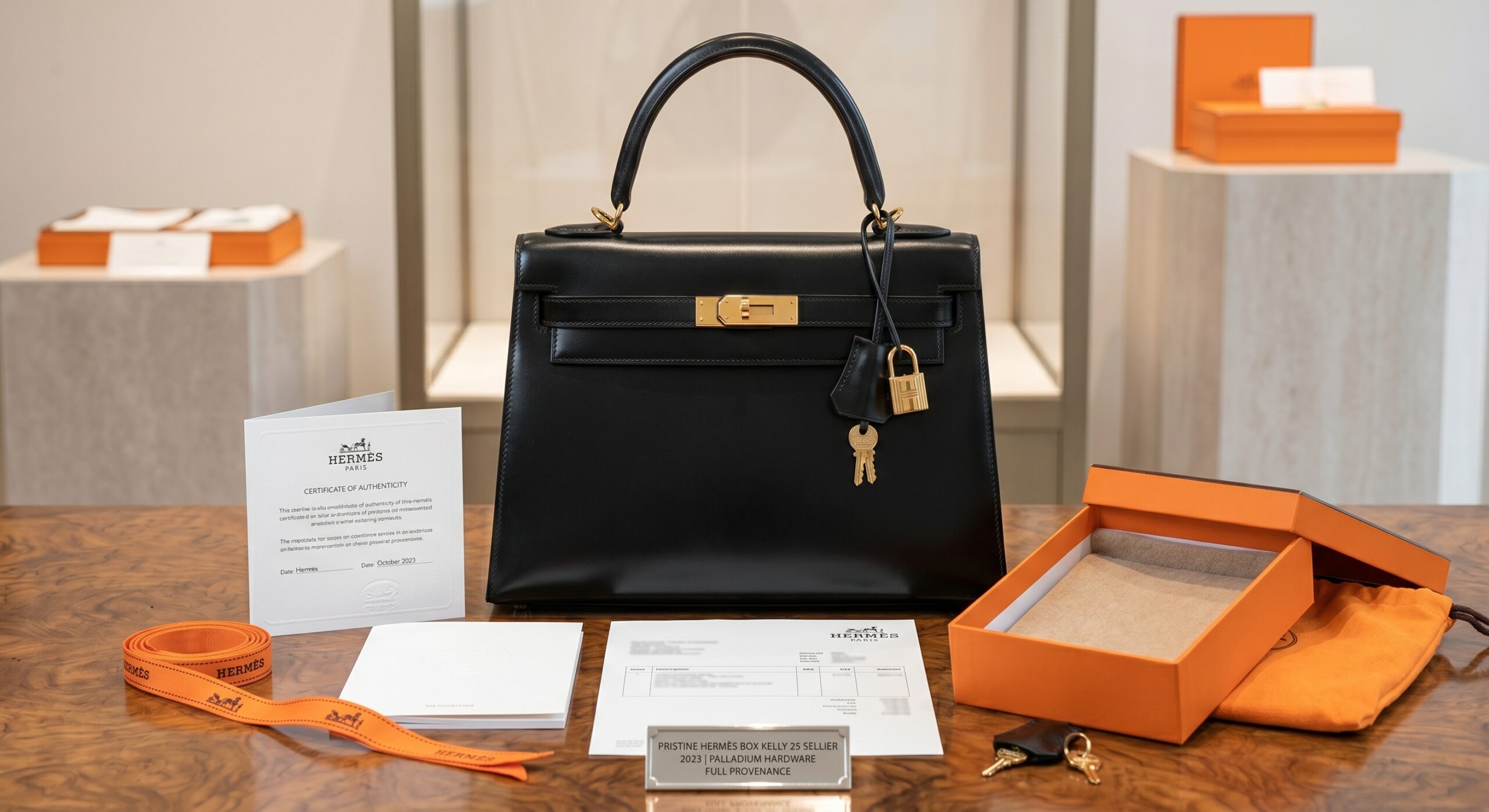
Assuming you have successfully navigated the boutique gatekeeping and secured a Birkin 25 or Kelly 25 Sellier in Noir Box Calf, your immediate position is incredibly strong. A Pristine, store-fresh Box Kelly 25 frequently commands a price delta of +80% to +120% over retail on platforms like Fashionphile. Buyers are willing to pay astronomical sums because the bag represents absolute perfection: no patina, no microscopic hardware scratches, intact protective plastics, and flawless provenance. As we analyzed in our breakdown of Sellier vs Retourne shape retention, the rigid, sharp lines of a new Box Sellier are currently dominating collector demand.
The Modern Production Caveat
While the profit margin is massive, the investor must recognize that modern Box Calf is slightly different from its vintage counterpart. To comply with modern environmental regulations and tanning restrictions, Hermès has subtly altered the finishing process. Some high-level collectors argue that new Box Calf is slightly stiffer and lacks the immediate depth of archival pieces. While this is a common debate among purists, the cold, hard data from resale platforms proves that the broader market does not care. A "Store Fresh" rating from 2026 will mathematically obliterate a "Very Good" rating from 1995 every single time. For a granular look at how tanning changes impact the chemical aging of these leathers over time, our sister site provides excellent technical data on the science of Box Calf leather aging and authenticating archival hides.
However, the risk of the new Box Kelly is entirely concentrated in the acquisition phase. If you spend $40,000 in fine jewelry to secure a $12,000 Box Kelly, and the bag resells for $25,000, your net portfolio operation is technically operating at a massive cash-flow deficit unless you can also liquidate the jewelry efficiently. Balancing these multi-asset plays is exactly why we documented the Hermès fine jewelry vs bag investment return metrics.
Practical Capital Allocation Strategy
Deciding between vintage and new is entirely dependent on your liquidity horizon and your tolerance for boutique friction. If you have liquid capital, an established SA relationship, and the patience to wait 12 to 18 months, engineering a profile to extract a new Box Kelly 25 is the optimal play for absolute profit generation. The price delta on a store-fresh piece is simply unmatched, providing a massive, immediate windfall upon secondary market liquidation.
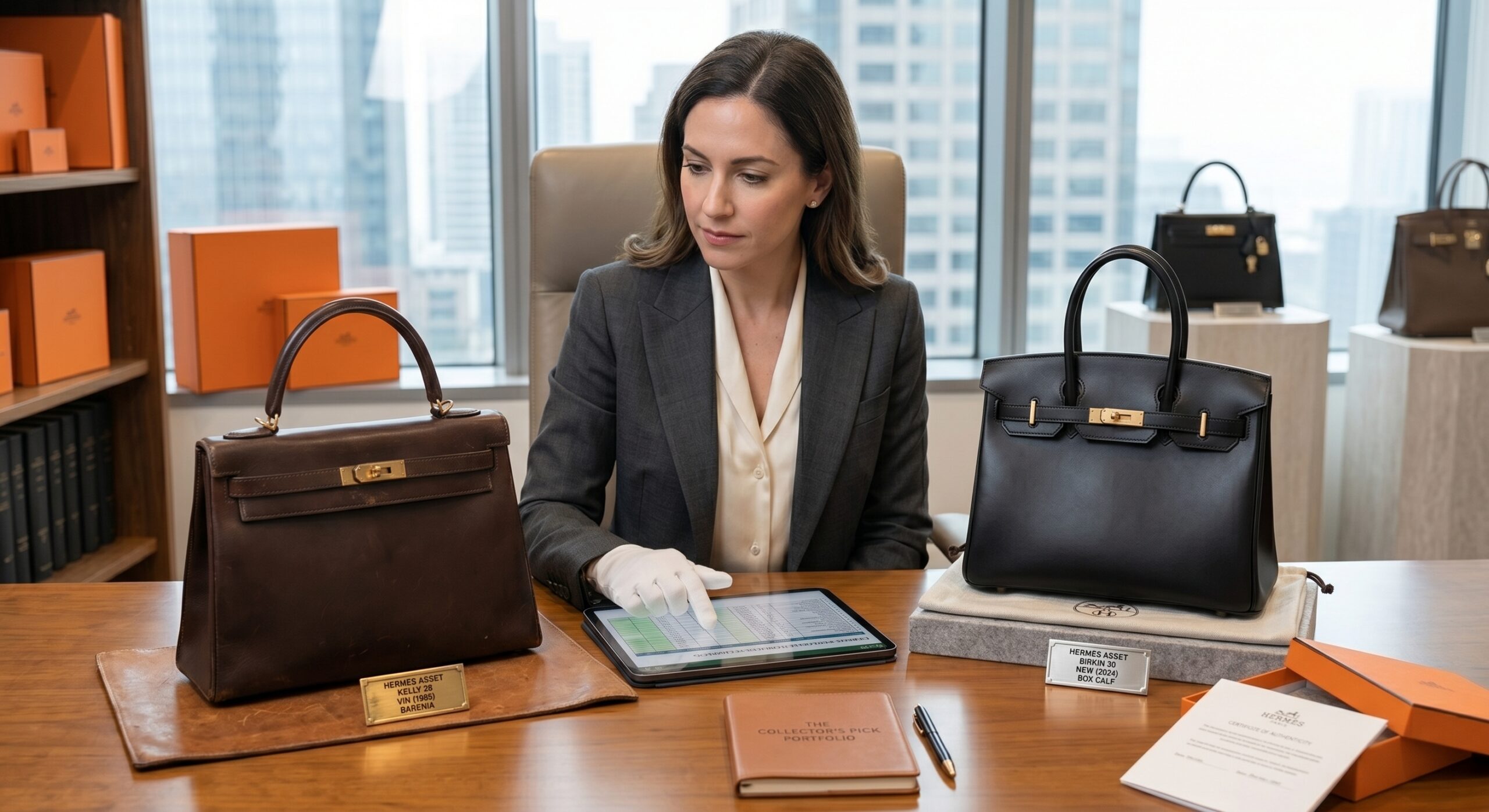
Conversely, if you are seeking a highly secure, medium-yield vault asset without the headache of purchasing $30,000 worth of peripheral boutique items, the vintage route is highly strategic. You must source the bag from a reputable dealer or a stringent platform like 1stDibs, ensuring the condition grade is at least "Excellent." You are looking for minor, superficial scratching that can be polished by the spa, avoiding any bag with structural collapse, cracked resin, or missing critical hardware. A well-bought vintage Box Kelly 28 will not double in value overnight, but it acts as an impenetrable hedge against inflation, holding its baseline value with ironclad stability.
| Configuration & Era | Acquisition Friction / Spend Ratio | Resale Price Delta Potential | Secondary Market Liquidity |
|---|---|---|---|
| New Box Kelly (Size 25/28) | Extreme (3:1+ Boutique Spend) | Apex Premium (+80% to +120%) | Ultra-High (Immediate Buyer Pool) |
| Vintage Box Kelly (Pristine/Excellent) | Zero (Direct secondary purchase) | Stable Baseline (+10% to +30%) | High (Strong purist demand) |
| Vintage Box Kelly (Heavy Wear/Scratches) | Zero (Direct secondary purchase) | Negative (Requires costly Spa repair) | Low (Severe liquidity freeze risk) |
| New Epsom Kelly (For Context) | High (Standard 2:1 Boutique Spend) | High Premium (+70% to +90%) | Extremely High |
The Market Insider's Verdict
The choice between vintage and new Box Calf is a calculation of where you want to absorb risk: at the boutique register, or in the condition grading of a pre-owned asset. Bottom Line: For pure, explosive financial ROI and immediate secondary market liquidity, acquiring a store-fresh, new Box Kelly 25 is the superior maneuver, provided you can stomach the massive required spend ratio. If you refuse to play the boutique game, a carefully vetted, Excellent-grade vintage Box Kelly serves as a brilliant, low-friction capital preservation tool.
Popular Searches
Explore our most searched vintage investment and market questionsVintage Box Kelly Retourne Resale Value
Analyzing why soft-structure vintage assets suffer steeper depreciation than rigid Sellier models.
📈 Strong ResaleCost of Hermès Spa for Vintage Box Calf
Calculating the exact financial impact of factory restoration on your final price-to-resale ratio.
⬆ Rising DemandBirkin vs Vintage Kelly Investment 2026
Tracking the shifting collector demand from oversized modern totes to structured archival pieces.
◆ Rare OpportunityHow to Authenticate Vintage Hermès Hardware
Why flat brass and missing date stamps dictate the true liquidity of 1980s quota bags.
