
Hermès Wish List Strategy for New Clients: The Insider Approach
Market Intelligence: Engineering Your Boutique Profile to Force Allocations
Executing a calculated Hermès wish list strategy for new clients is the singular difference between securing a highly liquid asset in eight months or bleeding capital into a boutique relationship that yields nothing. In 2026, the secondary market is unforgiving. Buyers on Vestiaire Collective and Fashionphile demand pristine quota bags in specific, universally desired configurations. If you approach an Hermès boutique blindly, treating it like a standard retail transaction, you will fail to acquire these assets. The "wait list" is a fiction designed to manage public expectations; the reality is a ruthless, data-driven allocation system governed by your Sales Associate (SA). Your wish list is not a letter to Santa—it is a financial blueprint that tells your SA exactly what price delta you are targeting, and what spend ratio you are willing to endure to get it. In this analysis, we will deconstruct the exact phrasing, department targeting, and psychological leverage required to engineer your profile and force a top-tier allocation.

2:1
Target Initial Spend Ratio
6–12 Months
Aggressive Allocation Timeline
Zero
Tolerance for Specificity Errors
The Fiction of the Wait List
Before you step foot in a boutique, you must consult our central hub on Buying Hermès Without the Wait to unlearn the most pervasive myth in luxury retail: the chronological wait list. There is no line. If you place your name in a ledger and wait for a call without returning to spend money, you will wait indefinitely. Allocations are distributed based on a client's active, verifiable profitability to the boutique.
Your Sales Associate (SA) operates as an internal portfolio manager. They have a limited number of quota bags (Birkins and Kellys) delivered each season. To secure one for you, they must present your client profile to the store director and justify why you deserve the asset over another SA's client. If your profile consists solely of a single scarf purchase and a demand for a Craie Birkin 25, your SA has zero leverage in that boardroom. The wish list, therefore, is a formal agreement. It signals that you are willing to build a boutique relationship through high-margin purchases, provided the SA eventually delivers the exact configuration you requested.
Understanding this transaction is paramount. The initial barrier to entry is entirely financial, but the execution requires extreme finesse. You must project the aura of a dedicated brand enthusiast while operating with the cold calculation of an institutional investor.
Engineering the Spend Ratio via Department Selection
Your wish list submission is meaningless if it is not immediately backed by targeted capital deployment. As we have documented extensively in our Hermès quota bag spending ratio strategy, not all dollars are weighted equally by the boutique's internal metrics.
A new client must aggressively target departments that yield the highest commission and internal prestige for the SA. Fine jewelry, watches, and ready-to-wear (RTW) are the holy trinity. If you purchase $15,000 worth of leather goods (such as non-quota Evelynes or Picotins), you have practically wasted your capital. Leather goods do not advance your profile toward a quota bag. Conversely, purchasing a single diamond Kelly bracelet instantly legitimizes your wish list in the eyes of the store director.
When you present your list, it must be accompanied by your first major "anchor" purchase. This signals to the SA that you are a serious player, not a window shopper or a prospective reseller. However, consistency is critical. Dropping $25,000 in a single day is often flagged as suspicious "flipper" behavior. You must execute your spend ratio methodically, visiting the boutique every 4 to 6 weeks to continually engage your SA and check on the status of your requests.
- Anchor your initial wish list presentation with a high-margin purchase in fine jewelry or homeware.
- Never buy small leather goods (SLGs) with the expectation that they will contribute to your quota bag profile.
- Consolidate 100% of your spend with a single SA. Loyalty is binary; splitting purchases across SAs destroys your leverage.

Structuring the Request: The Goldilocks Parameter
The actual construction of the wish list requires the "Goldilocks Parameter"—it must be specific enough to protect your investment ROI, but broad enough that the SA can actually fulfill it within a reasonable timeframe.
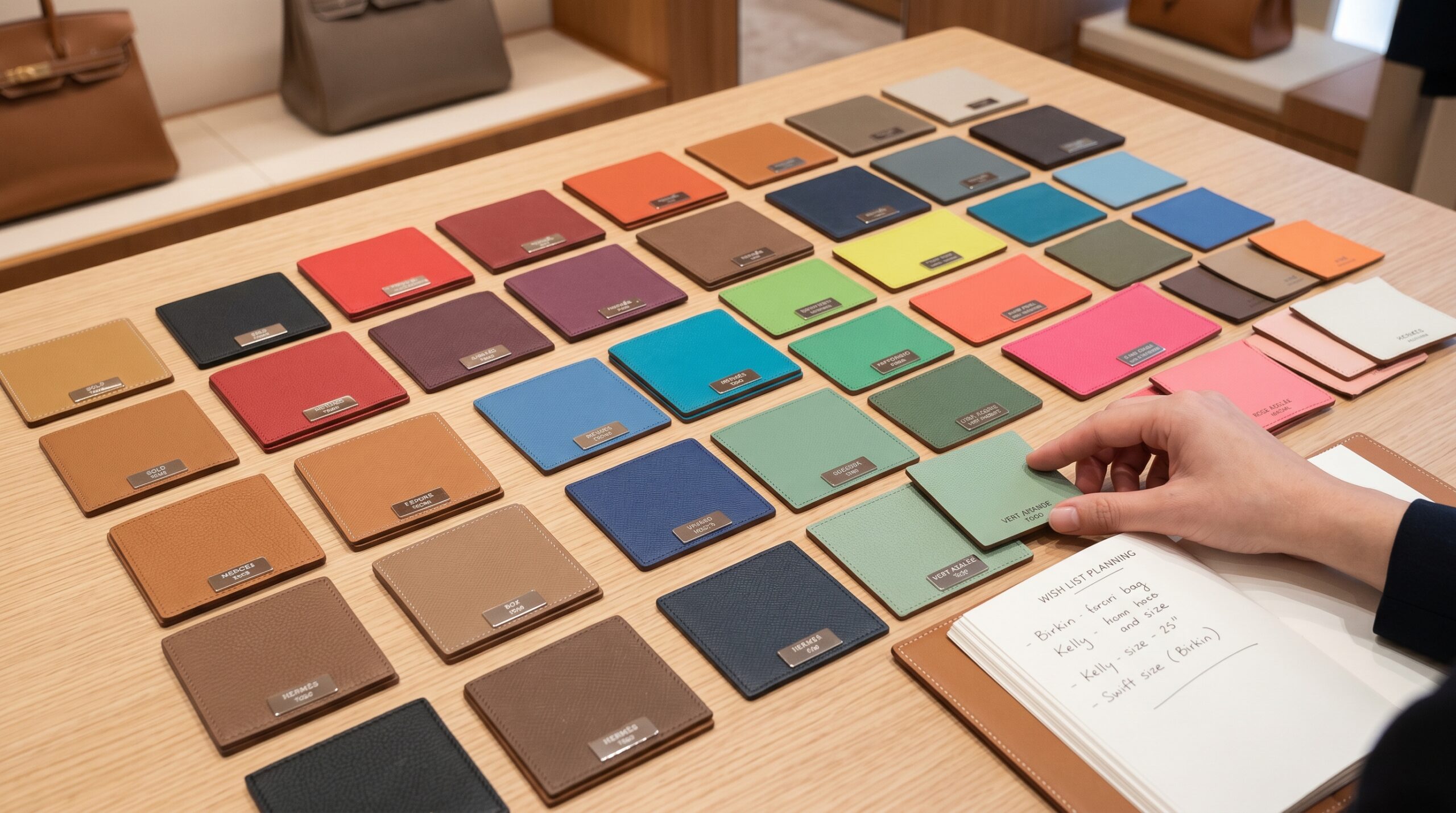
If you request a "Birkin 25 in Nata Epsom with Rose Gold Hardware," you have created an impossibly narrow target. If that exact bag does not arrive at your specific boutique over the next 12 months, your capital remains trapped. Worse, if you request an HSS (Hermès Special Service) allocation on day one, you instantly mark yourself as naive. Instead, you must request "families" of assets. The optimal phrasing for an investor is: "I am looking for a Birkin 25 or Kelly 28 Sellier. I prefer light, classic neutrals like Craie, Trench, or Nata, and I am entirely open to either Gold or Palladium hardware."
Avoiding the "Poison Pill" Offer
If you are too vague—simply stating, "I want any Birkin"—you open yourself to the "Poison Pill" allocation. An SA may offer you a Birkin 35 in a highly contrasting, seasonal bright color. If you accept it, you instantly destroy your price-to-resale ratio, as these bags frequently sell below retail on the secondary market. If you reject it, you risk offending the SA and damaging the boutique relationship. You must set firm boundaries on size and color families on your very first visit to prevent being offered dead stock.
It is also crucial to contextualize your requests based on the physical location of your boutique. As outlined in our analysis of the best Hermès boutique locations, asking for a highly competitive Kelly 25 in a major flagship like Madison Avenue requires a radically higher spend ratio than requesting that same bag in a secondary market boutique.
Execution and the Exit Strategy
Once the wish list is lodged and the spend ratio is initiated, you must maintain the relationship. Text your SA regarding upcoming RTW collections. Buy the occasional silk scarf to maintain top-of-mind awareness. For insights on navigating the brand's complex color offerings to ensure your RTW and silk purchases align with your eventual bag, our sister site provides an excellent Hermès color availability and aesthetic guide.
However, you must also define your exit strategy. If you have hit a 2.5:1 spend ratio after 12 months and your SA continues to stall, you must confront the reality that your capital is bleeding. At this juncture, you must politely but firmly request a timeline. If the SA cannot deliver, you must cease spending immediately. Do not succumb to the sunk cost fallacy by continuing to buy items you do not want.
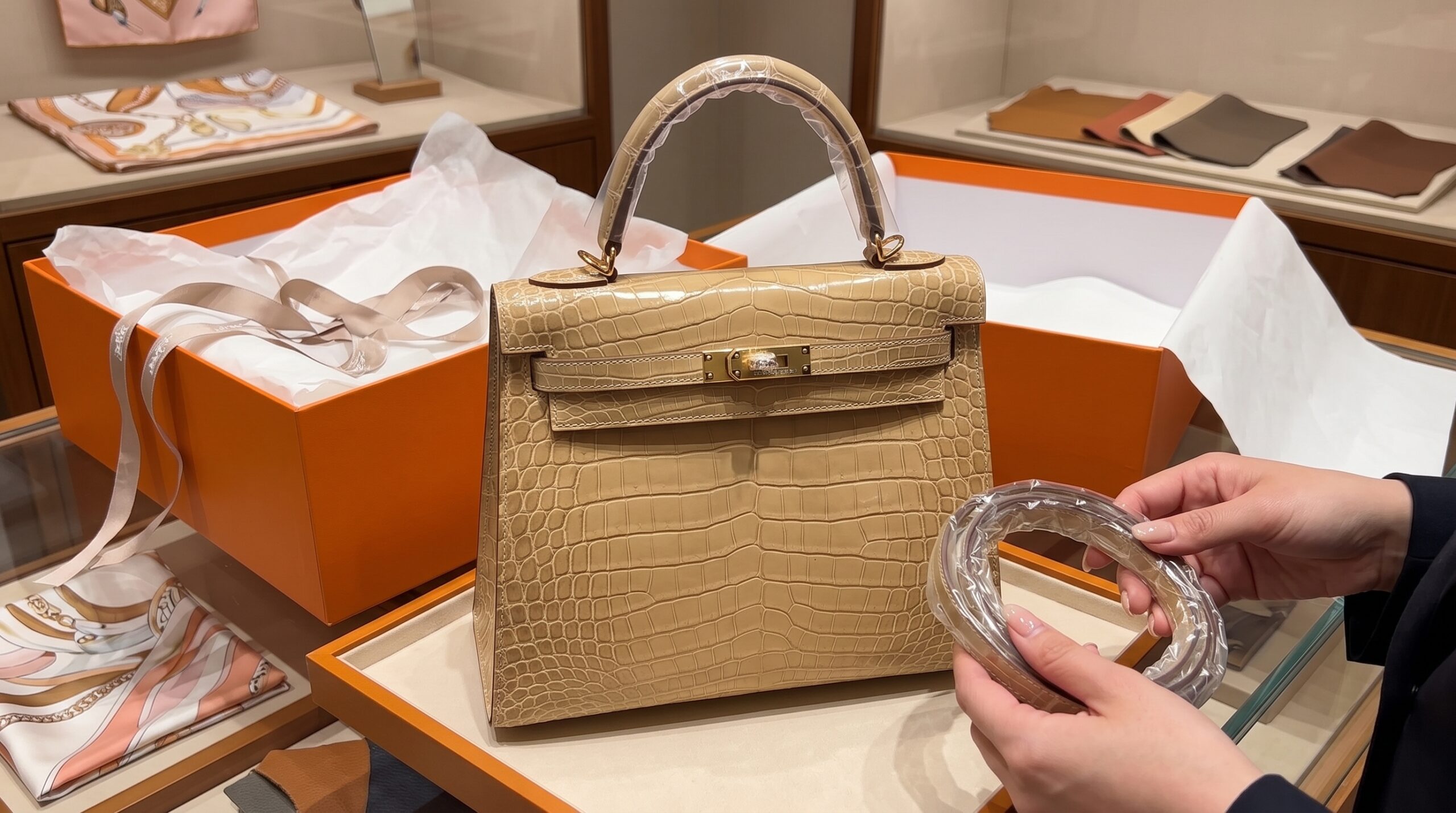
When the bag finally arrives, immediately check its condition grade. Ensure the protective hardware stickers are intact and verify the provenance documentation. Your wish list strategy is only complete when that pristine asset is safely in your hands, ready to command its maximum price delta on a resale platform.
| Wish List Request Profile | Estimated Wait Time | Required Spend Ratio Impact | Market Liquidity (Resale) |
|---|---|---|---|
| Hyper-Specific (Exact Color/Leather/HW) | 18–24+ Months | Requires massive over-spend | Variable (Depends on the exact specs) |
| Broad Category (Size 25/28, Any Neutral) | 6–12 Months | Standard Target (1.5:1 to 2:1) | Extremely High |
| Too Broad ("Any Birkin") | 1–3 Months | Low | Negative (Risk of low-demand seasonal colors) |
| HSS / Special Order Request | VIP Invite Only | 3:1+ (Multi-year history) | Apex Premium (If designed correctly) |
The Market Insider's Verdict
A wish list is a highly structured financial negotiation, not a casual request. Approaching an SA without understanding department weightings or setting firm boundaries on bag sizes is a guaranteed way to trap your capital in illiquid goods. Bottom Line: To force an allocation and secure a profitable asset, new clients must anchor their wish list with high-margin jewelry purchases, define clear parameters around highly liquid sizes (25/28) in neutral colors, and ruthlessly cut off spending if the SA fails to deliver after the 2:1 threshold is breached.
Popular Searches
Explore our most searched acquisition and boutique strategy questionsHow to Get a Birkin Without Purchase History
The reality of walk-in availability and why the spend ratio dictates all major market flagships.
📈 Strong ResaleHermès Spend Ratio for Kelly 25
Calculating the exact financial pre-spend required to unlock the most requested rigid asset.
⬆ Rising DemandWhat to Buy at Hermès to Get a Bag Faster
Why fine jewelry and ready-to-wear dramatically accelerate your profile over leather goods.
◆ Rare OpportunityRejecting a Hermès Quota Bag Offer
How to decline a toxic, low-liquidity colorway without permanently destroying your SA relationship.
