
Selling Hermès Without the Original Receipt: What Buyers Accept
Market Intelligence: Navigating Liquidity Penalties and Provenance Recovery
Navigating the reality of selling Hermès without the original receipt is a high-stakes calculation in the 2026 secondary market. While purists argue that a missing piece of paper shouldn't devalue pristine craftsmanship, the investment data tells a brutally different story. The modern collector operates in an environment flooded with "superfakes" crafted so meticulously that even seasoned authenticators hesitate. In this climate of paranoia, provenance is not merely a nicety; it is the core foundation of an asset's price-to-resale ratio. When you lose the original boutique invoice, you introduce immediate, heavy friction into the transaction, causing a guaranteed contraction in your final profit margin. However, a missing receipt does not mean your capital is permanently stranded. By understanding the precise price deltas involved, leveraging accepted proxy documentation, and choosing the correct resale platform, you can successfully liquidate the asset. In this analysis, we will map out exactly what secondary buyers accept, the financial penalties you must absorb, and the tactical steps required to execute a secure, profitable sale without original provenance.
-15% to -25%
Avg. Price Delta Penalty
High
Reliance on Third-Party Certs
Pristine
Condition Grade Needed to Offset Loss
The Foundation of Provenance Economics
To understand the financial penalty of a missing receipt, we must first consult our Authentication Hub to grasp how the market values risk. When a buyer drops $22,000 on a Birkin 25, they are paying for absolute certainty. A quota bag purchased directly from a boutique represents zero risk, achieved through a meticulously maintained boutique relationship and a high spend ratio. When that bag transfers to the secondary market, the original receipt serves as the critical bridge transferring that zero-risk guarantee to the new owner.
In the absence of that bridge, the buyer assumes a massive risk premium. They are forced to rely on the competence of the resale platform's internal authentication team or external experts. Because human error exists, the market mathematically demands a discount to shoulder that anxiety. Your missing receipt does not alter the physical condition grade of the bag, but it fundamentally damages its psychological liquidity.
Furthermore, an SA (Sales Associate) will almost never reprint an original receipt for a client looking to sell, effectively making that initial piece of thermal paper an irreplaceable component of the asset's overall portfolio value. When assessing your overall return on investment, treating the receipt with the same reverence as the leather itself is a non-negotiable principle of modern luxury wealth management.
The Price Delta Penalty Across Resale Platforms
The financial hit you take for lacking a receipt varies heavily depending on the liquidation avenue you choose. Major resale platforms—specifically Vestiaire Collective, The Real Real, Fashionphile, and 1stDibs—each handle undocumented assets differently.
If you utilize a direct-buyout platform like Fashionphile, they will absolutely purchase your authentic Birkin or Kelly without a receipt. Their internal authenticators are highly trained to verify the blind stamps, hardware weight, and saddle-stitching independently. However, because they must eventually resell the bag to a retail customer who will inevitably ask, "Does it come with the receipt?", Fashionphile must price the bag lower to move it. Consequently, their initial buyout offer to you will reflect a severe haircut. You can expect to lose approximately 15% to 25% of the standard price delta compared to an identical bag offered with full provenance.
If you utilize a peer-to-peer consignment model like Vestiaire Collective, you retain control over the asking price. You can list a receipt-less Kelly 28 Sellier at the absolute market peak. However, the bag will likely suffer a severe liquidity freeze. Buyers scrolling the platform will skip your listing in favor of an identical one featuring a photo of the original invoice, even if the competitor's bag is priced slightly higher. As documented in our recent reseller market price drop analysis, buyers currently have massive leverage, and they are using it to demand flawless provenance or aggressive discounts.
- Expect a baseline 15% to 25% reduction in your final price-to-resale ratio when selling without the original boutique invoice.
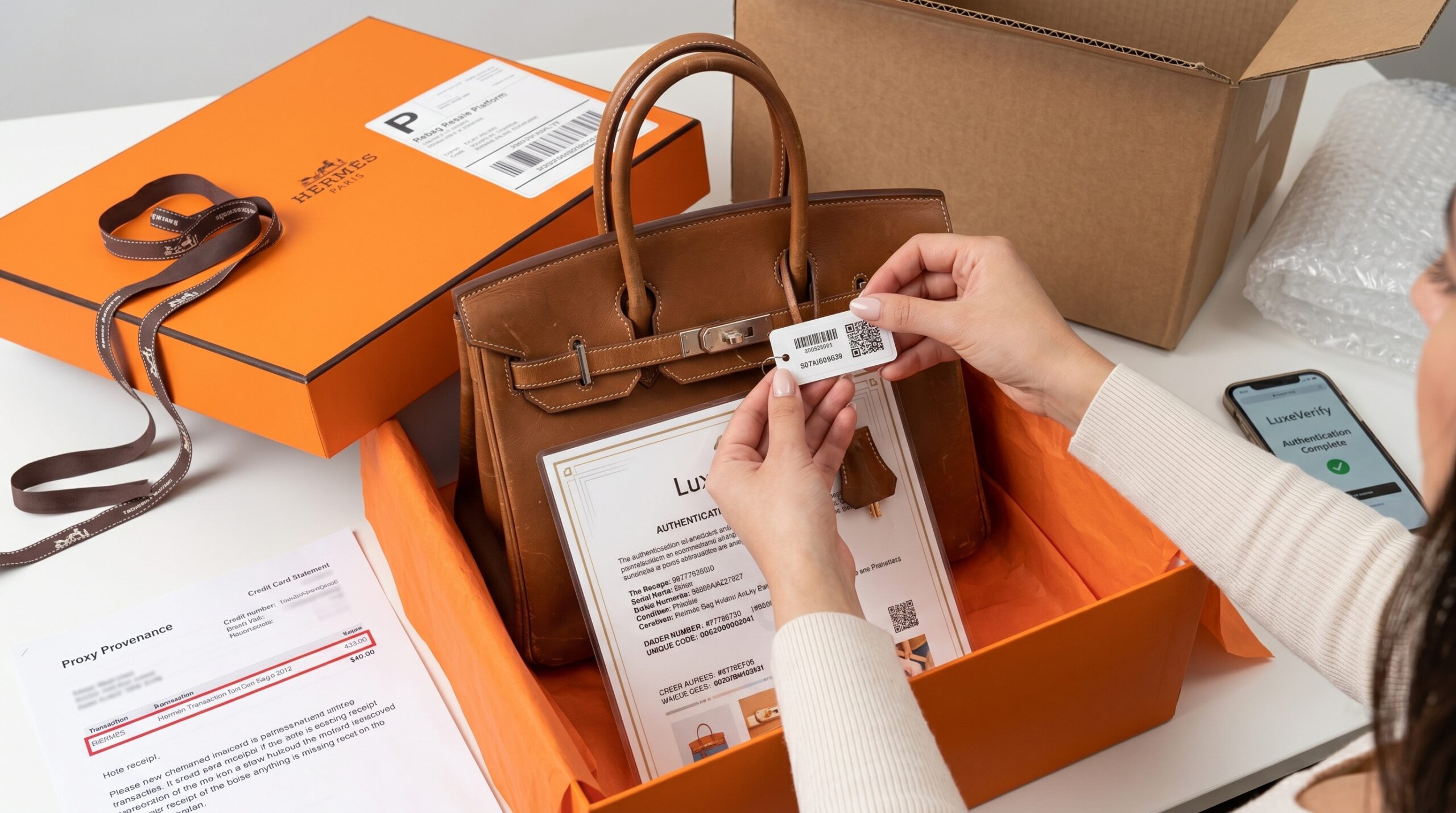
- Do not attempt to pass off a "gift receipt" or credit card statement as true provenance; savvy buyers reject these immediately.
- Direct-buyout platforms offer faster liquidity for undocumented bags, but consignment preserves slightly more of your capital if you can afford to wait.
Valid Proxies: What the Market Actually Accepts
If the original receipt is permanently lost, you must rapidly assemble proxy documentation to restore buyer confidence and stop the price delta bleed. The secondary market has collectively agreed upon a hierarchy of acceptable alternatives.
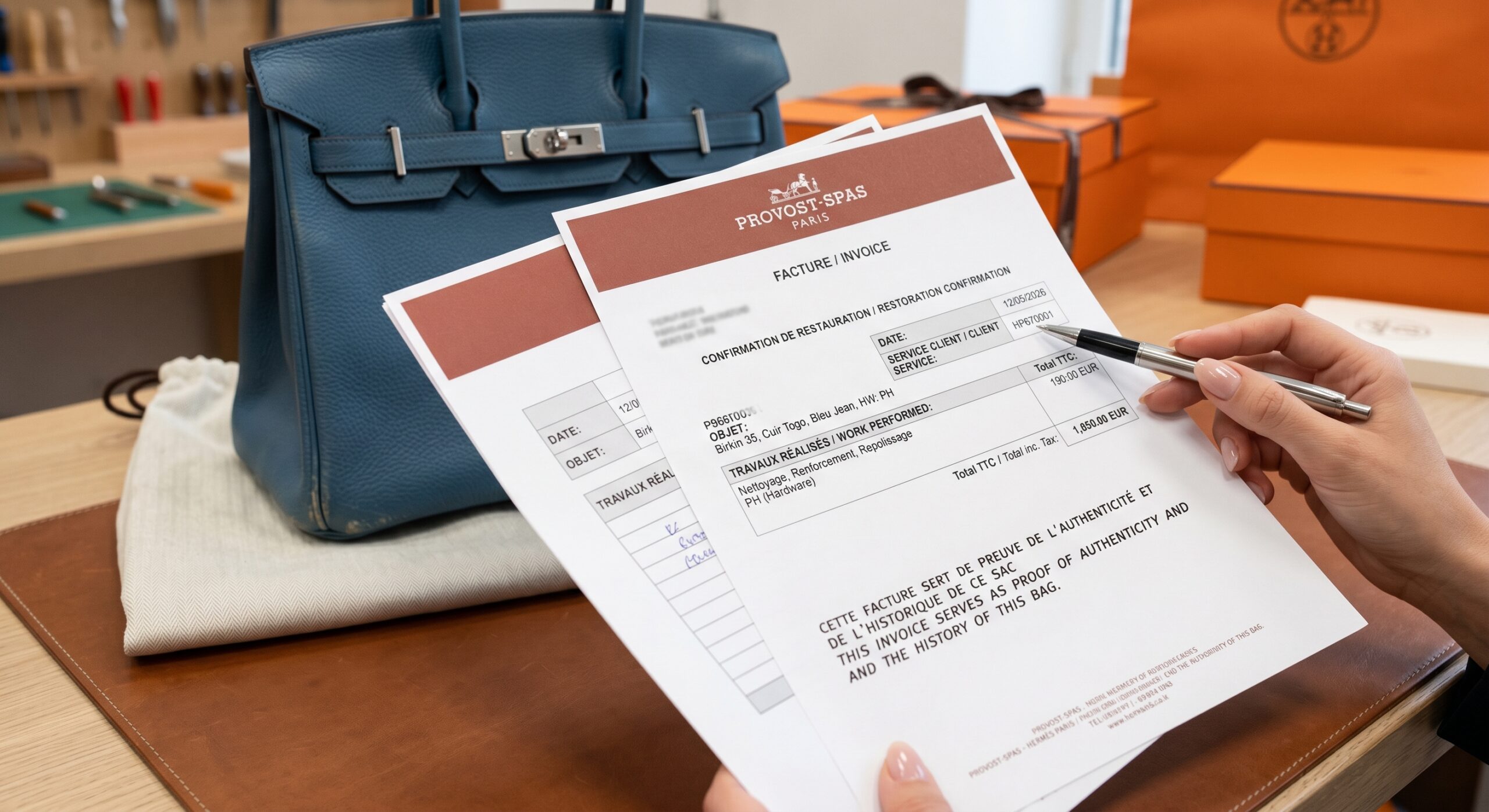
The absolute gold standard proxy is an Hermès Spa receipt. If you take a vintage or slightly worn bag into an Hermès boutique for refurbishment, the artisans will thoroughly inspect it. Hermès maintains a strict policy: they will immediately confiscate and destroy any counterfeit item submitted for repair. Therefore, an official invoice detailing a spa treatment (even a simple corner touch-up or hardware polish) acts as undeniable, corporate-sanctioned proof of authenticity. A spa receipt restores immense liquidity and can claw back a significant portion of the lost price premium. For a deeper technical understanding of how Hermès authenticates these items internally, our sister site explores the forensic authentication protocols used when provenance is missing.
Third-Party Authentication Certificates
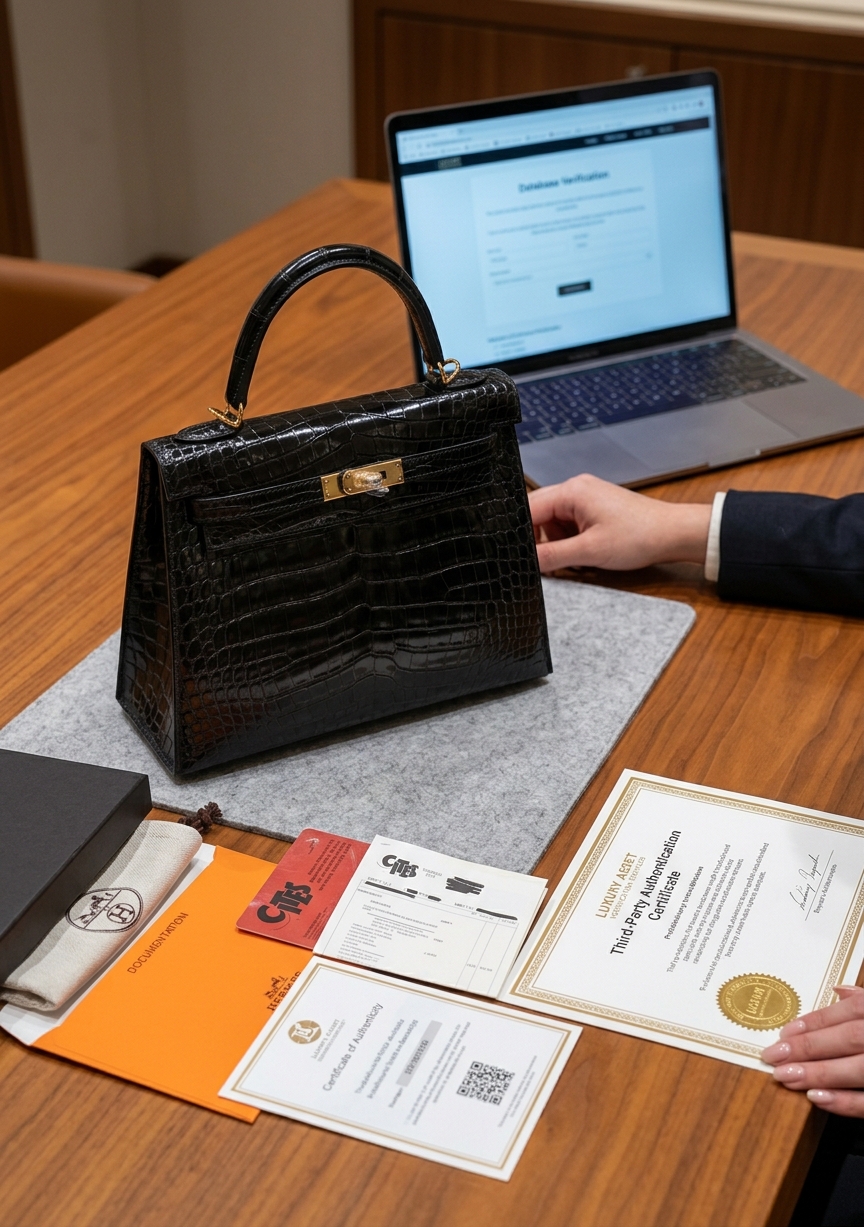
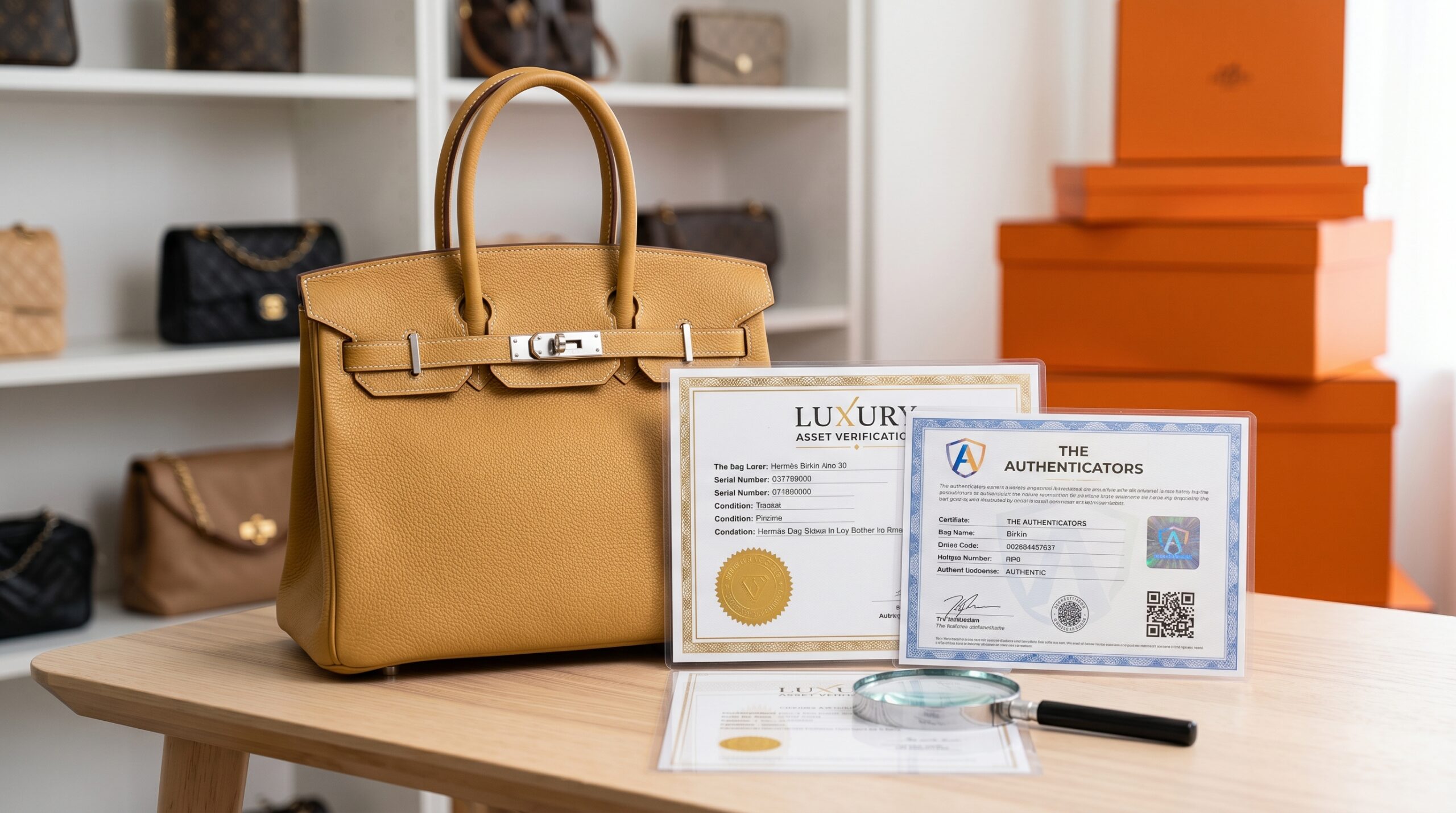
If you cannot wait 6 to 12 months for a spa treatment, you must purchase a third-party certificate. In the Hermès community, a certificate from Bababebi is considered the ultimate external validation, particularly for high-value Hermès Special Service (HSS) pieces. Entrupy, which uses algorithmic microscopic analysis, is also widely accepted by commercial platforms. While these certificates will not erase the financial penalty of a missing original receipt, they serve as the absolute minimum requirement to thaw a liquidity freeze and get the bag sold.
Ultimately, a bag’s physical state must overcompensate for its missing paperwork. A receipt-less Birkin in a 'Very Good' condition grade will plummet in value. A receipt-less Birkin in absolute 'Pristine' condition, with plastic still on the hardware, will fare much better, as the visual perfection soothes buyer anxiety.
Executing the Sale: A Tactical Approach
If you are holding an undocumented asset and wish to liquidate in 2026, you must adjust your expectations and streamline the transaction. First, audit the remaining provenance. Do you still have the original orange box, the dust bag, the clochette, and the lock and keys? If you are missing the receipt AND the clochette, the bag drops into a highly distressed asset category. Every surviving accessory helps defend the price-to-resale ratio.
Next, secure a Bababebi certificate before approaching any buyer or consignment platform. When listing the bag, lead with total transparency. Hedging or hiding the fact that the receipt is missing until the negotiation phase will infuriate buyers and blow up the deal. State clearly: "Bag is in Pristine condition, original receipt misplaced, guaranteed authentic with accompanying Bababebi certificate."
Finally, target the right demographic. Hardcore collectors seeking vault assets will likely pass. Your target buyer is someone seeking a "daily driver" at a slight discount. If the bag is a soft, slouching Retourne style, lean into its casual utility. For broader context on how these styles depreciate, our analysis on Birkin vs Kelly 5-year value retention highlights why buyers are willing to forgive missing paperwork on heavily used daily bags more easily than on rigid, investment-grade Sellier pieces.
| Documentation Status | Buyer Confidence Level | Price Delta Impact | Expected Market Liquidity |
|---|---|---|---|
| Full Provenance (Original Receipt, Box) | Absolute Certainty | Maximum Premium (+75% to +100%) | Extremely High (Under 72 Hours) |
| Hermès Spa Invoice (Proxy) | Very High | Slight Penalty (-5% to -10%) | High Velocity |
| Third-Party Cert Only (Bababebi/Entrupy) | Moderate to High | Significant Penalty (-15% to -25%) | Moderate (Requires Price Adjustment) |
| Zero Provenance (Bag Only) | Extremely Low | Severe Penalty (-30% or more) | Frozen (Requires Direct Buyout Liquidation) |
The Market Insider's Verdict
Losing the original boutique receipt is a costly administrative error, but it is not a fatal blow to your investment. The secondary market is liquid enough to absorb undocumented assets, provided the price reflects the assumed risk. Bottom Line: If you must sell without the original receipt, you must immediately secure a third-party authentication certificate, accept a 15% to 25% penalty on your price-to-resale ratio, and utilize direct-buyout platforms if you require immediate cash flow.
Popular Searches
Explore our most searched authentication and resale questionsCan I Sell a Birkin to Fashionphile Without a Receipt
Understanding exactly how direct-buyout algorithms penalize missing boutique provenance.
📈 Strong ResaleDoes Bababebi Certificate Increase Bag Value
Why third-party verification is the mandatory baseline for thawing a secondary market liquidity freeze.
⬆ Rising DemandHermès Spa Receipt as Authentication Proof
How leveraging the brand's own repair network creates bulletproof proxy documentation.
★ Collector FavouriteValue of Hermès Orange Box and Accessories
Calculating the exact financial deduction applied when dust bags, clochettes, and boxes are lost.
