
Hermès Fine Jewelry vs Bag Investment Return: Which Wins?
Market Intelligence: Balancing Sunk Costs and Liquid Capital in Your Portfolio
When calculating the exact Hermès fine jewelry vs bag investment return, the modern collector must fundamentally distinguish between assets that act as "keys" and assets that act as "vaults." In 2026, the secondary market does not treat all Hermès products with the same blind reverence it did during the speculative bubble of the early 2020s. While a leather quota bag can generate explosive, immediate capital gains, the fine jewelry department operates on entirely different financial physics. Buyers on platforms like Vestiaire Collective and Fashionphile will ruthlessly penalize the price-to-resale ratio of worn 18k gold, yet purchasing that very same gold at the boutique is the mandatory toll required to access the brand's most lucrative leather goods. In this deep dive, we will analyze the stark contrast in price deltas between these two dominant categories, unpack how condition grades dictate their respective secondary market fates, and outline a portfolio strategy that balances the obligatory losses of jewelry against the massive ROI of leather.
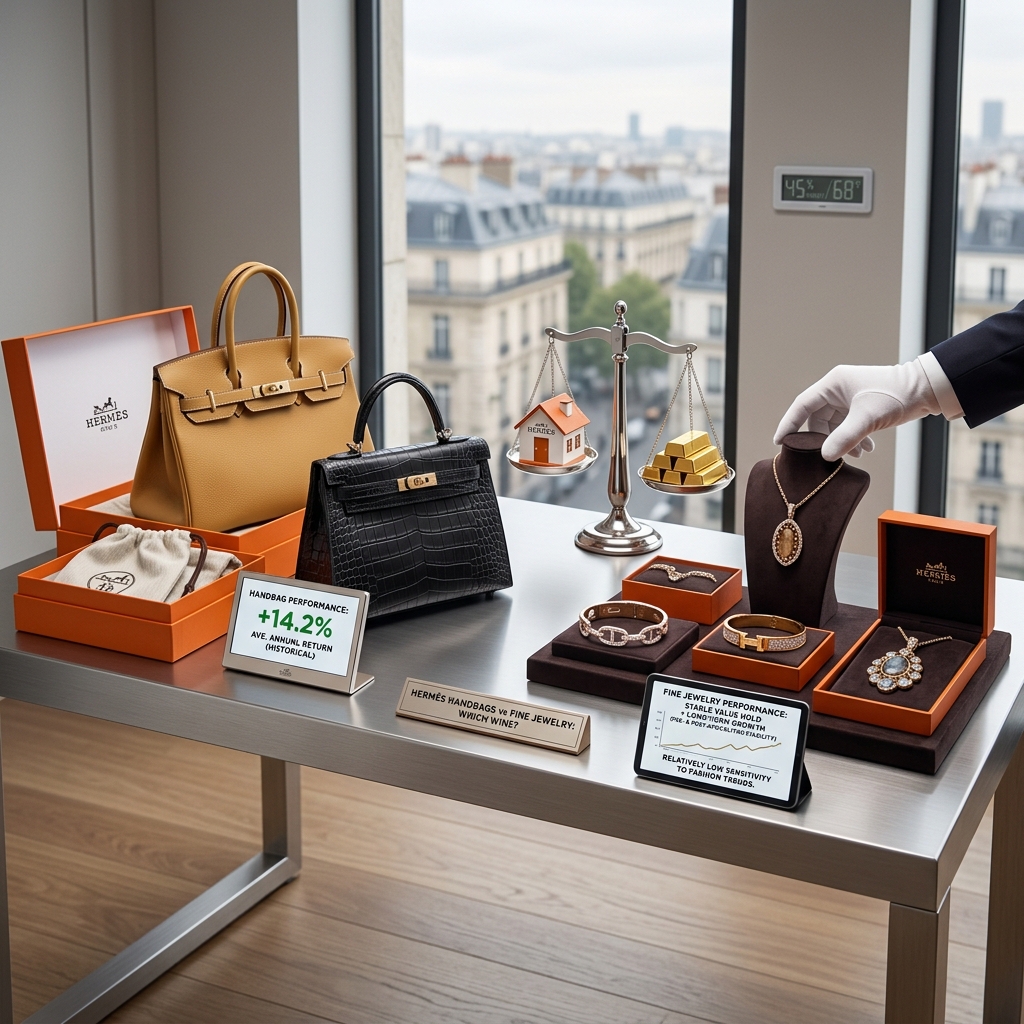
+75% to +100%
Avg. Birkin 25 Resale Premium
-15% to -30%
Avg. Fine Jewelry Initial Loss
Mandatory
Jewelry Role in Spend Ratio
The Foundation: Keys vs Vaults
To accurately assess which asset class "wins," we must first anchor our analysis in the mechanics detailed within our primary Investment Guide. The Hermès boutique operates as a gated ecosystem. Your Sales Associate (SA) controls the gate to the vault—the Birkins, the Kellys, and the coveted HSS (Hermès Special Service) allocations. To unlock that gate, you must build a verifiable, highly profitable spend ratio. Fine jewelry acts as the ultimate key.
From an internal boutique perspective, fine jewelry and watches are high-margin departments that SAs are heavily incentivized to push. Dropping $18,000 on a diamond-encrusted Kelly bracelet achieves your requisite spend ratio instantly, circumventing the need to buy thirty pairs of Oran sandals over two years. However, when you step out of the boutique and into the secondary market, the roles reverse.
The leather quota bag becomes the vault—a highly liquid asset that not only preserves the $12,000 you spent on it but generates an additional $10,000 in pure profit delta. The fine jewelry, however, becomes an illiquid liability. Buyers on The Real Real and 1stDibs do not assign the same frantic premium to a pre-owned Hermès necklace as they do to a store-fresh Birkin. Thus, the investment "win" is not a competition between the two; it is a symbiotic relationship where one is sacrificed to acquire the other.
The Leather Vault: Unmatched Capital Appreciation
Let us examine the raw data of the leather goods sector. As we rigorously tracked in our Hermès price increase history analysis, retail prices for quota bags have surged by 8% to 12% annually in recent years. Instead of cooling the secondary market, these hikes have artificially raised the resale floor.
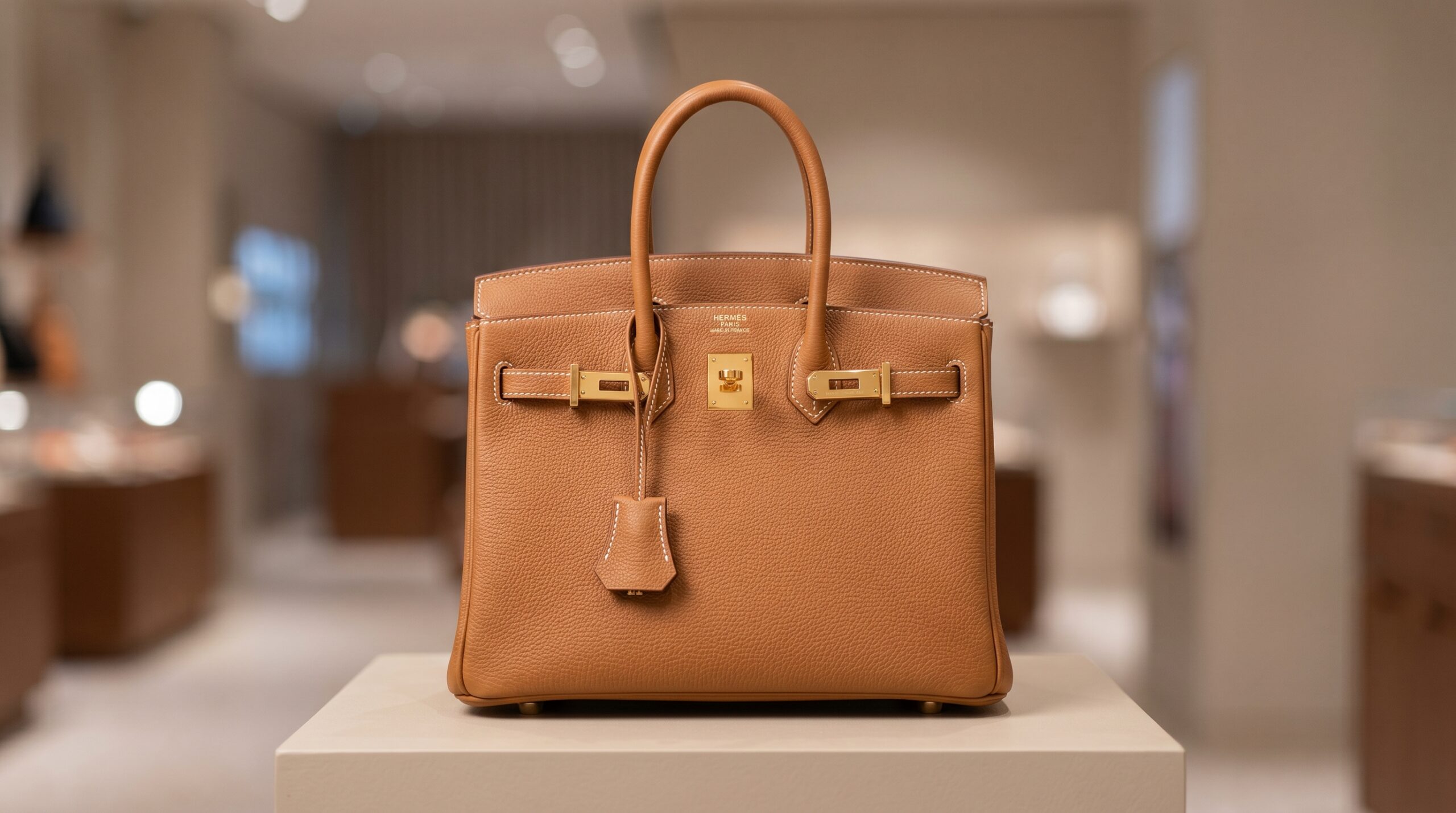
A Birkin 25 in a universally demanded neutral (such as Craie, Noir, or Gold) in Togo or Epsom leather remains an apex financial instrument. Its price-to-resale ratio frequently hovers between 1.8x to 2.0x retail. If you acquire a Birkin 25 at the boutique for approximately $11,400, its immediate cash-out value on a resale platform is roughly $20,000 to $23,000. The liquidity is staggering; a competitively priced, Pristine B25 will turn over in under 72 hours.
However, this ROI is intensely fragile. The bag must remain in Pristine condition with flawless provenance. A missing box, a lost receipt, or a minor scratch on the hardware drops the condition grade to 'Excellent' or 'Very Good', instantly vaporizing $3,000 to $5,000 of your price delta. For those looking to hedge with older assets, our comparison of vintage Hermès Box Kelly vs new investment reveals that leather is the only category that reliably appreciates over decades of holds, provided the structure remains intact.
- Leather quota bags represent the highest absolute ROI in the Hermès portfolio.
- Focus strictly on sizes 25 and 28 in classic neutrals to guarantee maximum liquidity.
- Preserve the condition grade meticulously; a leather bag is only a vault if the market perceives it as flawless.
The Fine Jewelry Reality: Depreciation and Condition Grades
Switching our lens to fine jewelry—specifically 18k Rose, Yellow, and White Gold pieces set with diamonds—the financial reality is sobering. While beautifully crafted, Hermès jewelry does not command the same secondary market hysteria as Cartier’s Love collection or Van Cleef & Arpels' Alhambra.
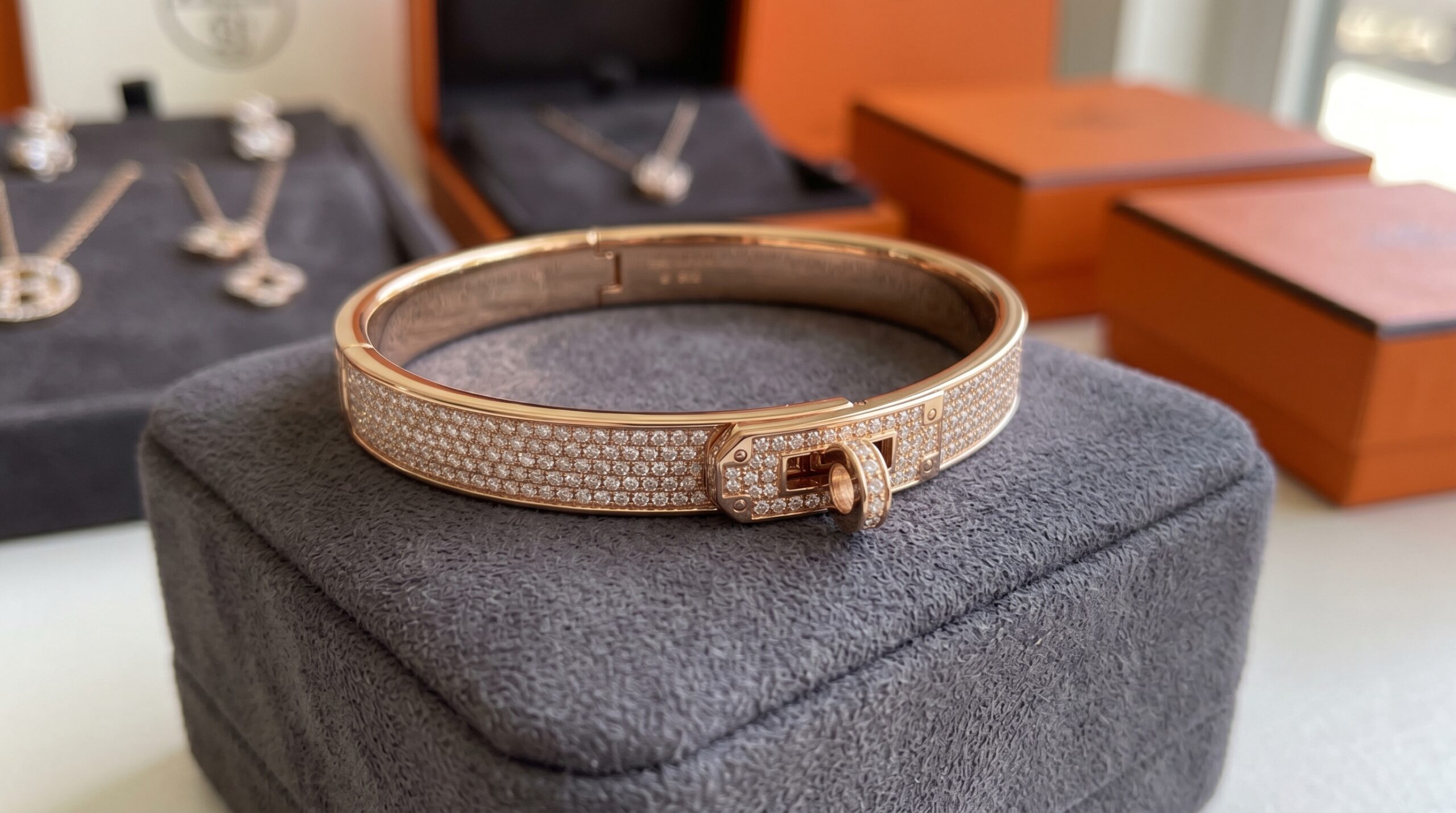
When you purchase an $8,000 Hermès Chaine d'Ancre gold necklace, its immediate value on Fashionphile drops by roughly 20% to 30%. The secondary market views pre-owned Hermès jewelry primarily through the lens of its raw material weight and brand cachet, but it refuses to pay retail parity. This depreciation is exacerbated by wear. 18k gold scratches easily with daily use. A heavily scratched Kelly bracelet will suffer a severe condition grade penalty, dropping its price-to-resale ratio even further. For collectors interested in the forensic details of how these metals wear and how secondary platforms verify them, our sister site provides an exhaustive look into the science and authentication of Hermès precious metals.
The "Loss Leader" Strategy
Because you will likely take a financial hit on your fine jewelry upon resale, you must view these purchases as "loss leaders." If you lose $3,000 reselling a diamond bracelet on Vestiaire Collective, but that purchase secured you a Birkin 25 that nets you a $10,000 profit, your net portfolio gain is $7,000. The key is minimizing the jewelry loss. Stick to iconic motifs (Kelly, Collier de Chien, Chaine d'Ancre) in 18k gold. Avoid highly obscure, seasonal jewelry pieces without diamonds, as they suffer the most catastrophic liquidity freezes.
Furthermore, as detailed in our reseller market price drop analysis, the secondary market is currently saturated with fine jewelry from collectors employing this exact tactic. With high supply and moderate demand, platforms are lowering their direct buyout offers for jewelry, forcing sellers to rely on consignment to extract acceptable margins.
Balancing the Portfolio for Maximum Gain
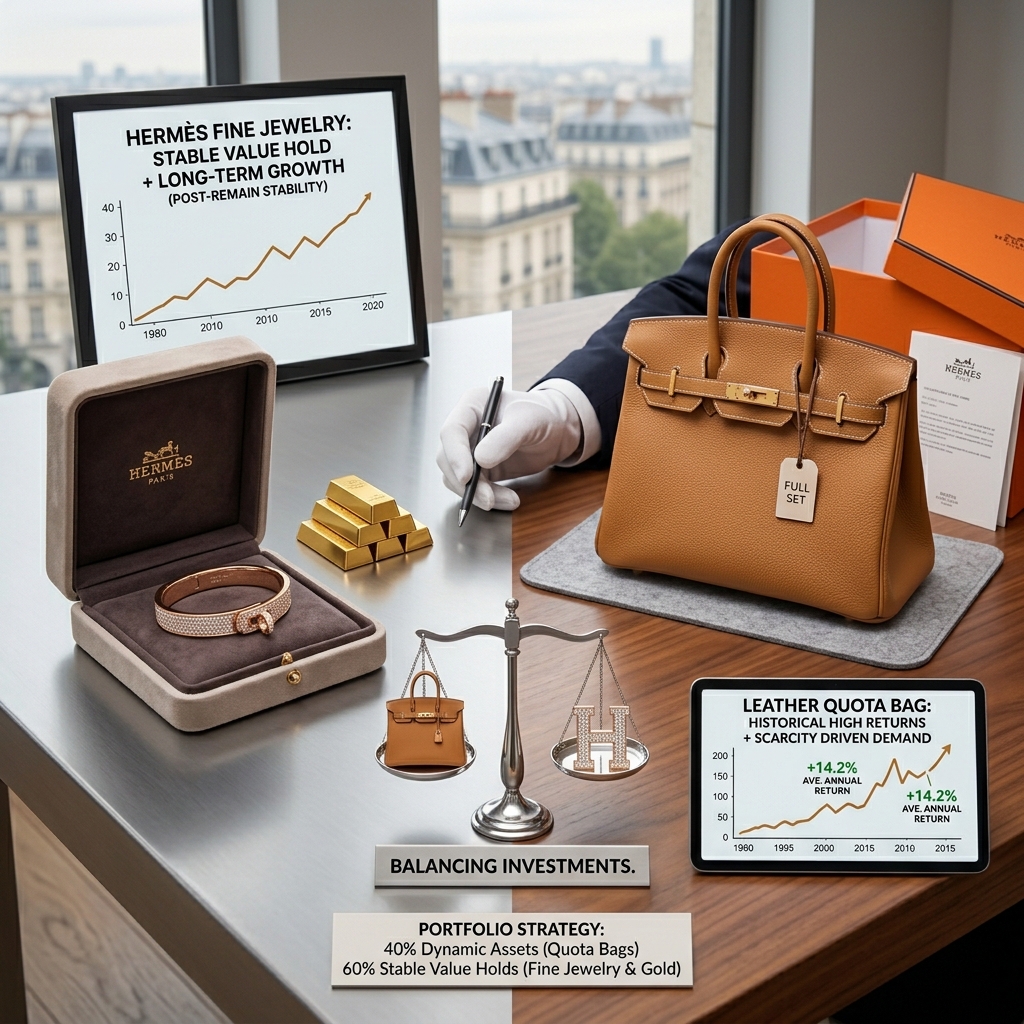
If your goal is pure, ruthless financial gain, your acquisition strategy must seamlessly blend these two realities. You cannot acquire the high-ROI bags without purchasing the depreciating jewelry, so your objective is to mitigate the bleed.
When interacting with your SA, funnel your obligatory spend ratio strictly into classic 18k gold pieces with diamonds. Diamonds buffer the depreciation slightly better than plain gold on the secondary market. Wear the jewelry carefully to preserve its condition grade, keeping the original presentation boxes and authenticity certificates. If you decide to liquidate the jewelry, utilize Vestiaire Collective or 1stDibs and set a firm price; do not accept low-ball direct buyouts unless you are desperate for immediate cash flow.
Once the quota bag is offered, accept only high-liquidity configurations (neutral colors, sizes 25/28, Epsom or Togo leather). The massive positive price delta of the bag will easily eclipse the negative price delta of the jewelry, resulting in a highly profitable, balanced investment cycle.
| Asset Class | Boutique Acquisition Role | Initial Resale Price Delta | Secondary Market Liquidity |
|---|---|---|---|
| Quota Bags (Birkin/Kelly 25) | The Target (The Vault) | +75% to +100% (Profit) | Extremely High |
| Fine Jewelry (18k / Diamonds) | The Mandatory Spend (The Key) | -15% to -30% (Loss) | Moderate to High |
| Non-Quota Bags (Evelyne/Picotin) | Poor Spend Ratio Contributor | -10% to -20% (Loss) | High (But saturated) |
| Silver Jewelry | Weak Spend Ratio Contributor | -30% to -40% (Loss) | Moderate |
The Market Insider's Verdict
In a direct comparison of raw ROI, the leather quota bag absolutely obliterates fine jewelry. However, this is a false dichotomy; the boutique ecosystem requires you to buy the latter to access the former. Bottom Line: To execute a profitable Hermès investment strategy, you must intentionally acquire classic, diamond-set fine jewelry as a calculated "loss leader" to satisfy your spend ratio, relying on the explosive resale premium of the resulting Birkin or Kelly allocation to generate your portfolio's ultimate net profit.
Popular Searches
Explore our most searched jewelry and leather investment questionsHermès Kelly Bracelet Resale Value
Tracking the expected depreciation curve for the most common spend-ratio jewelry item.
📈 Strong ResaleVintage Hermès Jewelry vs Modern Return
Why rare archival gold pieces from the 1970s often outperform modern boutique purchases.
⬆ Rising DemandFashionphile Hermès Jewelry Buyout Prices
Analyzing the current margins and liquidity freezes for pre-owned 18k Rose Gold assets.
★ Collector FavouriteDoes Hermès Silver Count Toward Birkin
Why high-margin fine jewelry is a vastly superior acquisition strategy compared to silver.
