
Resale Value of Hermès Special Order (HSS) Bags Explained
Market Intelligence: Evaluating the Apex of Hermès Acquisition Strategy
The definitive resale value of Hermès Special Order (HSS) bags explained reveals a market characterized by extreme volatility and staggering price deltas. The discrete horseshoe foil stamp—placed adjacent to the Hermès logo—represents the absolute pinnacle of luxury acquisition. It signals that a collector has maintained an elite spend ratio, mastered the boutique relationship, and been granted the rare privilege of customizing a quota bag. However, a dangerous fallacy persists among new investors: the belief that the HSS stamp intrinsically guarantees a massive secondary market payout. In reality, the 2026 secondary market is ruthlessly split. While carefully orchestrated, neutral HSS configurations achieve astronomical liquidity, highly personalized, contrasting "vanity" colorways frequently become toxic assets that struggle to clear retail parity. In this analysis, we deconstruct the precise aesthetic parameters that drive maximum ROI, examine the vulnerability of custom bags to condition grade deductions, and outline exactly how to engineer your special order for optimal liquidation.
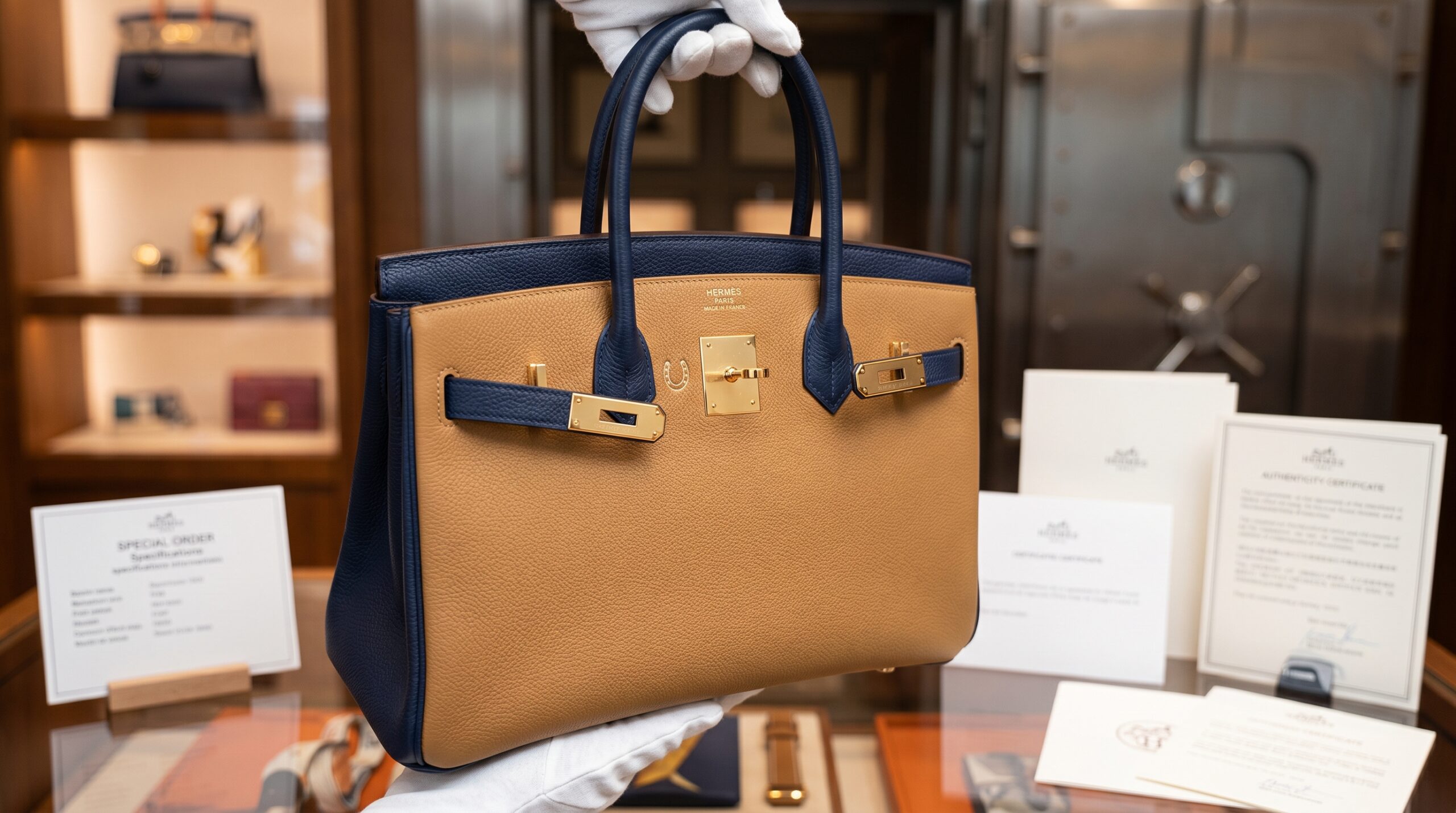
+40% to +80%
Premium for Neutral HSS
-20%
Liquidity Drop for High Contrast
Pristine
Condition Grade Absolute Requirement
The Foundation of HSS Scarcity and Sunk Costs
To accurately assess an HSS asset, you must first understand the financial friction required to generate it. An HSS allocation is not simply requested; it is a highly restricted reward typically offered during bi-annual boutique events to clients occupying the top tier of a Sales Associate's (SA) portfolio. As established in our Hermès quota bag spending ratio strategy, unlocking an HSS slot frequently demands a 3:1 or 4:1 spend history concentrated heavily in high-margin departments like fine jewelry and watches.
Because the pre-spend sunk cost is exorbitant, the secondary market automatically bakes an extreme premium into the initial price-to-resale ratio. A buyer on 1stDibs, Vestiaire Collective, or Fashionphile is not merely purchasing a handbag; they are paying a steep convenience fee to completely bypass years of relationship building and tens of thousands of dollars in requisite boutique purchases. The formal wait list does not exist, but the queue for HSS privileges is intensely competitive.
However, that baked-in premium only materializes if the secondary market actually desires the bag you customized. The HSS program allows clients to choose the leather, the exterior and interior colors, the stitching, and the hardware. If those choices reflect universal luxury tastes, the asset is incredibly liquid. If those choices are eccentric, the asset is financially stranded.
The Profit Trap: Stealth Wealth vs. Vanity Colors
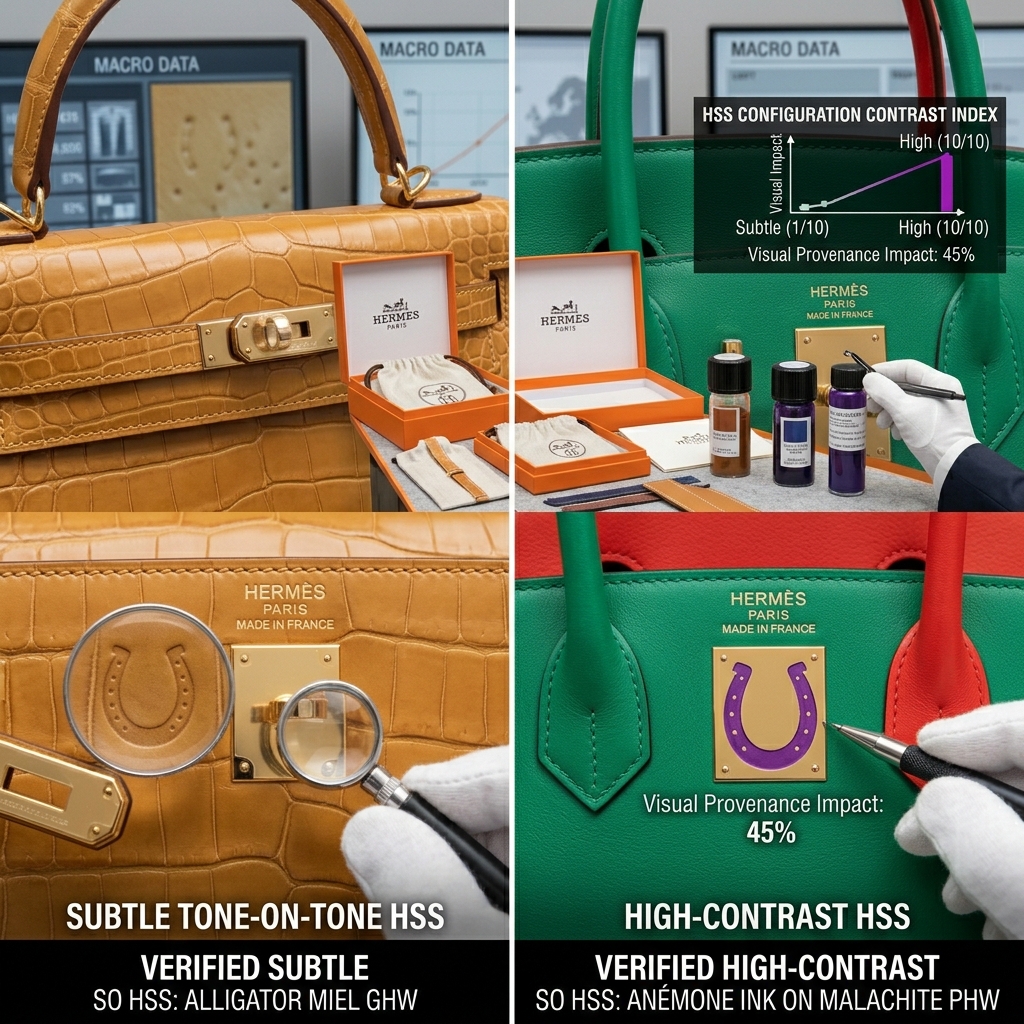
The single greatest determinant of an HSS bag's price delta is the level of contrast within its colorway. When analyzing transaction data across top-tier resale platforms, a stark division emerges between "Investment HSS" and "Vanity HSS."
Investment HSS pieces are engineered specifically to align with a "Stealth Wealth" aesthetic. They feature subtle, tone-on-tone configurations—such as a Craie exterior paired with a Nata interior, or a Trench body with slightly darker stitching. Another highly liquid configuration is the "peek-a-boo" style: a universally demanded neutral exterior (like Noir or Gold) paired with a vibrant, contrasting interior (like Rose Sakura). Because the exterior remains versatile, the buyer pool is massive. A Pristine condition Birkin 25 HSS in Craie/Gold Epsom leather routinely commands a 40% to 80% premium above standard quota bag resale prices.
Conversely, Vanity HSS pieces reflect the original owner's hyper-specific tastes. A bag featuring a Vert Bosphore body with Rouge Casaque handles and bright yellow contrast stitching is a financial liability. A buyer dropping $35,000 on a resale platform wants an asset they can carry effortlessly, not a theatrical statement piece that clashes with their wardrobe. These highly contrasting, bi-color or tri-color HSS bags frequently suffer severe liquidity freezes, sitting unsold for months until the seller is forced to aggressively slash the price-to-resale ratio.
- Always prioritize neutral exteriors (Craie, Nata, Etain, Gold) to guarantee a massive secondary buyer pool.
- Limit bright colors exclusively to the interior lining to retain the HSS novelty without sacrificing wearability.
- Select contrast stitching only if it utilizes a classic, established Hermès pairing (e.g., Gold leather with white stitching).
Hardware Multipliers and Provenance Rigidity
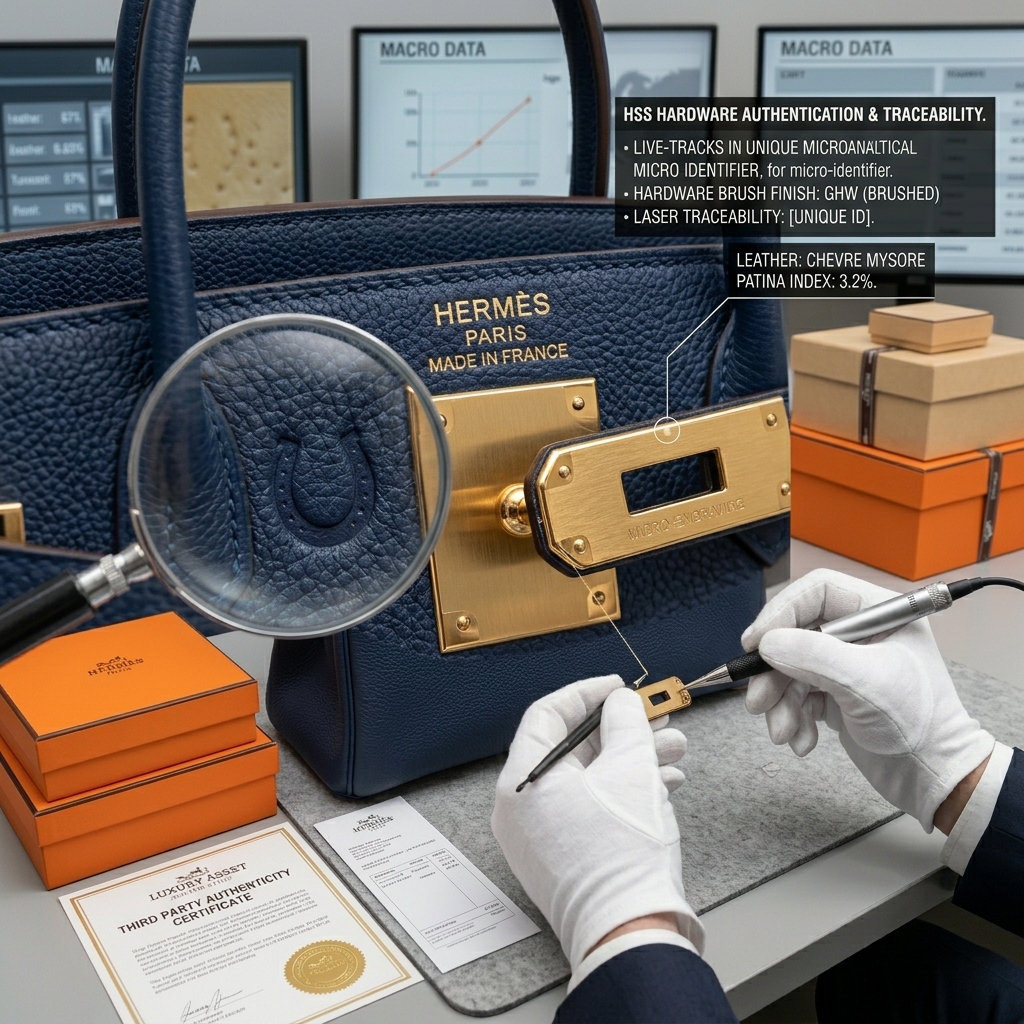
Beyond color, the materials chosen during the HSS process deeply impact the bag's long-term value. The HSS menu frequently unlocks access to leathers not always readily available for standard allocations, specifically Chevre Mysore (goatskin). Because Chevre is heavily associated with VIP custom orders, resists scratching brilliantly, and is highly durable, a Chevre HSS bag commands a distinct, measurable premium over standard Togo or Epsom variations.
Hardware selection acts as the final multiplier. The HSS program occasionally offers brushed hardware (Brushed Gold or Brushed Palladium). While brushed hardware resists micro-scratches effectively, standard polished Rose Gold Hardware (RGHW) currently yields a higher price delta when paired with light neutrals. For an in-depth look at how aesthetic pairings influence market demand, our sister site offers a comprehensive HSS color pairing and aesthetic guide.
The Condition Grade Absolute Requirement
Because buyers are paying an extreme premium for HSS exclusivity, they are completely unforgiving regarding condition. A drop from Pristine to Excellent on a standard Birkin might cost you $1,500; on an HSS bag, that same minor corner scuff can obliterate $5,000 of the price delta. Maintaining absolute, bulletproof provenance is non-negotiable. If you lose the original receipt detailing the custom specifications or the unique HSS box, you introduce doubt into the transaction, forcing a severe price reduction.
Executing the HSS Appointment and Liquidation
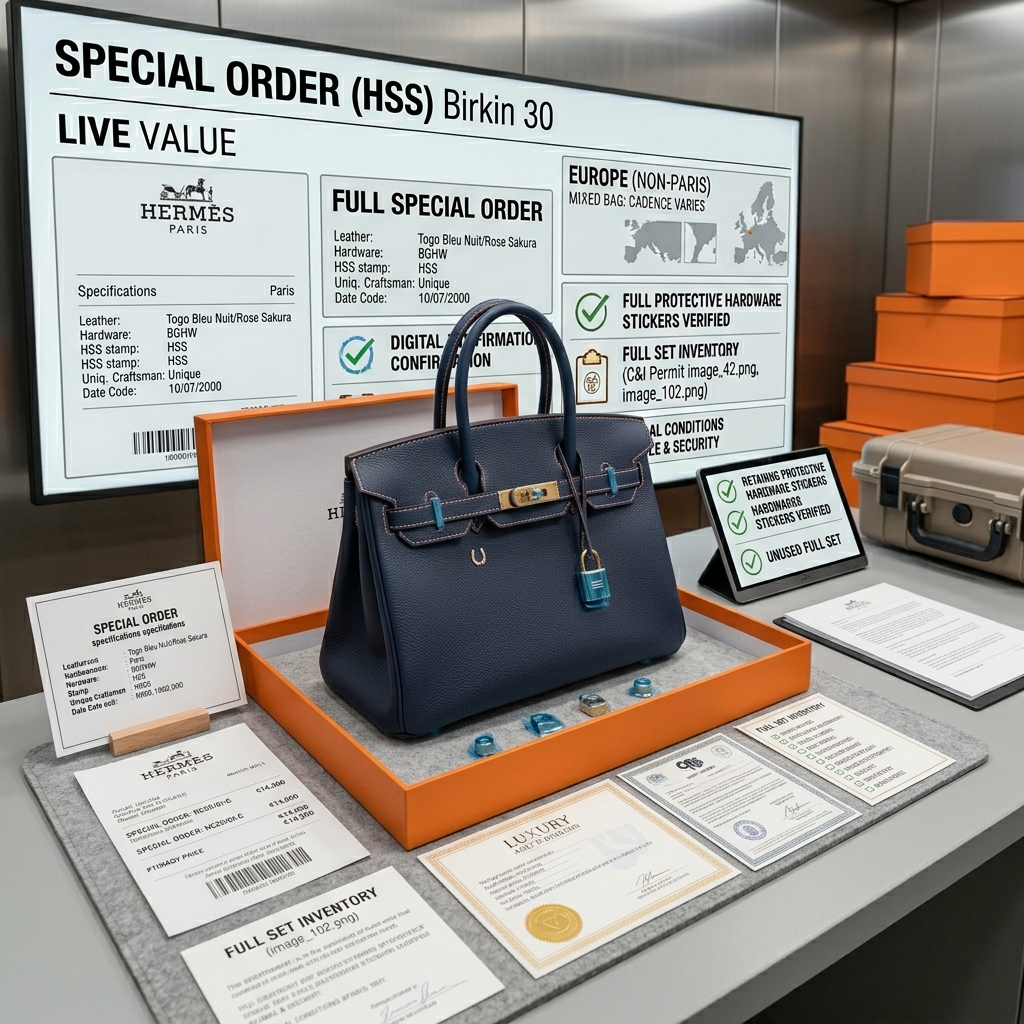
When you finally receive the invitation for an HSS appointment, you must approach it with clinical detachment if your primary goal is asset maximization. Do not allow the excitement of the moment or the SA's suggestions of "fun, bold combinations" to override your investment strategy. You are the one who has to liquidate the asset on Vestiaire Collective in three years, not them.
To lock in maximum liquidity, request a Kelly 25 Sellier or a Birkin 25. Choose a unified, neutral exterior (like Craie or Etoupe) and restrict personalization strictly to the interior leather and hardware. We detailed how these broader market forces affect standard models in our historical price increase analysis, and the same rules apply here: parking capital in universally demanded neutral assets is the only proven defense against market shifts.
Finally, understand the timeline. HSS bags typically take 6 to 18 months to arrive after ordering. You are essentially locking in a futures contract on Hermès pricing. If you engineer a highly liquid, stealth wealth configuration, you guarantee that when the bag finally arrives, it immediately represents a highly profitable, easily deployable asset in your portfolio. For a broader view of how these pieces stack up against other investments, review our jewelry vs bag investment analysis.
| HSS Configuration Type | Aesthetic Profile | Resale Premium Impact | Secondary Market Liquidity |
|---|---|---|---|
| Tone-on-Tone Neutral (e.g., Craie/Nata) | Subtle, highly versatile | +40% to +80% over standard resale | Ultra-High (Immediate Buyer Pool) |
| Neutral Exterior / Pop Interior | Classic with hidden novelty | +30% to +60% over standard resale | Very High |
| High Contrast Bi-Color (e.g., Blue/Red) | Polarizing, highly personal | -10% to +10% over standard resale | Low (Severe Liquidity Freeze Risk) |
| Tri-Color Combinations | Theatrical, difficult to style | Negative price delta frequently observed | Extremely Low |
The Market Insider's Verdict
An HSS allocation represents the zenith of boutique access, but the horseshoe stamp alone cannot overcome bad design choices on the secondary market. Highly personalized, contrasting colors trap your capital in illiquid assets. Bottom Line: To extract the maximum price-to-resale ratio from an HSS opportunity, you must ruthlessly engineer the bag for the broader market: prioritize tone-on-tone light neutrals, choose structured leathers like Chevre or Epsom, and maintain absolute pristine condition and provenance.
Popular Searches
Explore our most searched special order and acquisition questionsHermès HSS Horseshoe Stamp Meaning
How the discrete foil stamp identifies VIP custom allocations on the secondary market.
⬆ Rising DemandSpend Ratio Required for Hermès HSS 2026
The precise financial thresholds needed to unlock custom ordering privileges.
📈 Strong ResaleBest Leather for Hermès Special Order
Why Chevre Mysore dominates the custom market and drives apex price deltas.
◆ Rare OpportunityCraie vs Nata HSS Resale Premium
Analyzing which tone-on-tone light neutral configuration offers the fastest liquidity.
