
Preventing Color Transfer on Light Hermès Leather: Proven Methods
Market Intelligence: Defending the Apex Price Delta of Rare Neutrals Against Irreversible Damage
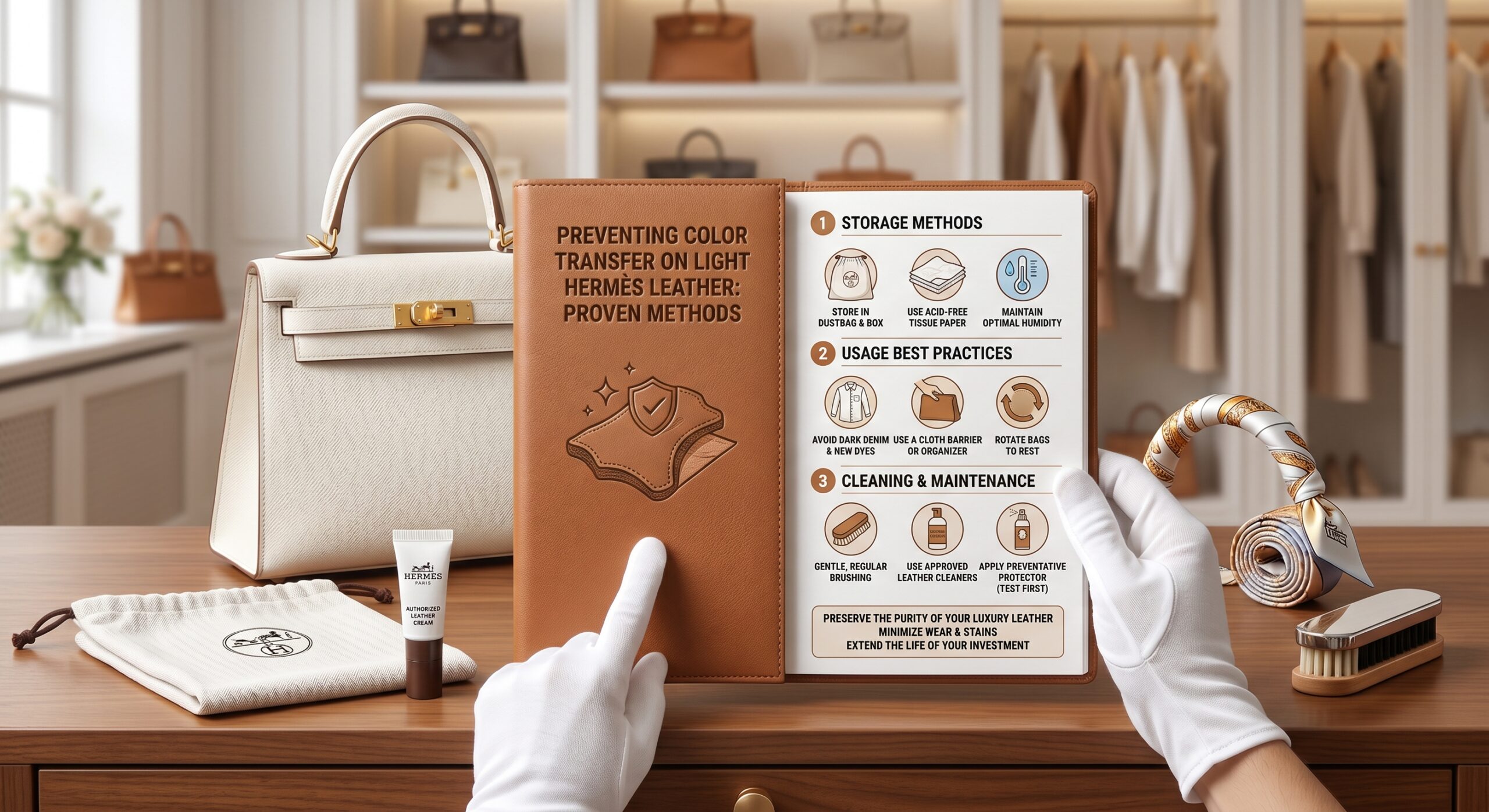
Executing the exact protocols for preventing color transfer on light Hermès leather is not an exercise in obsessive vanity; it is the most critical financial defense strategy required for modern asset preservation. In 2026, the secondary market heavily favors "stealth wealth" aesthetics. Ultra-light, rare neutrals—specifically Craie, Nata, Beton, and Trench—dominate the resale platforms, commanding the highest price-to-resale ratios in the Hermès portfolio. An allocation for a Craie Birkin 25 demands a grueling boutique spend ratio, yet that meticulously cultivated value can be obliterated in a single afternoon of careless wear. When dark dyes from denim, silk, or dark leather outerwear transfer onto a light Hermès bag, the damage is not superficial—it is a catastrophic, irreversible chemical migration. A pristine Nata Kelly that brushes against raw denim will suffer an instant condition grade downgrade, causing a devastating contraction in its price delta. Buyers on Vestiaire Collective and Fashionphile will ruthlessly penalize these assets, often slashing $3,000 to $5,000 off the final valuation. In this exhaustive analysis, we explore the precise mechanics of dye migration, map the vulnerabilities of specific Hermès leathers, and detail the professional-grade mitigation tactics required to lock in your asset's liquidity.
-$3,000 to -$5,000
Avg. Price Delta Penalty
Togo / Clemence
Most Vulnerable Leathers
Pristine
Condition Grade Mandatory for Max ROI
Table of Contents
The Financial Cost of Dye Migration
To understand the gravity of color transfer, one must first consult our central Care & Storage Guide to frame how authenticators assess damage. When you acquire a quota bag in a highly coveted light neutral, you are holding an asset whose premium is entirely predicated on its immaculate visual purity. The secondary buyer is paying a massive markup to acquire perfection without enduring the boutique relationship grind.
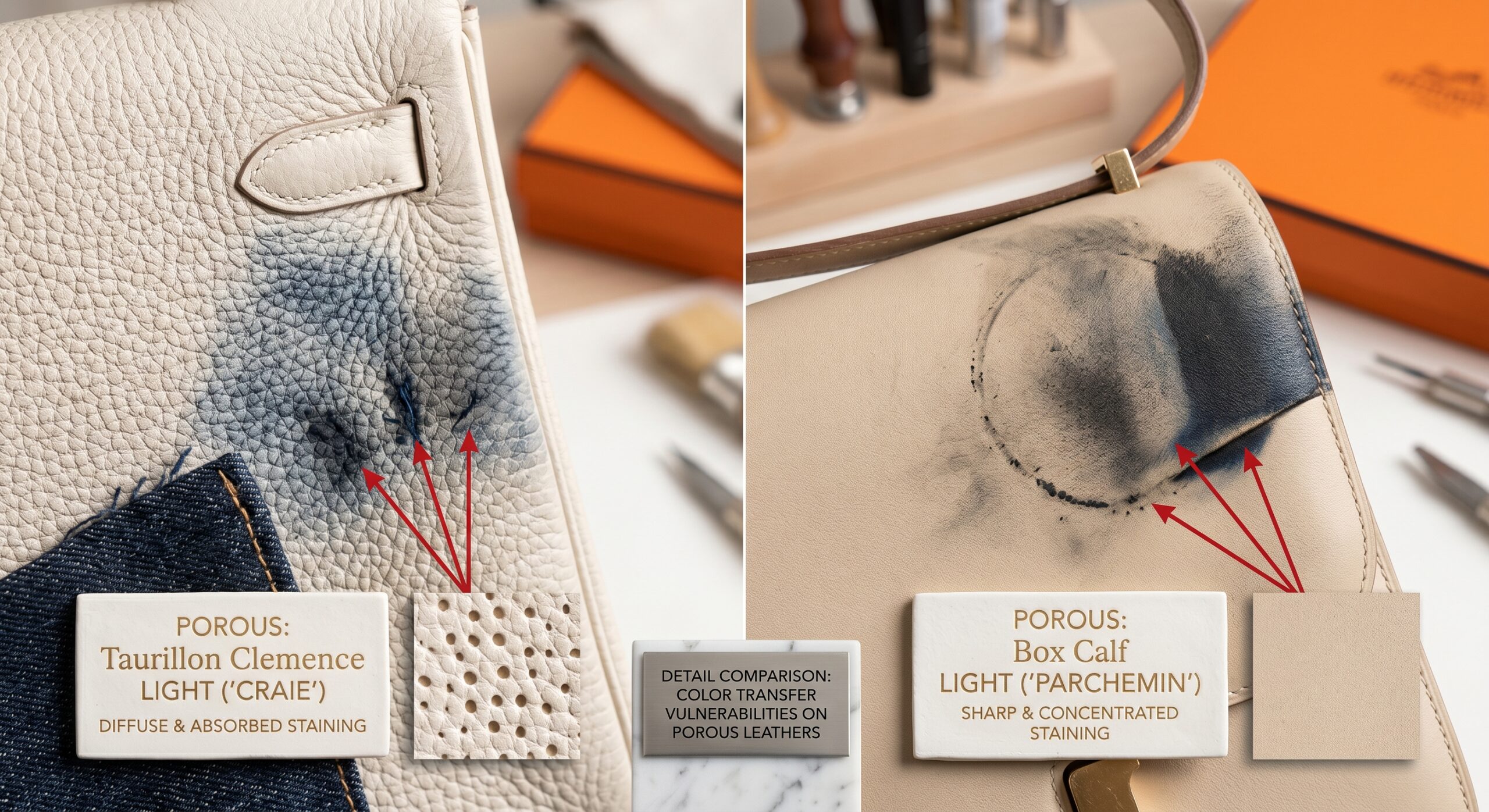
Color transfer occurs via friction and moisture. When an abrasive, heavily dyed material (the most notorious being raw or dark-wash denim) rubs repeatedly against the back panel of a Craie Birkin, the dark indigo dye migrates from the fabric and embeds itself deep into the grain of the leather. This is not dirt resting on the surface; it is a chemical bond. You cannot simply wipe it away with a damp cloth.
When this damaged asset hits a resale platform, the penalty is severe. Direct-buyout platforms like Fashionphile utilize rigid algorithms. A back panel showing blue discoloration drops the bag immediately out of "Excellent" condition into the "Very Good" or "B" category. Because the buyer pool for a stained luxury asset is microscopic compared to the pool for a pristine one, the platform must dramatically drop the asking price to ensure liquidity. This translates directly to a gutted buyout offer, erasing the price delta you secured via your initial boutique acquisition.
Leather Types and Porosity Vulnerabilities
Not all Hermès leathers react to external dyes with the same severity. The speed and permanence of the transfer depend entirely on the porosity and finish of the specific skin. If you are targeting a light neutral for your portfolio, understanding these material differences is essential.
Soft, organic, heavily grained leathers like Togo and Clemence are exceptionally vulnerable. Because they lack a rigid synthetic topcoat, their pores are open. When friction forces dark dye against these leathers, they absorb the pigment almost instantly, pulling the color deep into the pebbled grain. As detailed in our analysis of which Hermès leathers are most durable for daily use, while Togo excels at hiding physical scratches, it fails spectacularly at resisting chemical dye migration. An Evelyne TPM in Nata Clemence worn against a black wool coat will absorb the black fibers and dye within hours of active wear.
Conversely, Epsom leather offers a vastly superior line of defense. Epsom is an embossed, rigid leather finished with a protective resin coating. This topcoat acts as a temporary shield. If an Epsom Kelly 25 in Craie brushes against dark denim, the dye transfer often sits closer to the surface rather than penetrating the fibers, allowing for a higher probability of successful mitigation if caught early. Similarly, Chevre (goatskin) possesses a resilient, lightly glazed surface that resists immediate dye penetration, making it the superior choice for Hermès Special Service (HSS) allocations prioritizing light colors.
- Togo and Clemence are highly porous and act as sponges for external dyes; exercise extreme caution.
- Epsom and Chevre provide a stronger defensive barrier due to their surface finishes, holding their condition grade longer.
- Heritage leathers like Swift are smooth and highly absorbent, representing the absolute highest risk for permanent, highly visible color migration.
Environmental Accelerants: Heat and Humidity
Friction alone is rarely enough to cause immediate, deep-level dye transfer; it requires a catalyst. The secondary market consistently sees a surge of ruined light-colored assets during the summer months and in tropical climates because heat and humidity are the ultimate accelerants.
When the ambient humidity rises, materials release moisture. The dark dye in a pair of jeans or a silk dress becomes slightly unstable. Simultaneously, the pores in organic leathers like Togo open wider in warm, damp conditions. When the damp, unstable dye meets the open, porous leather under the friction of a walking stride, the transfer is aggressive and instantaneous. If you attempt to use the Hermès raincoat to protect the bag during a humid summer shower, you introduce a new threat. As we tested in our comprehensive Hermès raincoat leather damage test, the plastic sheath traps a micro-climate of intense heat and moisture. If the bag is wearing a dark, non-colorfast Twilly on its handle beneath that raincoat, the trapped humidity can cause the Twilly's dye to bleed directly onto the light leather handle.
The Insert Threat to HSS Interiors
The threat of color transfer is not limited to the exterior. Many collectors utilize cheap, dark-colored felt inserts to protect the interior structure of their bags. In a humid environment, the dye from a cheap black insert can migrate directly into the light Chevre lining of an HSS piece. An authenticator inspecting a bag with a ruined interior lining will drastically penalize the price-to-resale ratio. To mitigate this, collectors must strictly utilize premium, undyed felt or color-matched silk inserts. For a precise ranking of safe internal structures, reference our guide on the best bag inserts for Birkin 30 structure. Our sister site also breaks down the forensic chemistry of the science of leather dye transfer and mitigation for investors seeking technical material data.
Practical Defense and Storage Protocols
If you are managing a portfolio heavily weighted in light neutrals, your daily carrying strategy must be meticulously calculated. The golden rule is absolute separation: never carry a Craie, Nata, or Beton quota bag against raw denim, dark suede, cheap wool, or non-colorfast silk. If you are wearing dark, highly pigmented clothing, you must rotate to a darker asset in your portfolio. The risk to your price delta is too severe.
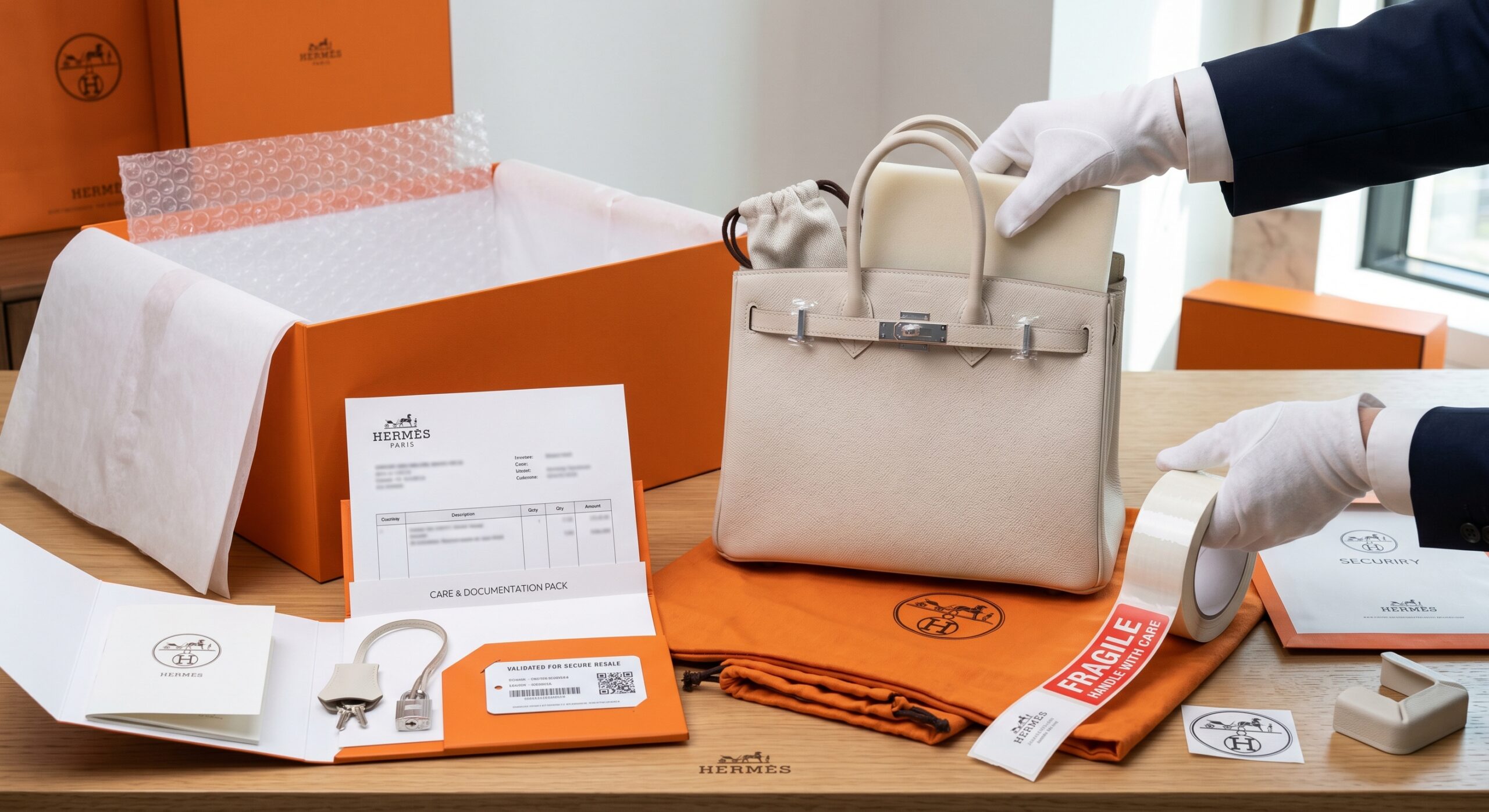
Do not attempt to pre-treat your Hermès bag with aftermarket chemical water-proofing or stain-repellant sprays. The secondary market is highly sophisticated. Authenticators on platforms like The Real Real and 1stDibs will detect the chemical residue, texture alteration, or scent of these sprays. Application of unauthorized chemicals immediately voids the "Pristine" condition grade and can result in the complete rejection of the asset, destroying your liquidity entirely.
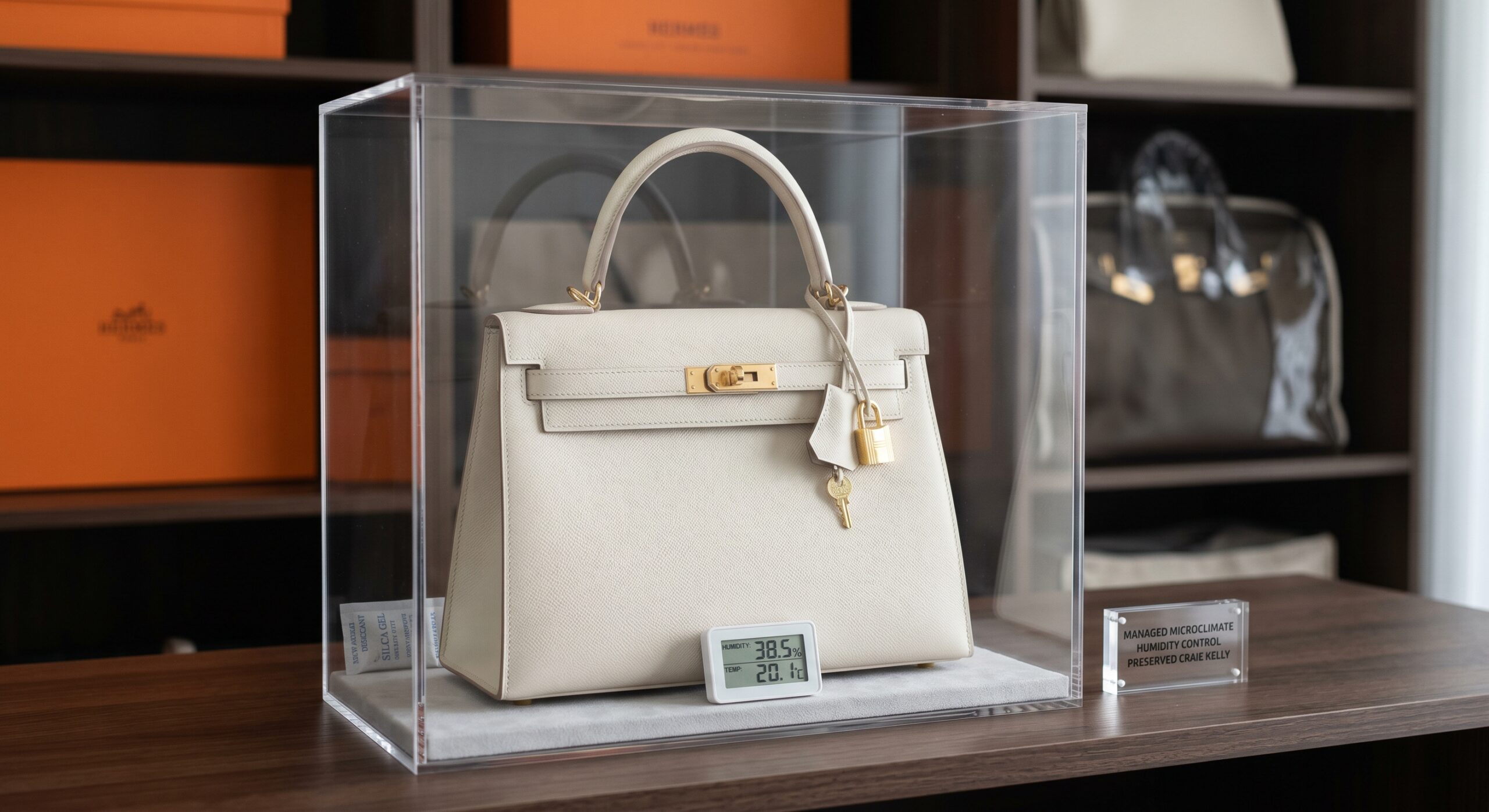
Finally, your storage environment must be sterile. If you live in a tropical or humid climate, you must control the macro-environment of your vault. As detailed in our breakdown of storing Hermès bags in high humidity, store your light bags separately from dark leathers, never allow them to touch inside the closet, and utilize continuous-drain dehumidifiers to neutralize the ambient moisture that acts as the catalyst for dye migration. By enforcing these strict protocols, you lock in the aesthetic perfection required to command top-tier premiums.
| Leather Type | Porosity & Vulnerability | Resistance to Dark Dyes | Resale Penalty for Dye Transfer |
|---|---|---|---|
| Togo / Clemence | Highly Porous / Extreme Risk | Poor (Absorbs deeply into grain) | Catastrophic (-$3k to -$5k Delta) |
| Epsom | Low Porosity (Resin Coated) | Moderate (Surface resistance) | Severe (-$2k to -$4k Delta) |
| Chevre (Goatskin) | Low Porosity (Glazed) | Moderate to High | Severe (Destroys HSS Premiums) |
| Swift / Box Calf | Smooth / Highly Absorbent | Extremely Poor | Total Liquidity Freeze |
The Market Insider's Verdict
The premium attached to rare light neutrals is mathematically dependent on flawless, unblemished visual purity. A single instance of denim dye transfer instantly transitions an apex financial asset into a distressed, illiquid liability. Bottom Line: To protect your capital and ensure the highest possible price-to-resale ratio, you must strictly embargo the pairing of light Hermès leathers with dark, abrasive fabrics, utilize only non-abrasive interior inserts, and categorically refuse the use of aftermarket chemical sprays.
Popular Searches
Explore our most searched condition preservation and asset care questionsCan Hermès Spa Fix Color Transfer
Analyzing the extreme costs and low success rates of factory dye restoration on porous leathers.
📈 Strong ResaleHow to Store a Craie Birkin 25
The definitive environmental protocols required to defend the apex price delta of light neutrals.
⬆ Rising DemandDoes Epsom Leather Stain Easily
Why structured, resin-coated assets provide a superior defensive barrier against daily friction.
★ Collector FavouriteBest Insert for Nata Hermès Bag
Identifying the exact felt grades required to prevent interior dye migration and protect the Chevre lining.
