
Hermès Noir vs Etain: Which Color Has Better Resale Across Models?
Market Intelligence: Evaluating the Absolute Liquidity of the Apex Dark Neutrals
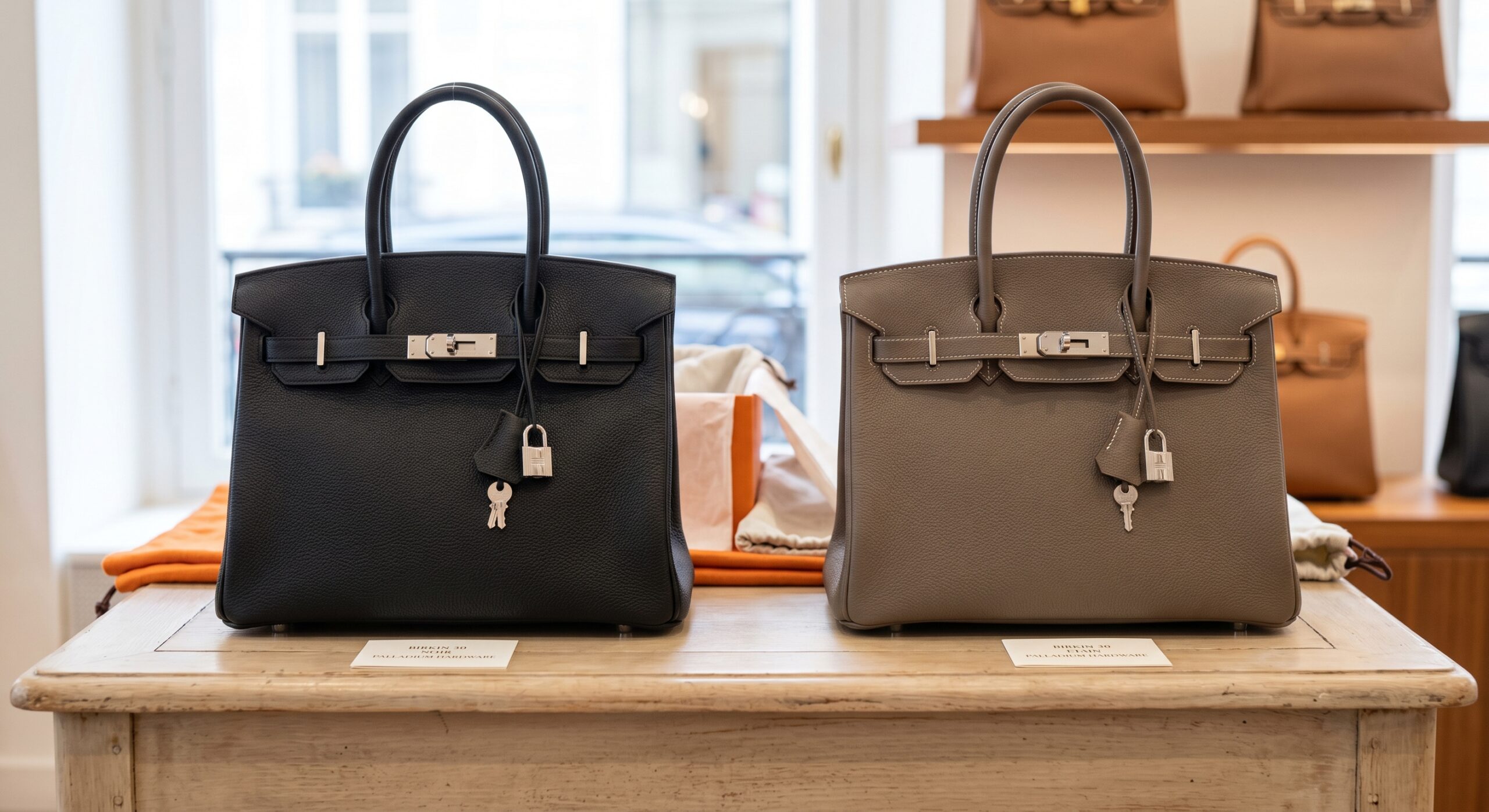
Debating Hermès Noir vs Etain: which color has better resale across models forces the luxury investor to analyze the razor-thin margins separating the brand's most lucrative foundational assets. In the highly corrected 2026 secondary market, speculative buyers have abandoned seasonal brights and polarizing pastels. The remaining institutional capital is flowing aggressively into the "stealth wealth" safety of dark neutrals. Noir (Black) and Etain (Tin Grey) are the undeniable heavyweights of this category. However, assuming these two colors perform identically on resale platforms like Vestiaire Collective and Fashionphile is a critical portfolio error. While Noir represents the ultimate baseline of global liquidity—a cash-equivalent asset that turns over instantly—Etain operates as a highly specific value multiplier depending entirely on its hardware pairing and leather finish. If you miscalculate the condition grade vulnerabilities of Noir or underestimate the hardware dependencies of Etain, your expected price-to-resale ratio will collapse. In this comprehensive head-to-head analysis, we deconstruct the exact price deltas these colors command, evaluate how they physically age, and dictate precisely which shade you must request from your Sales Associate to maximize your financial return.
Ultra-High
Liquidity Rating for Noir
+10% to +15%
Etain Premium with RGHW
Pristine
Condition Grade Mandatory for Max ROI
Table of Contents
The Foundation of Neutral Asset Economics
To accurately project the financial trajectory of Noir versus Etain, investors must first consult our Colors Reference Hub to understand boutique supply dynamics. Neither Noir nor Etain is a seasonal color; they are permanent fixtures in the Hermès leather arsenal. However, "permanent" does not equate to "available." The global demand for these two shades vastly outstrips annual production.
When you initiate a boutique relationship, anchoring your wish list with a request for a quota bag in Noir or Etain signals to your Sales Associate (SA) that you are a serious, educated collector focused on longevity. But because every high-net-worth client in the world is asking for the exact same bags, the required spend ratio to unlock them is formidable. In flagship boutiques, an SA will not surrender a Kelly 25 Sellier in Noir without first seeing a robust, verifiable purchase history—frequently demanding a 2:1 or 2.5:1 ratio in fine jewelry, watches, or homeware.
The secondary market absorbs this immense retail friction. Buyers on The Real Real and 1stDibs recognize that acquiring a dark neutral from a boutique requires tens of thousands of dollars in "shadow costs." Therefore, they are willing to pay a massive price delta to acquire the asset immediately. The fundamental difference between Noir and Etain on these platforms is not whether they will sell, but the speed of the transaction and the specific buyer demographic they attract.
The Noir Baseline: Absolute Velocity and Vulnerability
Noir (color code 89) is the undisputed king of liquidity. If you require immediate capital recapture, a Pristine Birkin 25 or 30 in Noir Togo leather is the safest asset you can hold. On direct-buyout platforms like Fashionphile, a Noir Birkin functions essentially as cash; they will purchase it instantly because they know it will resell to an end-user within 48 hours.
The price-to-resale ratio for a Noir Birkin 25 routinely sits at +80% to +100% over the retail baseline. The hardware pairing slightly shifts the demand curve. As we detailed in our comprehensive hardware type resale price analysis, Noir paired with Gold Hardware (GHW) currently commands a slightly higher premium (+5% to +8%) than Palladium (PHW), as the modern market favors the warm, high-contrast luxury aesthetic.
However, Noir possesses a severe vulnerability: condition grading. Black leather is notoriously unforgiving to physical wear. If you acquire a Noir quota bag in smooth Box Calf or Swift leather, a single fingernail scratch or scuffed corner is glaringly obvious. Authenticators will ruthlessly drop the bag's condition grade from "Pristine" to "Very Good," instantly wiping $2,000 to $4,000 off your expected price delta. Furthermore, Noir Togo leather is prone to "whitening" at the base corners over time if not rigorously protected. To defend the liquidity of a Noir asset, you must treat it with militant care.
- Noir guarantees the highest velocity of any color; it will always sell rapidly.
- Pair Noir exclusively with Gold Hardware (GHW) to extract the absolute maximum resale premium.
- Avoid smooth leathers in Noir if you intend to use the bag, as surface scratches will destroy the condition grade and price delta.
The Etain Anomaly: Hardware Multipliers and Tone
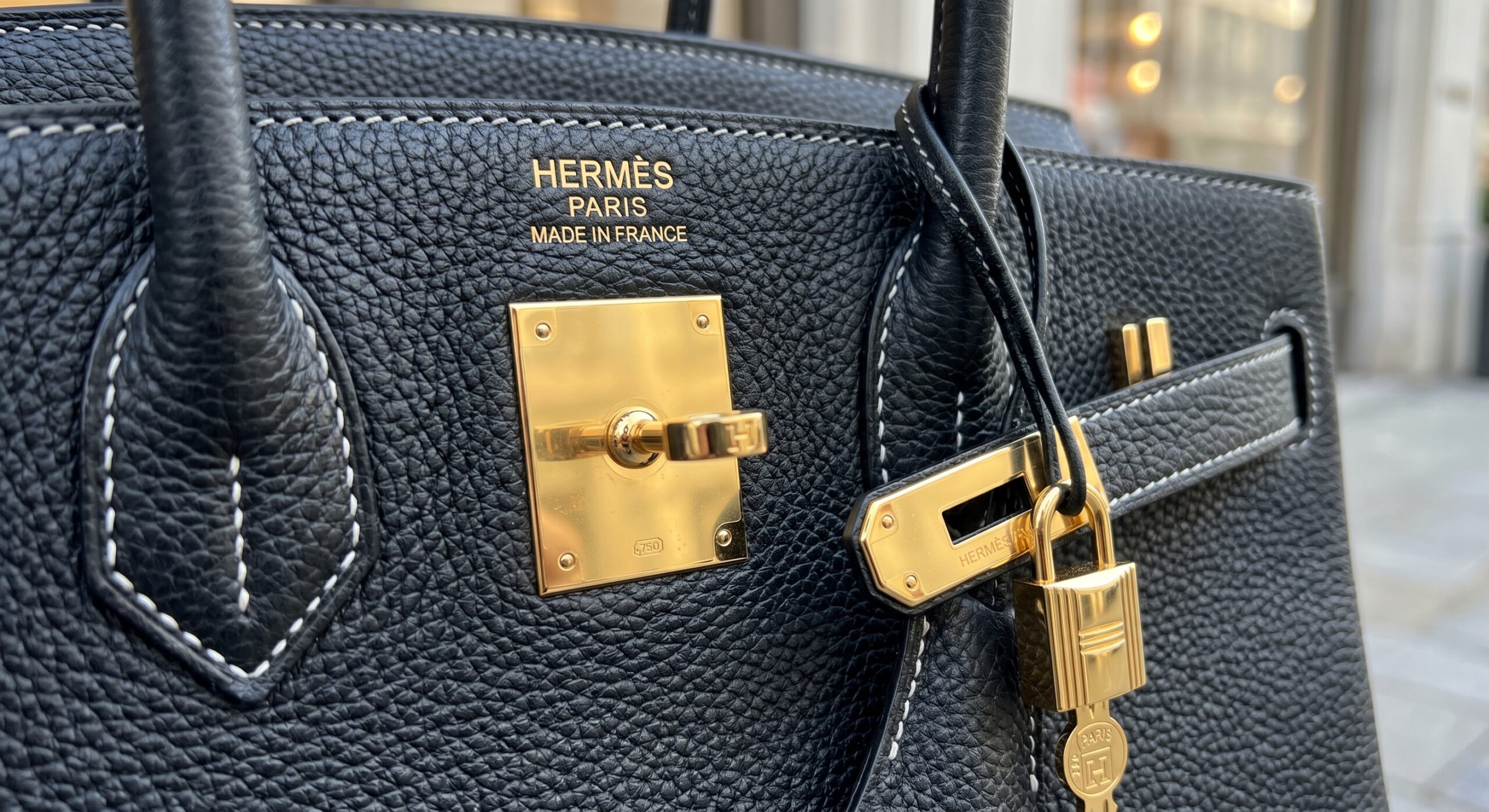
Etain (color code 8F), meaning "tin" in French, is a complex, chameleon grey. It occupies a unique space in the market: it provides the dark, dirt-masking safety of Noir, but offers a softer, more nuanced aesthetic. While its baseline velocity is slightly slower than Noir, Etain possesses a unique multiplier effect that investors must understand.
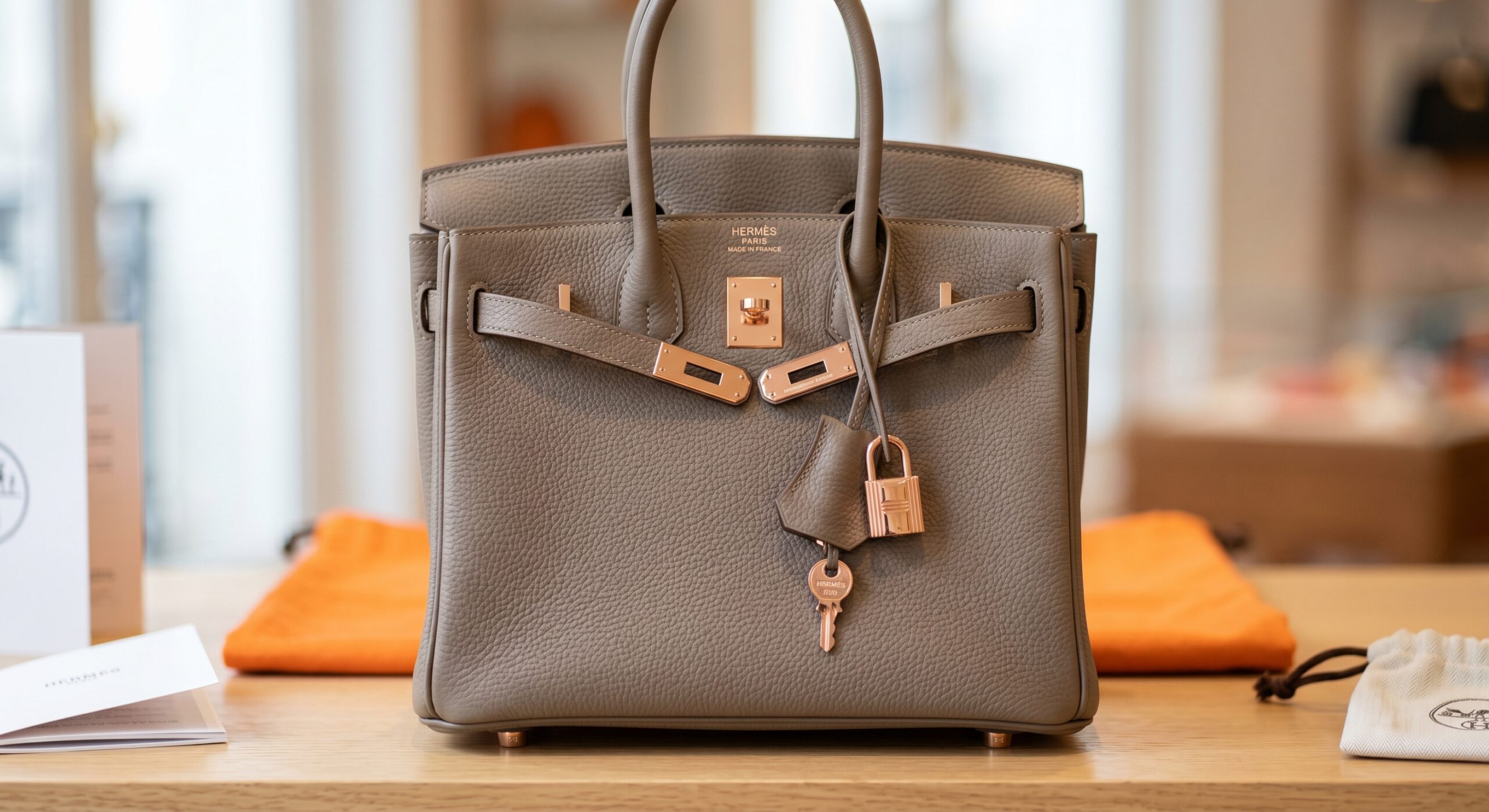
The true financial power of Etain is unlocked exclusively through its hardware. When Hermès pairs Etain with Rose Gold Hardware (RGHW), it creates one of the most intensely demanded configurations in the modern portfolio. The warmth of the rose gold perfectly offsets the cool, flat grey of the leather. On Vestiaire Collective and Sotheby's, an Etain Kelly 25 with RGHW frequently outpaces a standard Noir Kelly, commanding an additional +10% to +15% premium. For a forensic breakdown of how these specific undertones interact visually to drive buyer psychology, our sister site provides an excellent guide to Hermès Etain color undertones and hardware matching.
The Etain Condition Defense
Unlike Noir, Etain provides excellent camouflage against condition grade degradation. The flat grey tone naturally hides micro-scratches and minor corner scuffs far better than a stark black surface. As we noted in our reseller market price drop analysis, buyers are fiercely punishing worn bags. Because an Etain bag carried for six months still visually reads as "Excellent" to an authenticator, it defends its price-to-resale ratio much more effectively during a medium-term hold than a Noir equivalent.
However, if Etain is paired with standard Palladium (PHW), its premium flattens. The market views Etain with PHW as slightly clinical or "flat," stripping away the explosive price delta associated with the Rose Gold pairing. If an SA offers you Etain with PHW, you are acquiring a safe, liquid asset, but not an apex profit multiplier.
Practical Acquisition and Portfolio Strategy
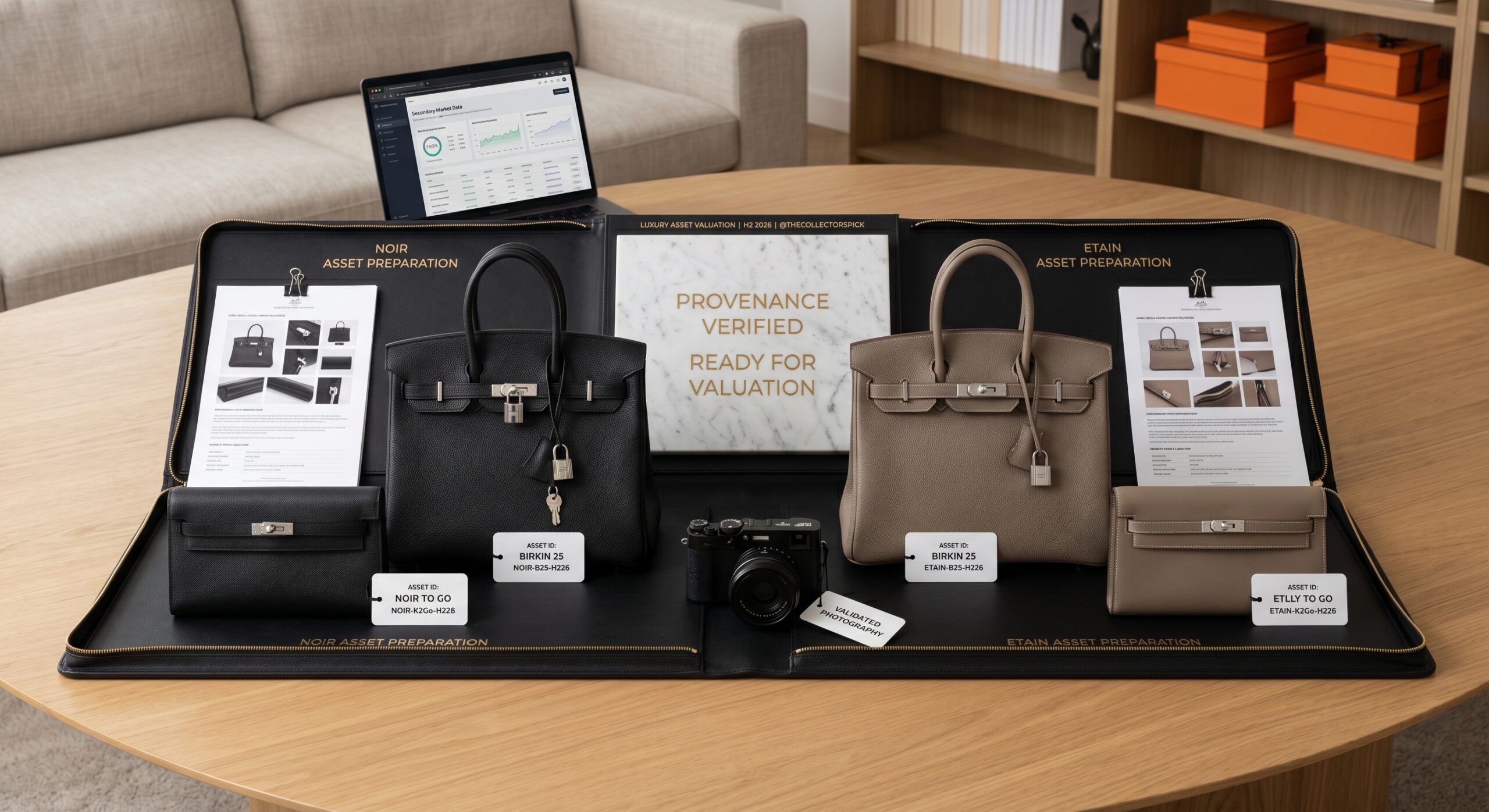
Deciding between Noir and Etain requires aligning your boutique requests with your specific financial goals. When constructing your wish list, you must provide your SA with strict parameters. If your objective is pure, unadulterated liquidity—the ability to turn a bag into $20,000 cash in 24 hours—you must demand Noir.
If your strategy involves actually carrying the asset occasionally while defending its condition grade, Etain is the superior choice. However, you must be explicit with your SA: the Etain request must be inextricably linked to Rose Gold Hardware. Accepting Etain with Palladium is a strategic misstep if your goal is maximum ROI.
When it comes time to liquidate, your platform strategy should diverge based on the color. For a Noir Birkin, utilize direct-buyout platforms like Fashionphile; they will offer highly competitive rates because they know they can flip it instantly. For an Etain piece with RGHW, utilize a peer-to-peer model like Vestiaire Collective. You want to expose that highly specific, rare combination to international collectors who are willing to pay a massive premium for the exact hardware pairing, rather than accepting an automated, baseline algorithm offer. For further holistic strategies on managing your Hermès portfolio, review our complete All Topics directory.
| Color & Hardware Configuration | Condition Grade Defense (Scratch Visibility) | Resale Premium / Price Delta | Secondary Market Liquidity |
|---|---|---|---|
| Noir + Gold Hardware (GHW) | Poor (Scratches highly visible) | +80% to +100% (Apex Baseline) | Ultra-High (Instant Velocity) |
| Etain + Rose Gold (RGHW) | Excellent (Masks minor wear) | +90% to +115% (Specialty Premium) | Very High |
| Noir + Palladium (PHW) | Poor | +70% to +90% | Ultra-High |
| Etain + Palladium (PHW) | Excellent | +60% to +80% (Flatter Premium) | High |
The Market Insider's Verdict
Both Noir and Etain are foundational pillars of a luxury portfolio, but they operate on different mechanical principles. Noir relies on inescapable global demand, while Etain relies on precise aesthetic engineering. Bottom Line: For absolute, guaranteed liquidity and rapid capital turnover, Noir (specifically with GHW) is the unmatched asset. However, if you secure Etain specifically paired with Rose Gold Hardware (RGHW), it frequently outpaces Noir in total price delta while simultaneously offering superior defense against condition grade depreciation.
Popular Searches
Explore our most searched color investment and liquidity questionsHermès Rose Gold Hardware Resale Value
Tracking the exact premium multiplier applied when RGHW is paired with specific neutral leathers.
📈 Strong ResaleEtain vs Craie Price Delta 2026
Comparing the robust safety of dark grey against the explosive, high-maintenance premium of ultra-lights.
⬆ Rising DemandBest Hermès Color for First Birkin
Why locking in a dark neutral guarantees your initial capital deployment remains highly liquid.
★ Collector FavouriteDoes Noir Box Calf Scratch Easily
Understanding the severe condition grade risks associated with acquiring smooth black heritage leathers.
