
Hermès Evelyne vs Picotin: Which Has Better Market Liquidity?
Market Intelligence: Deciphering the Velocity and Price Deltas of the Entry-Level Sector
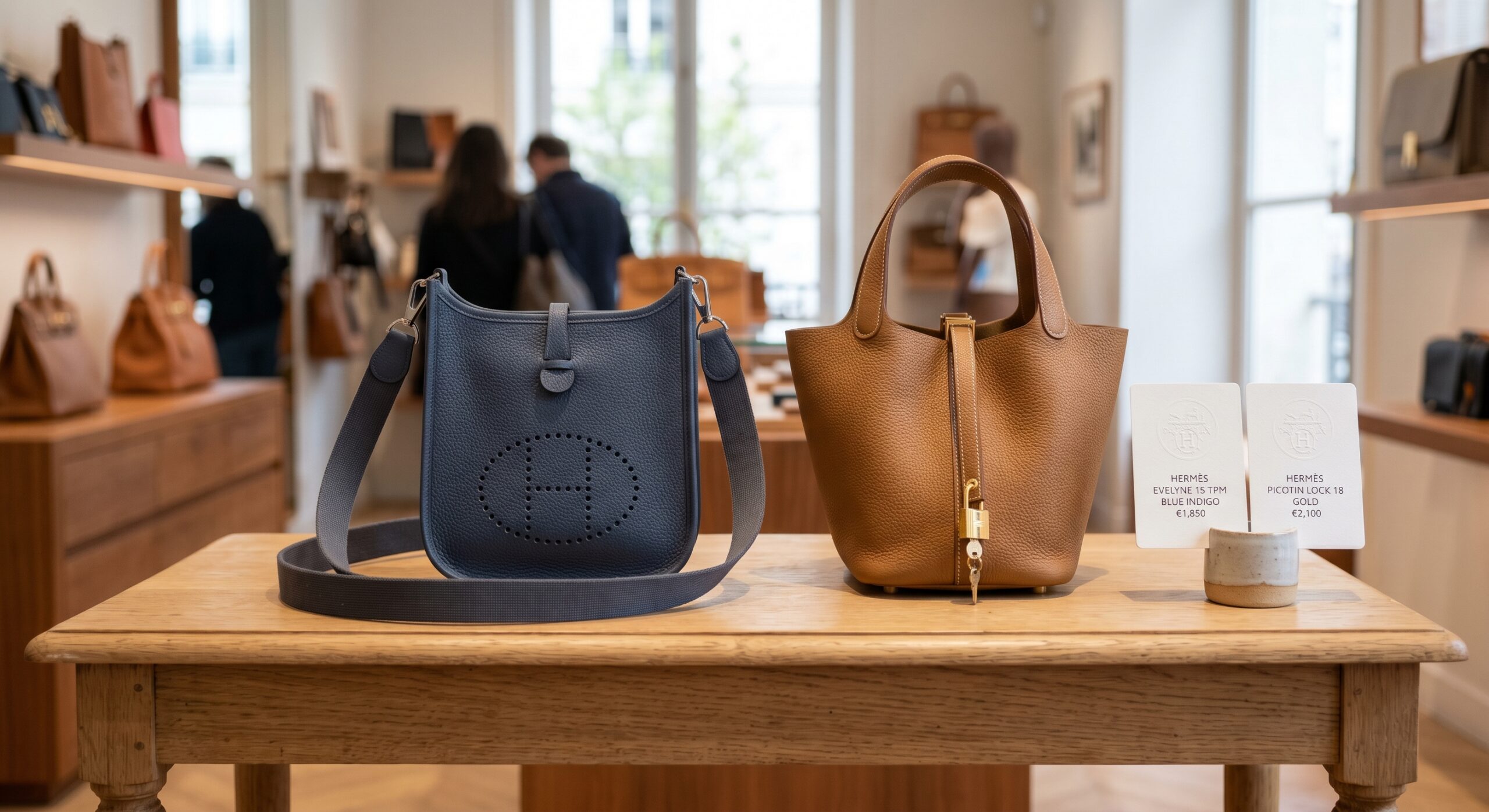
When high-net-worth investors debate Hermès Evelyne vs Picotin: which has better market liquidity, they are fundamentally analyzing the velocity of the foundational tier of luxury asset management. In the hyper-corrected 2026 secondary market, these entry-level, non-quota bags serve an entirely different financial purpose than a Birkin or a Kelly. You do not purchase an Evelyne or a Picotin expecting to capture an explosive, +100% price delta. Instead, these assets act as highly tactical "cash parking" instruments—accessible price points that offer extreme turnover speed when you need to recapture liquid capital. However, treating these two distinct silhouettes as interchangeable is a severe portfolio error. While both inhabit the sub-$3,000 retail category, they are targeted by entirely different secondary buyer demographics and suffer from uniquely different condition grade vulnerabilities. A minor miscalculation regarding size, hardware, or leather wear can instantly transform a rapidly liquid asset into a stagnant liability. In this comprehensive head-to-head analysis, we will map out the exact resale performance of both models across major platforms, dissect the structural liabilities that erode their value, and outline exactly which bag protects your capital most efficiently.
Ultra-High
Liquidity for Sizes TPM & 18
-10% to -20%
Avg. Expected Price Delta
Pristine
Grade Required to Prevent Massive Loss
Table of Contents
The Foundation: Non-Quota Acquisition Mechanics
To accurately evaluate the resale performance of these bags, investors must first ground their perspective in the acquisition realities mapped out in our Iconic Collections hub. The Evelyne and the Picotin are non-quota bags. This means they are not restricted by the draconian, twice-a-year purchasing limits imposed on a quota bag (like the Birkin or Kelly). Furthermore, they do not require the astronomical 2:1 or 3:1 spend ratio in fine jewelry or homeware to unlock.
However, "non-quota" does not mean "freely available on shelves." In 2026, the boutique gatekeeping for entry-level leather goods remains intense. You cannot simply walk into a flagship boutique, point at a Picotin 18 in Gold, and walk out. Securing one still requires a tactical boutique relationship and a cooperative Sales Associate (SA). The informal wait list for these models is congested precisely because they represent the absolute lowest barrier to entry for new clients looking to establish a purchase history.
The secondary market absorbs this exact retail friction. Buyers on Vestiaire Collective or Fashionphile understand that acquiring an Evelyne TPM from a boutique still requires time, effort, and occasional peripheral spending. Because the retail baseline is relatively low (between $2,000 and $3,000), the buyer pool on the resale platform is massive. This ensures that when you list one of these bags in Pristine condition, the liquidity—the speed at which the bag turns into cash—is exceptionally high, often turning over in less than 48 hours. The trade-off for this speed is the price-to-resale ratio; you are sacrificing premium multiples for absolute velocity.
The Picotin Advantage: Classic Cash Parking
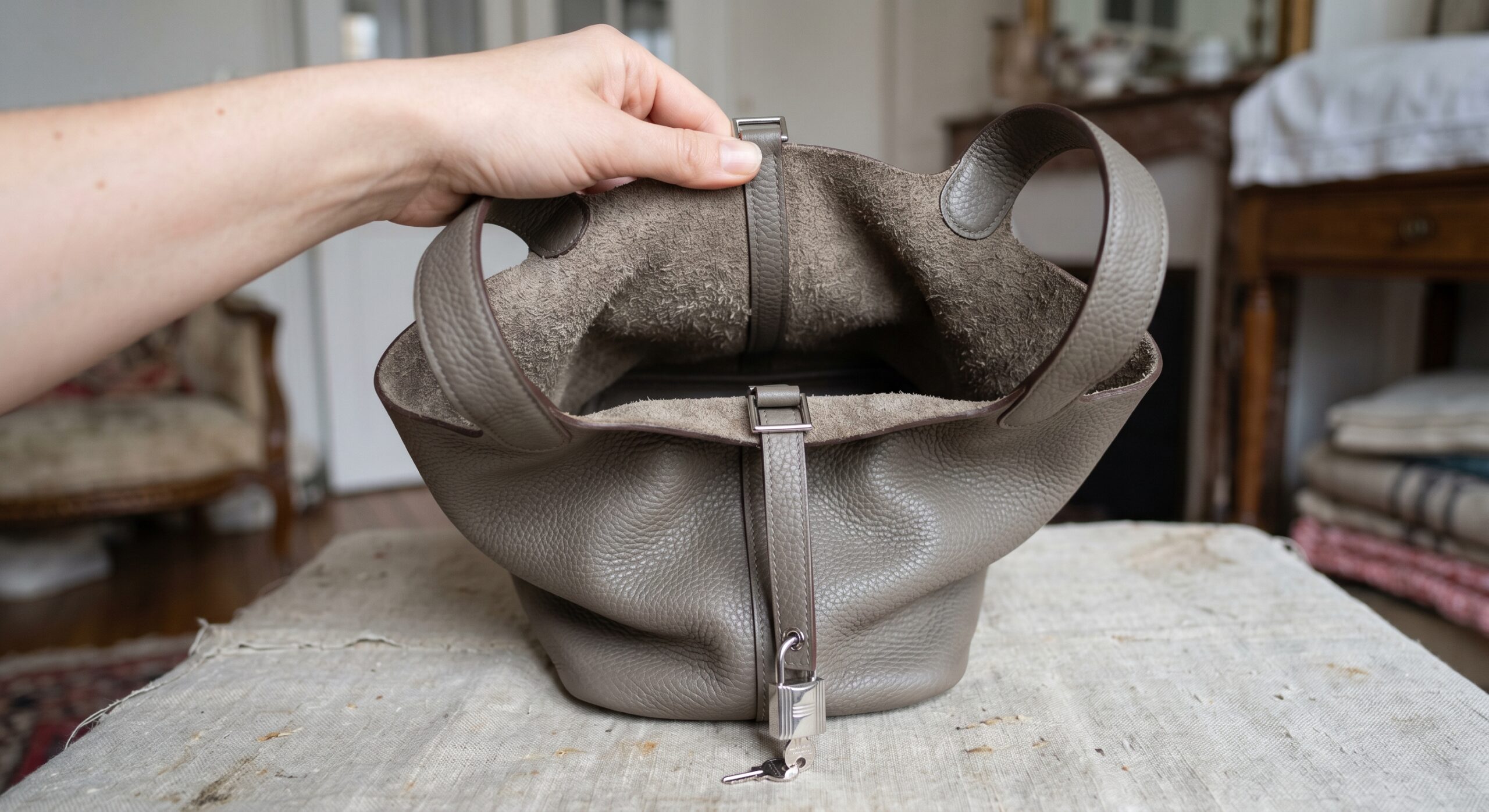
When analyzing direct secondary market data, the Picotin Lock—specifically the size 18 footprint—is widely considered the apex non-quota asset for capital preservation. Retailing for approximately $2,900 in Clemence leather, the Picotin operates as an unlined, minimalist bucket bag secured by the iconic Hermès padlock.
On platforms like The Real Real and 1stDibs, a Pristine Picotin 18 in a classic neutral (Noir, Gold, Etoupe) holds its price-to-resale ratio incredibly well, frequently trading between $2,500 and $2,800. This represents a very mild negative price delta, meaning the seller recoups the vast majority of their initial investment. In highly restricted seasonal pastels (like Rose Sakura) or special bi-color variations (like the Picotin Cargo or Casaque), the bag can occasionally breach retail parity and command a slight positive premium.
However, the Picotin carries a profound condition grade vulnerability. Because it is unlined and crafted predominantly in soft, heavily grained Clemence leather, it possesses virtually no structural rigidity. Over months of use, gravity pulls the leather downward, resulting in severe "puddling" or slouching at the base. Resale platform authenticators heavily penalize structural loss. A Picotin 18 that has lost its upright posture will be downgraded from "Excellent" to "Very Good," instantly widening the negative price delta. To defend this asset, you must treat the interior chemistry of the leather seriously. For a deep forensic dive into how soft leathers succumb to gravity, our sister site provides a brilliant analysis on the science of Clemence leather stretching and structural collapse.
- The Picotin 18 offers the tightest price delta and highest capital preservation in the entry tier.
- Avoid the Picotin 22 or 26; oversized bucket bags suffer from massive secondary market apathy and steep depreciation.
- The bag must be stored with a premium 2mm felt insert to prevent the slouching that destroys resale value.
The Evelyne Dynamic: Velocity vs. Canvas Liabilities
The Evelyne presents an entirely different financial proposition. Specifically, we focus on the Evelyne TPM (Tres Petit Modele, or Mini Evelyne), which has entirely eclipsed the larger PM and GM sizes in resale demand. Retailing around $2,000 to $2,200, it is the most accessible full-leather bag Hermès produces. As we outlined in our guide to the best entry-level Hermès bags under $3,000, the TPM is unmatched in sheer transaction speed.
If you list a Pristine Evelyne TPM in a desirable colorway on Fashionphile, you will receive a direct buyout offer almost instantly. The velocity is staggering. However, the price delta is wider than the Picotin. You will routinely absorb a 10% to 20% loss after consignment fees are factored in. The market treats the Evelyne TPM as a highly casual, depreciating asset.
The Canvas Strap Depreciation Trap
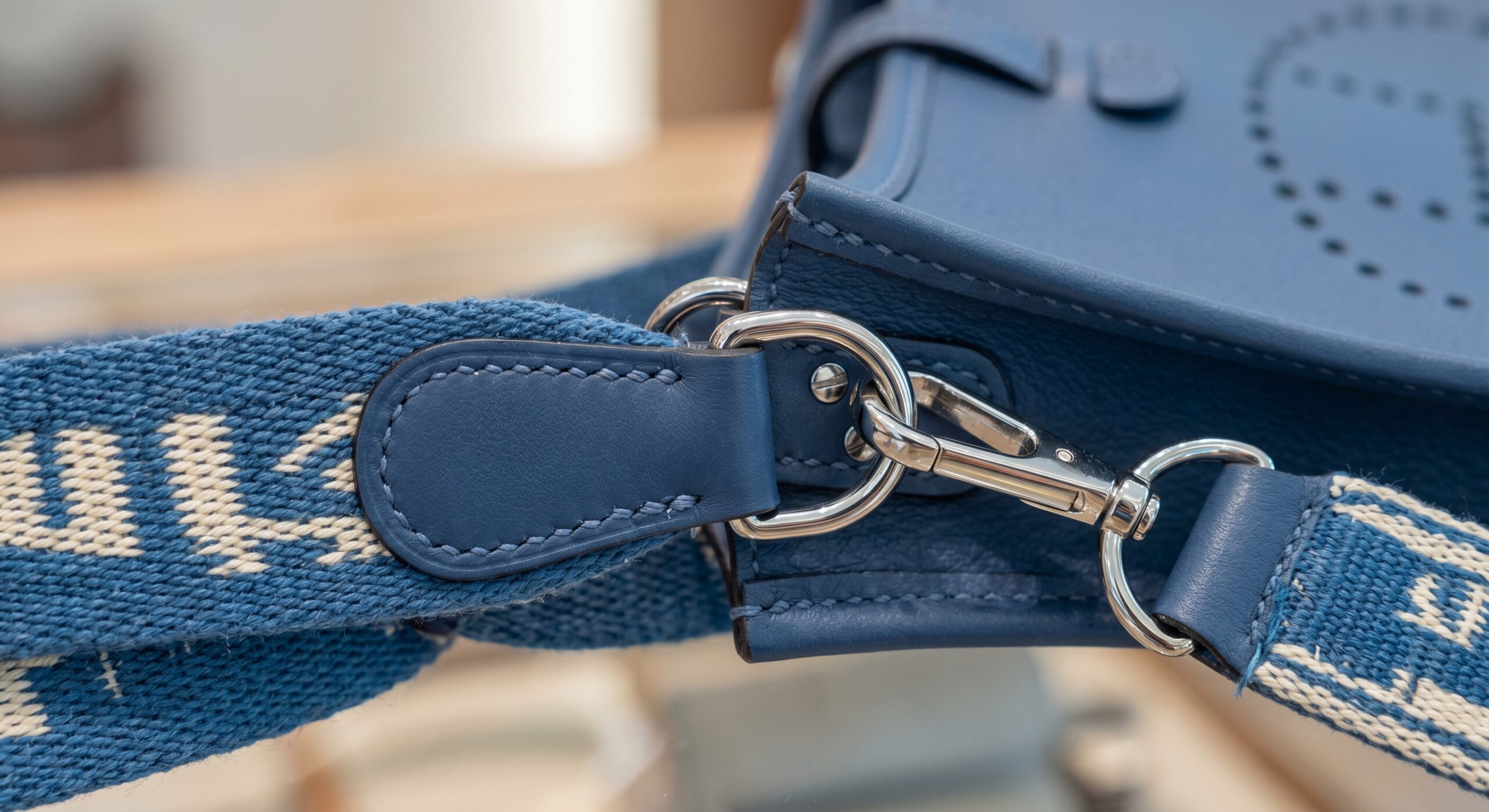
The defining feature of the Evelyne—and its greatest liability—is the detachable canvas crossbody strap. The secondary market is brutally unforgiving regarding canvas. While the Clemence leather body of the bag might remain flawless, the canvas strap absorbs sweat, dirt, and oils rapidly. If the strap exhibits pilling, staining, or hardware friction wear where it attaches to the bag, authenticators will plummet the condition grade. A buyer will use a soiled strap as leverage to negotiate a heavy discount, effectively destroying your capital preservation strategy.
Furthermore, because the Evelyne TPM is highly casual, the secondary market is much more receptive to vibrant, non-traditional colorways compared to the strict neutral bias of the quota bag market. A brightly colored Evelyne will often liquidate faster than a Noir one, provided the strap remains absolutely spotless.
Practical Implications and Liquidation Strategy
When executing your boutique strategy, clarity regarding the sizes of these models is paramount. As we detailed heavily in our analysis of which Hermès bag sizes have the highest resale demand, the era of the oversized handbag is dead. If an SA offers you a Picotin 22 or an Evelyne PM, and your goal is financial ROI or capital preservation, you must politely decline. Accepting an oversized non-quota bag traps your money in a severely depreciating asset that will linger on resale platforms for months.
If you are acquiring to eventually liquidate, focus on the Picotin 18 in classic neutrals for maximum value retention. If you simply need a bag to establish your boutique relationship while ensuring you can sell it in 24 hours (albeit at a slight loss), the Evelyne TPM is your target.
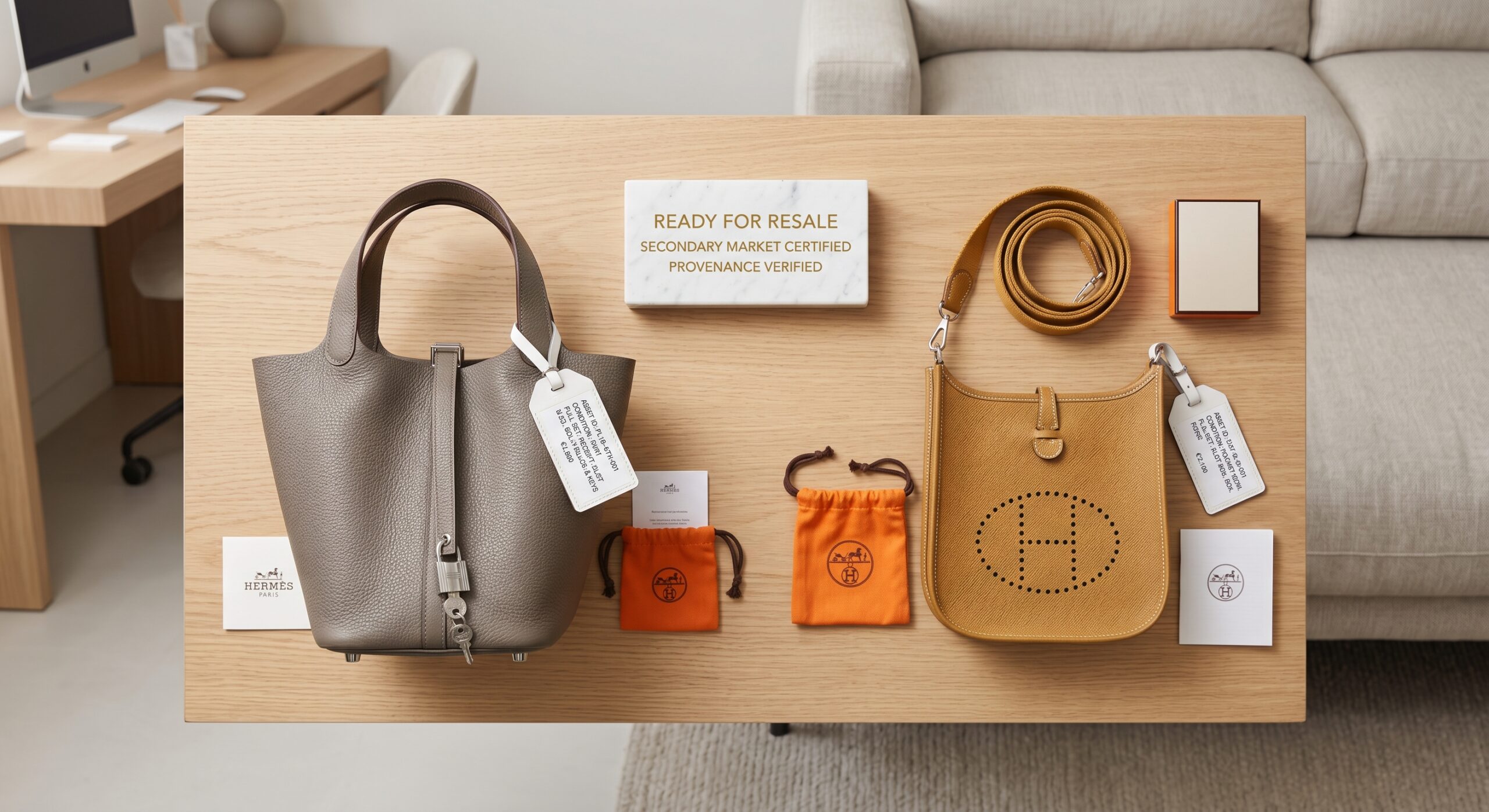
In either scenario, provenance and condition grading dictate everything. Retain the original box, dust bags, and receipt. For the Picotin, ensure the padlock and keys are unblemished. For the Evelyne, the canvas strap must appear functionally unworn. If you maintain "Pristine" status across these touchpoints, these entry-level assets will serve as highly reliable, liquid anchors within your broader luxury portfolio. For context on how this compares to higher-tier investments, review our guide detailing which Hermès bag styles hold their resale value best.
| Model & Size | Primary Condition Vulnerability | Resale Premium / Price Delta | Secondary Market Liquidity |
|---|---|---|---|
| Picotin Lock 18 (Clemence) | Base slouching / Structural loss | -5% to -15% (High Preservation) | Extremely High |
| Evelyne TPM (Clemence) | Canvas strap staining / Hardware friction | -10% to -20% (Depreciating) | Ultra-High (Instant Velocity) |
| Picotin 22/26 | Oversized scale lacks demand | -20% to -35% | Moderate to Low |
| Evelyne PM/GM | Heavy, bulky silhouette | -25% to -40% | Low (Severe liquidity freeze risk) |
The Market Insider's Verdict
Entry-level non-quota bags are high-velocity instruments, but they penalize carelessness aggressively. While the Evelyne TPM offers the absolute fastest route to cash, the canvas strap is a massive condition risk. Bottom Line: For superior capital preservation and the narrowest negative price delta, the Picotin 18 is the definitive winner over the Evelyne. It operates as the safest cash parking asset in the sub-$3,000 tier, provided you utilize a rigid insert from day one to defend its structure against the punishing metrics of the resale market.
Popular Searches
Explore our most searched entry-level investment and liquidity questionsHow Hard is it to Get a Picotin 18 in 2026
Tracking the escalating boutique gatekeeping that artificially limits non-quota supply.
📈 Strong ResalePicotin 18 vs Picotin 22 Resale Value
Analyzing the exact financial penalty the secondary market applies to oversized bucket bags.
⬆ Rising DemandDoes the Evelyne TPM Hold Value
Why the canvas crossbody strap remains the single biggest liability to your price-to-resale ratio.
★ Collector FavouriteDo Non-Quota Bags Build Spend Ratio
Understanding how purchasing entry-level leather goods impacts your ultimate Birkin allocation.
