
How to Tie a Twilly on a Kelly Handle Perfectly
Market Intelligence: The Silk Barrier Protecting Your Investment Grade and Resale Price Delta
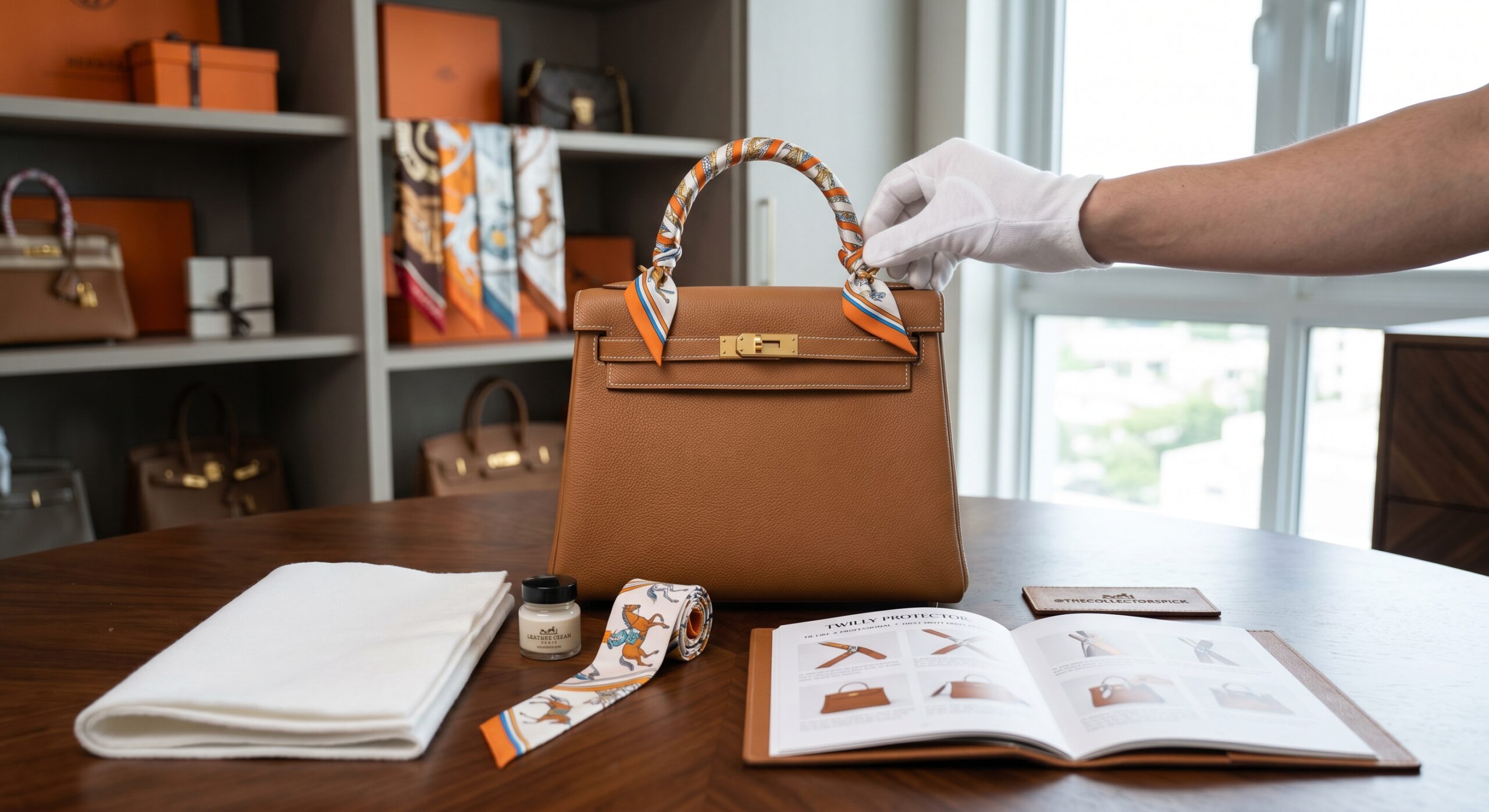
Knowing exactly how to tie a Twilly on a Kelly handle perfectly is not merely an exercise in styling or personalization; for the luxury investor, it is a mandatory protocol for asset preservation. In the highly scrutinized 2026 secondary market, the physical condition of a quota bag’s handle is the absolute ground zero for authenticator grading. When you finally acquire a Kelly 28 Sellier from the boutique, the pristine leather handle is instantly vulnerable to the natural oils, hand creams, and friction generated by daily carry. Unprotected handles absorb these elements, resulting in a dark, irreversible patina. On platforms like Vestiaire Collective and Fashionphile, a darkened handle instantly triggers a severe condition grade penalty, stripping thousands of dollars from your potential price-to-resale ratio. The Twilly—a simple $195 silk ribbon—acts as a sacrificial barrier, absorbing this damage to ensure your six-figure portfolio asset remains immaculate. In this analysis, we deconstruct the financial penalty of handle degradation, outline the exact mechanics of a protective wrap, and explore how strategically purchasing these silks exponentially accelerates your boutique spend ratio.
-$2,000 to -$4,000
Penalty for Darkened Handles
Pristine
Grade Retained by Twilly Use
High Margin
SA Commission on Silks
Table of Contents
The Financial Cost of Handle Degradation
To grasp the necessity of the Twilly wrap, investors must consult our primary Care & Storage Guide to understand the porous nature of Hermès leathers. Whether you acquire a Kelly in Epsom, Togo, or heritage Box Calf, the leather is fundamentally organic. Human hands constantly secrete oils, sweat, and transfer cosmetic residues (like hand sanitizer and lotion). When an unprotected hand grips the top handle of a Kelly, these elements are driven deep into the grain.
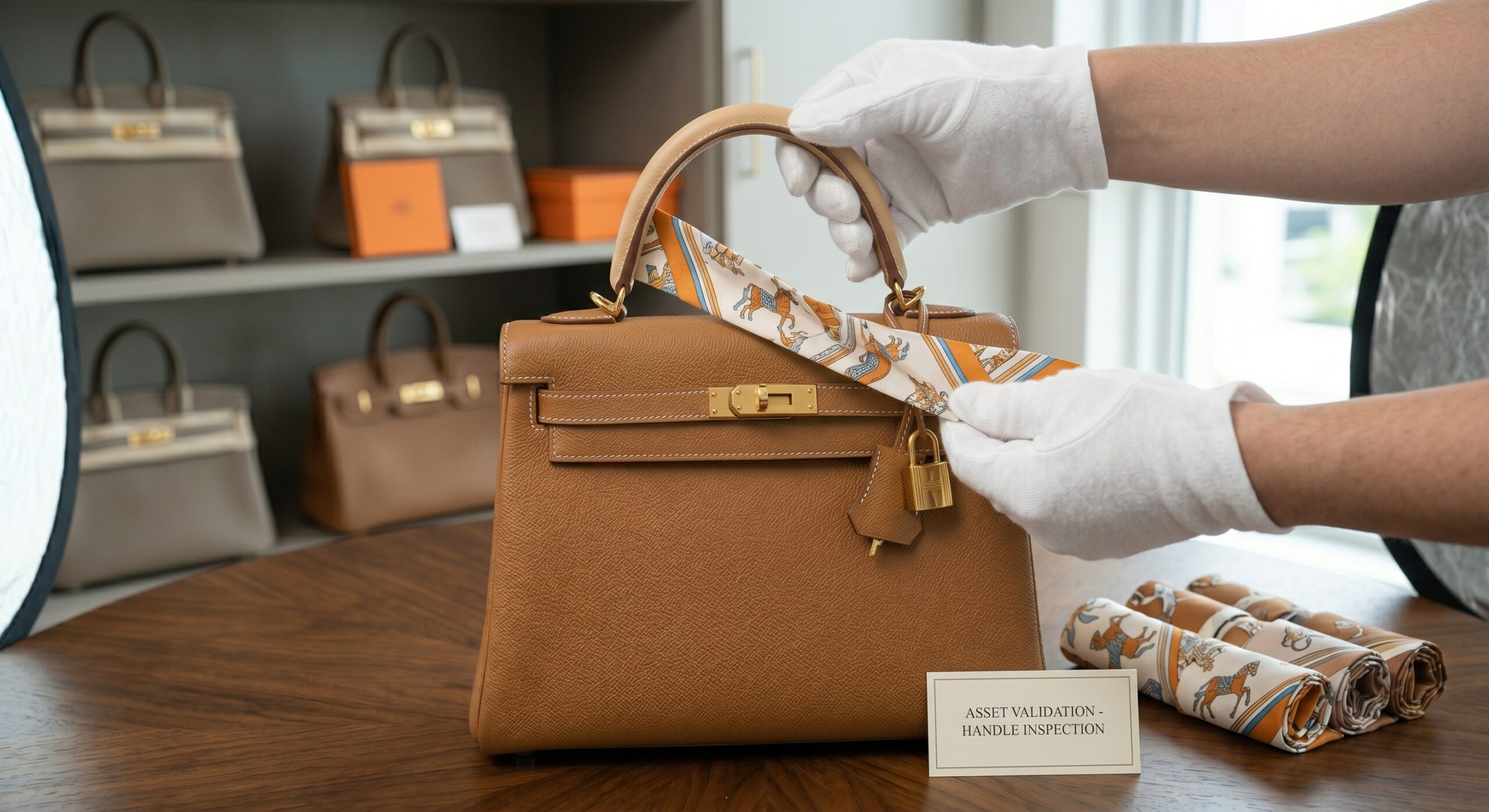
Over a remarkably short period—sometimes just a few months of active use—the underside and top arch of the handle will begin to darken. This is not a surface stain that can be wiped away; it is a chemical alteration of the dye and leather fibers. When this asset is transitioned to the secondary market, authenticators zero in on the handles first. If The Real Real or 1stDibs detect handle patina, your bag is immediately disqualified from a "Pristine" condition grade. A Kelly 25 that drops to a 'Very Good' or 'B' rating due to handle wear will suffer an immediate contraction of its price delta, typically losing $2,000 to $4,000 in resale value compared to a store-fresh equivalent.
The alternative is sending the bag to the Hermès spa for a full handle replacement. However, this freezes your liquidity. Spa treatments routinely take 6 to 12 months, and the cost of the repair cuts directly into your final profit margin. The Twilly prevents this entire cycle of depreciation.
The Mechanics of Condition Preservation
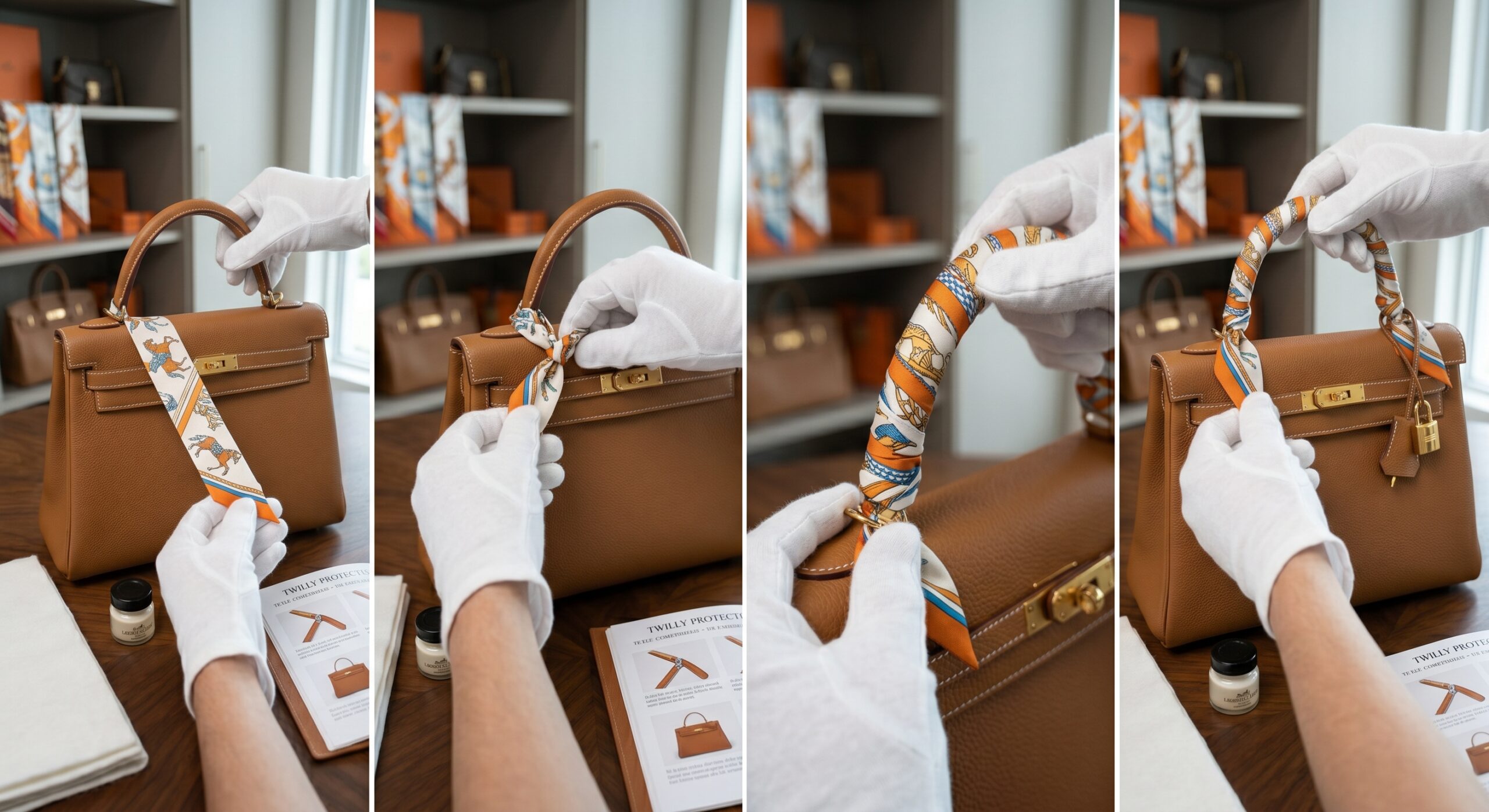
The effectiveness of the Twilly lies entirely in the tension and coverage of the wrap. A loose, purely decorative tie provides zero financial protection, as it allows the silk to slide back and forth over the resin edges of the handle, creating friction wear.
To execute the perfect, protective wrap, you must anchor the silk tightly at the base of the handle near the hardware ring. The wrapping motion must overlap seamlessly, ensuring no leather is exposed on the underside where the fingers grip. The tension must be firm enough to prevent shifting, but not so aggressive that it compresses the leather core of the handle. When executed correctly, the silk absorbs 100% of the daily environmental damage.
This barrier strategy is particularly vital when managing rare, light-colored assets. A Kelly in Craie or Nata is highly susceptible to dye transfer, not just from clothing, but from the environment. As we established in our guide to preventing color transfer on light Hermès leather, the handles of light bags act like sponges for dirt. If you acquire an Hermès Special Service (HSS) piece featuring a Craie exterior, failing to wrap the handle immediately upon unboxing is essentially an act of financial sabotage.
- Anchor the Twilly tightly at the base hardware to prevent friction sliding.
- Ensure overlapping coverage on the underside of the handle to block all hand oils.
- Inspect the Twilly regularly; if the silk becomes heavily soiled, replace it immediately to prevent oils from seeping through to the leather.
The Twilly and Your Spend Ratio Strategy
Beyond asset protection, the Twilly serves a vital, dual purpose within the boutique ecosystem. To secure a quota bag allocation, a collector must navigate the SA relationship by engineering a profitable spend ratio. While purchasing $20,000 in fine jewelry is the fastest route, the silk department remains a critical foundational component of this strategy.
Sales Associates are heavily incentivized to sell silks. It is a high-margin department with rapid inventory turnover. When a new client visits a boutique, purchasing two Twillys (one for each handle of a future bag, or to immediately protect a secondary market purchase) signals that the client is educated in brand protocols. It establishes a purchase history without requiring massive upfront capital deployment. The SA registers this engagement, marking the client as a serious custodian of the brand's heritage, not just a transient flipper hunting for a Birkin.
The Aesthetic Pairing Mandate
While the primary function of the Twilly is financial defense, the aesthetic selection matters immensely to your SA relationship. SAs appreciate clients who curate their collections thoughtfully. Selecting a Twilly that perfectly complements the leather of your bag demonstrates sophistication. For a deep dive into the visual strategy behind these pairings and how they reflect stealth wealth principles, our sister site provides a brilliant Hermès Twilly color matching and styling guide. Consistently engaging your SA to help select the perfect silk patterns accelerates your transition from a walk-in to a prioritized VIP client.
Execution, Storage, and Liquidation
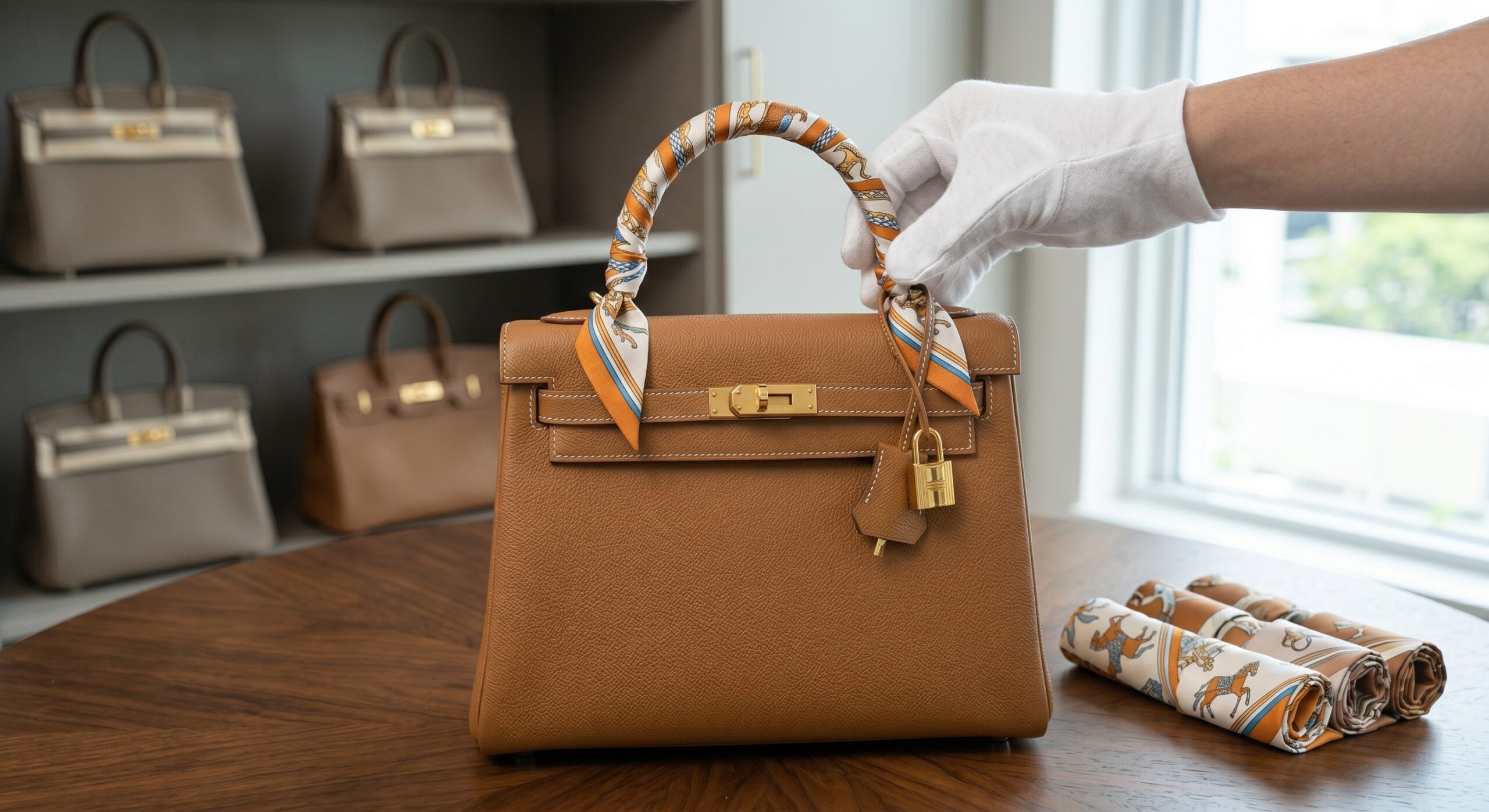
While the Twilly is essential during active carry, it introduces new risks if mishandled during storage. When you rotate your Kelly out of your daily lineup to rest in the vault, the Twilly must be removed. If left tightly wrapped for months in a climate-controlled environment, the tension of the silk can permanently indent the leather core of the handle or distress the resin edges. The bag must be allowed to breathe.
When the time comes to liquidate the asset on the secondary market, a strategic decision must be made regarding the presentation. You must remove the Twilly. A Kelly presented on Vestiaire Collective or submitted to Fashionphile with the handle wrapped instantly triggers suspicion. Authenticators and buyers will assume you are hiding severe handle darkening or a cracked resin edge beneath the silk. The bag must be photographed bare, allowing the pristine, untouched condition of the handle to command the maximum price-to-resale ratio.
The Twilly itself rarely retains its retail value on the secondary market. If you paid $195 for it, expect to sell it for $100 or less, as buyers are wary of pre-owned silks that have absorbed hand oils. Accept this minor loss as the cost of doing business. The Twilly sacrificed its value to guarantee that your $12,000 Kelly securely realizes a $22,000 secondary market payout.
| Handle Condition Status | Condition Grade Impact | Price Delta Penalty | Secondary Market Liquidity |
|---|---|---|---|
| Pristine (Protected by Twilly) | Maintains Apex Grade | Zero Penalty (Max Premium) | Ultra-High (Immediate Buyer Pool) |
| Minor Darkening (Unprotected) | Drops to 'Excellent' or 'B+' | -$1,000 to -$2,000 | High (Discount Hunters) |
| Severe Patina / Oil Saturation | Drops to 'Very Good' or 'B' | -$2,500 to -$4,000 | Moderate (Liquidity Freeze Risk) |
| Spa Replaced Handle | Restores Condition Grade | High Repair Cost / Time Loss | High (But overall net ROI is reduced) |
The Market Insider's Verdict
The secondary market is mathematically merciless toward signs of physical wear. A darkened handle is the fastest way to hemorrhage the inherent premium of a quota bag. Bottom Line: To absolutely lock in your asset’s condition grade and maximize its price-to-resale ratio, you must tightly wrap the Kelly handle with a Twilly during all periods of active carry, utilizing the silk as a sacrificial barrier against depreciation, and remove it entirely during vault storage and resale photography.
Popular Searches
Explore our most searched accessory and asset preservation questionsCost to Replace Hermès Kelly Handle 2026
Tracking the exorbitant spa fees required to fix unprotected, oil-saturated leather.
📈 Strong ResaleDoes Craie Leather Darken Quickly
Analyzing the extreme financial risks of carrying light-colored Hermès assets without silk barriers.
⬆ Rising DemandDo Twillys Count Toward Birkin Spend Ratio
Understanding how silk purchases manipulate your boutique relationship and SA leverage.
★ Collector FavouriteSelling Birkin with Twilly Included
Why bundling accessories rarely recoups their retail value and triggers authenticator suspicion.
